Barley, Bread, and Broken Windows: The Oldest Predictor of Unrest Is Sitting in Your Cart

Photo by Photo by Marjan Blan on Unsplash on Unsplash
Of all the numbers humans have written down, the price of food has the longest continuous history. Barley prices appear in Mesopotamian records nearly four thousand years ago. Rome kept meticulous accounts of the grain dole. Medieval towns posted the assize of bread on public boards. And across all of it, one correlation shows up with almost monotonous reliability: when staple food prices spike, so does unrest.
The Babylonian Baseline
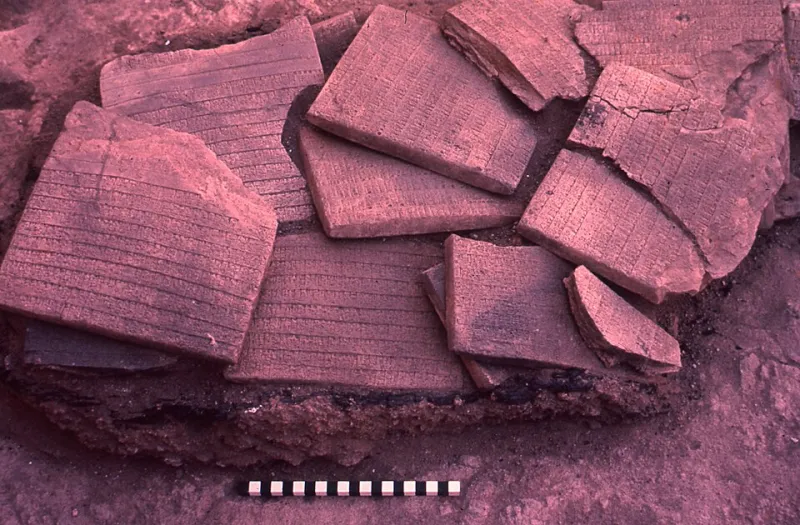
The clearest early dataset comes from Old Babylonian Mesopotamia, where scribes recorded barley prices in shekels per volume across centuries. Economic historians combing these tablets have found that price spikes cluster with the years of recorded social stress — debt cancellations, litigation surges, letters from merchants describing markets in disarray. Barley was the wage-earner's budget, and its price functioned as the era's cost-of-living index. When it moved, everything downstream moved with it.
Rome's Bread Machine
The Roman Republic and Empire turned grain into the central political question. Clodius's grain law in 58 BCE made the dole free — and made him enormously popular. The annona, the grain supply of the city, was a standing political institution; emperors who secured it lasted, and the failure of Egyptian shipments in the fifth century coincided with the city's vulnerability to exactly the sack it suffered. The lesson the Romans absorbed: a population fed by the state forgives much. A population facing empty shelves forgives nothing.
The French Arithmetic
The most cited modern case is 1789. When the crowd marched on the Bastille, bread prices in Paris were near their highest levels in decades after catastrophic harvests and a brutal winter. Historians debating the Revolution's causes rarely dispute the bread; they dispute what else mattered. Across the eighteenth century, food riots followed a recognizable script in England and France alike — markets seized, prices posted, crowds enforcing what they considered a "just price" by force. The rioters were not generally starving. They were responding to a price they could no longer pay for a good they could not do without.
The Modern Correlation
Researchers in the 2010s, notably a group at the New England Complex Systems Institute, found that global food price indices tracked closely with episodes of unrest across dozens of countries, including the run-up to the Arab Spring in 2011. The mechanism is not mysterious. Food is the one purchase a household cannot defer, and it is the most visible price in the economy — everyone sees it weekly, in person, in full.
Why the Grocery Receipt Hits Different
This is what distinguishes food inflation from other price signals. A rising cost of housing is experienced personally and privately. A rising cost of groceries is experienced in public, in line, with a cart, every week — and discussed with neighbors. The deep record suggests this visibility matters as much as the magnitude. Bread riots were not simply about calories; they were about a public, shared, undeniable number moving in the wrong direction while official rhetoric insisted conditions were fine.
The United States is, by historical standards, extraordinarily insulated. Food here consumes a smaller share of household budgets than almost anywhere in recorded history, and the agricultural machine is vast. But insulation is a matter of degree, not kind. When egg prices doubled in 2022 and 2023, the reaction was disproportionate to the dollar amount — and entirely proportionate to the psychology the archive documents: a visible staple, moving sharply, with no substitute.
What the Archive Says Happens Next
The historical pattern does not predict that food inflation causes collapse. It predicts something more specific: food price spikes reliably produce political demands, and the character of those demands depends on whether institutions respond. Rome responded with the dole and bought centuries. Eighteenth-century France responded with price controls that failed, then with repression, then not at all. The Babylonian kings responded with debt remission and the system held for generations.
The variable, in other words, is not the price. It is whether the people setting policy treat the grocery receipt as a serious signal or a statistical artifact. Five thousand years of ledger entries suggest the receipt is telling the truth about how people feel, whatever the headline index says — and that governments which learned to read it survived considerably longer than those that didn't.