The Paradox of Institutional Cannibalism
In 1938, at the height of Stalin's Great Purge, the Soviet Union appeared to possess an unprecedented level of internal unity. Dissent had been eliminated, loyalty had been demonstrated through public trials, and the remaining leadership spoke with a single voice. Two years later, when Nazi Germany invaded, this apparently unified system nearly collapsed within months. The purge that had created such visible strength had simultaneously destroyed the institutional knowledge and independent judgment that made effective resistance possible.
This contradiction—between the immediate appearance of strength and the long-term reality of weakness—defines one of history's most persistent institutional patterns. Organizations that survive internal loyalty campaigns do so not because they become stronger, but because they learn to hide their essential functions from the purge mechanism itself.
The Logic of Competence Elimination
The reason purges consistently target the most capable individuals first is not accidental but structural. Competence and independence operate as nearly inseparable qualities in complex organizations. The same intellectual flexibility that enables effective problem-solving also enables questioning of authority. The same broad knowledge that makes someone valuable in a crisis also makes them dangerous to insecure leadership.
The Ming Dynasty's Hongwu Emperor understood this dynamic explicitly when he systematically eliminated the scholar-bureaucrats who had helped him consolidate power. These men possessed both the administrative skills necessary for governance and the historical knowledge to recognize patterns of imperial overreach. Their competence made them indispensable; their knowledge made them threatening. The emperor chose to eliminate the threat, calculating that the administrative functions could be replaced more easily than the potential for resistance.
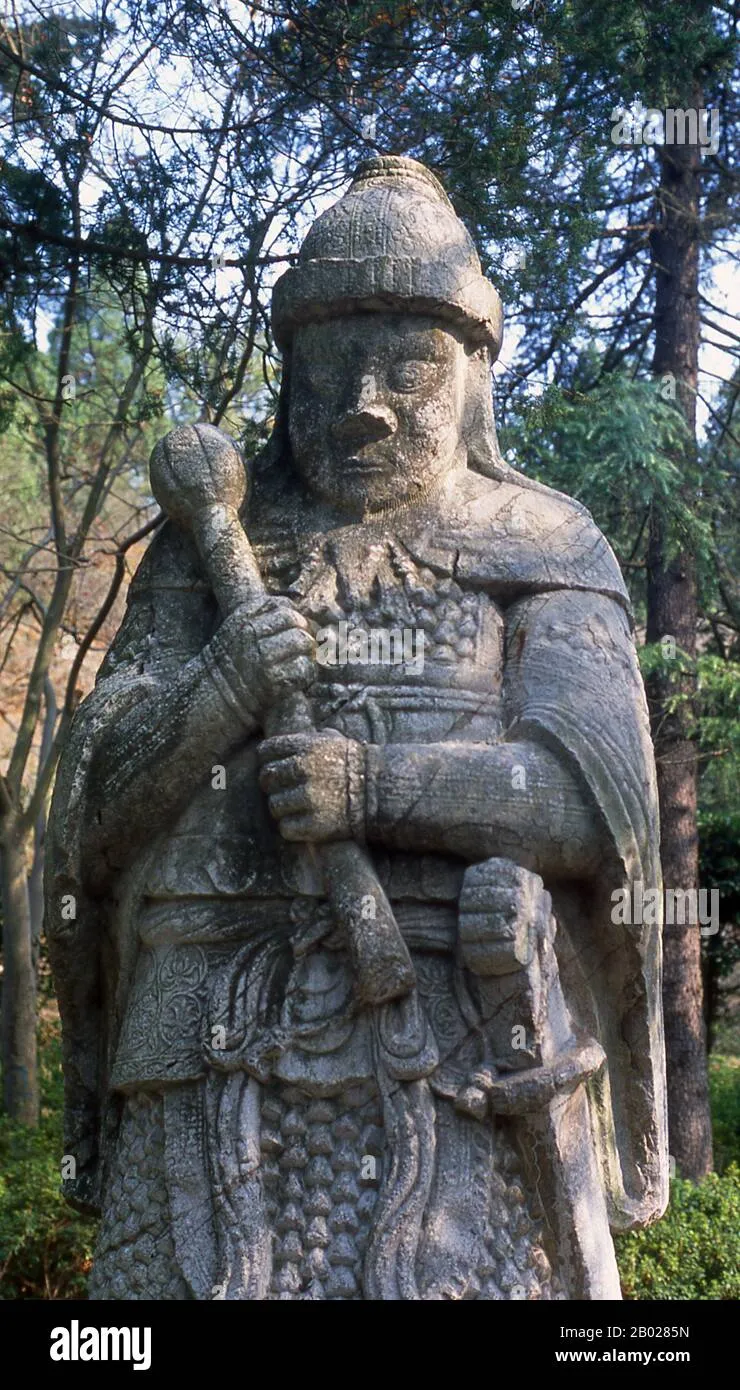 Photo: Hongwu Emperor, via c8.alamy.com
This calculation appears rational in the short term but proves catastrophic over time. Complex organizations require institutional memory, independent judgment, and the ability to adapt to unforeseen circumstances. These qualities reside primarily in the most competent individuals—precisely those who cannot survive a loyalty-based purge.
The Roman Template
Rome's proscription lists, beginning with Sulla and reaching their apex under the Second Triumvirate, provide perhaps the clearest example of how purges consume their own foundations. The lists initially targeted obvious political enemies, but the logic of the system quickly expanded to include anyone whose wealth, connections, or capabilities might pose a future threat.
What made the Roman purges particularly revealing was their systematic nature. Rather than targeting specific individuals for specific crimes, the proscription system created categories of dangerous people: those with too much money, too many clients, too much military experience, or too much popular support. Competence itself became suspicious because competent people could potentially become threats.
The immediate result was a dramatic consolidation of power. The surviving leadership faced no organized opposition and controlled unprecedented resources. The long-term result was an empire increasingly unable to respond effectively to external threats or internal crises. The institutional knowledge and independent judgment that had built Roman power had been systematically eliminated in the name of protecting it.
The Survival Strategies
Institutions that survive their own purges develop sophisticated mechanisms for hiding essential competence from the loyalty-testing apparatus. The Catholic Church during various inquisitions, the Chinese bureaucracy during cultural revolutions, and modern corporations during ideological restructuring all demonstrate similar adaptive strategies.
The most successful approach involves creating parallel systems: visible hierarchies that demonstrate loyalty and hidden networks that maintain functionality. Essential knowledge gets distributed among seemingly unimportant individuals. Critical decisions get made through informal channels that leave no documentary evidence. The organization learns to function despite its official structure rather than through it.
This adaptation comes at enormous cost. Energy that should go toward external challenges gets redirected toward internal survival. Innovation becomes dangerous because it draws attention. Long-term planning becomes impossible because it requires acknowledging uncomfortable realities.
The American Context
The United States has generally avoided the extreme purges that characterized other societies, but the underlying dynamic appears in modified forms during periods of ideological intensity. McCarthyism in the 1950s, corporate restructuring in the 1980s, and recent "accountability" movements all demonstrate the same basic pattern: competent individuals get eliminated not for specific failures but for potential disloyalty.
What makes the American experience particularly interesting is the role of institutional redundancy in limiting damage. Multiple competing organizations, federalism, and private sector alternatives create escape routes for purged competence. Individuals eliminated from one institution can often contribute to another, preventing total loss of institutional knowledge.
This redundancy appears to be crucial for long-term survival. Societies with monolithic institutions—whether governmental, religious, or economic—show greater vulnerability to purge-induced collapse because they lack alternative repositories for essential competence.
The Warning Signs
The historical record suggests several reliable indicators that an organization is entering a potentially catastrophic purge cycle. The redefinition of competence as disloyalty, the elevation of demonstrable loyalty over demonstrable results, and the increasing importance of ideological purity in personnel decisions all signal that institutional cannibalism may be beginning.
Perhaps most tellingly, organizations approaching dangerous purges consistently exhibit supreme confidence in their own strength. The elimination of internal criticism creates an echo chamber that mistakes conformity for consensus and silence for support. Leaders who successfully complete purges often express genuine surprise when external challenges reveal the institutional weakness their campaigns have created.
The lesson from five millennia of organizational history is uncomfortable: the moment when an institution appears most unified and loyal may be precisely the moment when it is most vulnerable to collapse. Human psychology's preference for visible loyalty over invisible competence creates a persistent trap that transcends specific cultures, technologies, or governmental systems. Understanding this pattern may be essential for recognizing when strength is actually weakness, and when the cure has become more dangerous than the disease.