Echoes of Glory: The Historical Pattern of Declining Powers Borrowing Yesterday's Symbols

The Roman Template
When Charlemagne was crowned "Emperor of the Romans" on Christmas Day 800 AD, the Western Roman Empire had been extinct for over three centuries. The Frankish kingdom that Charlemagne ruled bore little resemblance to the administrative, military, or economic structures that had defined Roman power at its peak. Yet the ceremony in St. Peter's Basilica deliberately evoked Roman precedent, complete with Latin titles, imperial regalia, and claims to Roman legal authority.
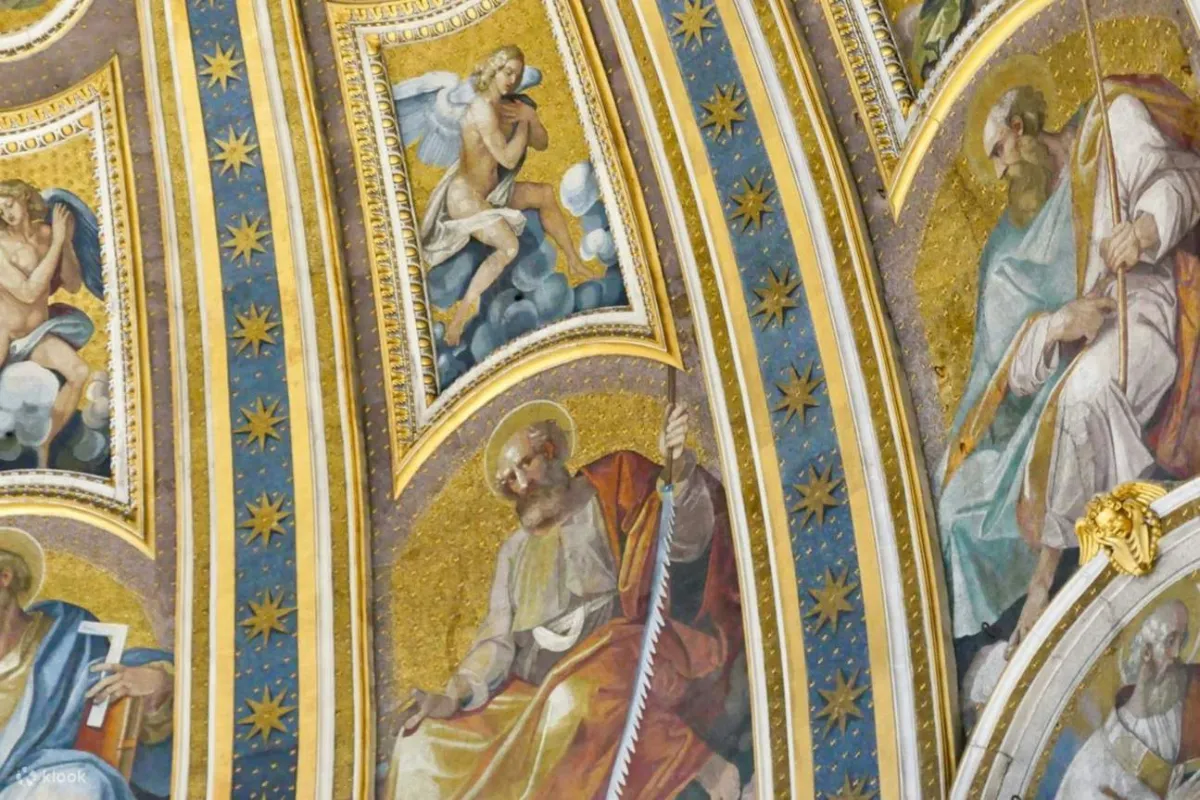 Photo: St. Peter's Basilica, via res.klook.com
This was not mere nostalgia—it was a calculated attempt to borrow legitimacy that Charlemagne's regime could not generate independently. The Carolingian Empire lacked the administrative sophistication, urban infrastructure, and commercial networks that had sustained actual Roman authority. But it could appropriate Roman symbols and hope that symbolic continuity would substitute for institutional capacity.
The pattern was already ancient when Charlemagne employed it. The Ptolemaic dynasty in Egypt had styled itself as the heir to pharaonic traditions while governing through Hellenistic institutions that bore no resemblance to the systems that had built the pyramids. The Seleucid Empire claimed Alexander's legacy while presiding over territories that Alexander's successors had never effectively controlled.
The Ottoman Appropriation
Perhaps no civilization pursued borrowed legitimacy more systematically than the Ottoman Empire in its relationship to both Roman and Islamic precedents. After conquering Constantinople in 1453, Sultan Mehmed II immediately began styling himself as "Caesar of Rome," claiming direct succession from the Byzantine emperors who had themselves claimed succession from the original Roman Empire.
This was not simply political theater. Ottoman administrative structures, legal codes, and ceremonial protocols were deliberately designed to evoke Roman precedent while incorporating Islamic elements that connected the empire to the early caliphates. The result was a hybrid system that borrowed authority from two different civilizational traditions without fully embodying either.
The strategy worked for centuries, but it also revealed the empire's underlying insecurity about its own legitimacy. The Ottomans never developed distinctively Ottoman symbols of authority that could stand independently of their borrowed precedents. When the empire finally collapsed in the early twentieth century, its successor state—the Turkish Republic—explicitly rejected both Roman and Islamic symbolism in favor of aggressively modernist aesthetics.
The American Revolutionary Exception
The United States represents a historical anomaly in this pattern. The American Revolution consciously rejected British precedents and attempted to create new forms of political symbolism from classical sources rather than immediate predecessors. The Great Seal, the Capitol building's architecture, and the republican terminology of American government drew inspiration from ancient Greece and Rome while deliberately avoiding contemporary European models.
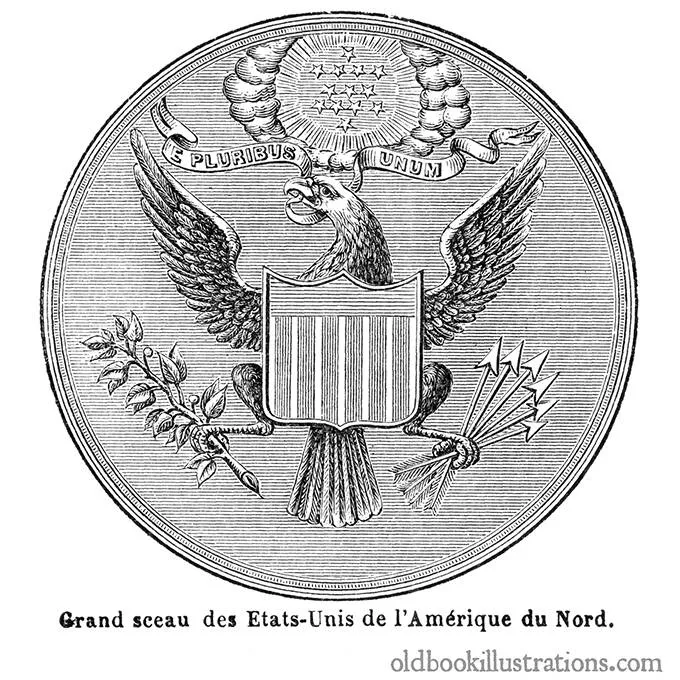 Photo: The Great Seal, via www.oldbookillustrations.com
This was a remarkable departure from historical norms. Most successful revolutions have either maintained existing symbolic structures or borrowed from rival powers. The French Revolution initially attempted to create entirely new symbols—new calendars, new religious practices, new ceremonial forms—but eventually reverted to imperial symbolism under Napoleon, who crowned himself Emperor and adopted many of the trappings he had supposedly overthrown.
The American approach succeeded partly because the revolutionary generation was geographically isolated from the European precedents they rejected. Distance made symbolic independence easier to maintain than it would have been for a European revolutionary movement operating within sight of the palaces it opposed.
The Holy Roman Persistence
The Holy Roman Empire represents perhaps the most extreme example of borrowed legitimacy in European history. For nearly a thousand years, a succession of German kingdoms maintained the fiction that they were continuing the Roman Empire, despite lacking any meaningful connection to Roman institutions, territory, or population.
The persistence of this fiction reveals something important about human psychology that has not changed in five thousand years: people prefer familiar symbols of authority to unfamiliar ones, even when the familiar symbols have been emptied of their original meaning. The Holy Roman Empire's subjects understood that their rulers were not actually Roman emperors, but they found comfort in the pretense of continuity.
This dynamic explains why revolutionary movements throughout history have found it easier to appropriate existing symbols than to create new ones. The Bolsheviks initially attempted to create entirely new forms of political symbolism, but they eventually reverted to imperial precedents, moving into the Kremlin and adopting ceremonial practices that differed only superficially from those of the tsars they had overthrown.
Contemporary American Parallels
The historical pattern of symbolic borrowing has uncomfortable resonances with contemporary American political culture. Both major political parties increasingly rely on imagery and rhetoric that evokes earlier periods of American history rather than articulating visions for new institutional forms.
Conservative political movements explicitly embrace symbols from the founding era—tricorn hats, colonial-era flags, constitutional language—while liberal movements increasingly reference the iconography of the New Deal and civil rights eras. Both tendencies suggest a diminished capacity for generating new symbols that could represent contemporary American aspirations.
This is not necessarily problematic in itself. All political movements draw on historical precedent, and symbolic continuity can provide valuable stability in periods of rapid change. But the historical record suggests that excessive reliance on borrowed symbols often indicates underlying institutional weakness.
The Technology Exception
Interestingly, American technology companies have largely avoided this pattern of symbolic borrowing. Companies like Apple, Google, and Tesla have created distinctive visual identities that do not reference historical precedents. Their success suggests that American innovative capacity remains strong in certain sectors, even as political culture increasingly relies on recycled imagery.
This divergence between technological and political symbolism may reflect different audiences and functions. Technology companies must appeal to global markets that have no attachment to American historical symbols, while political movements operate within domestic contexts where historical references carry emotional weight.
But the contrast is still striking. American technology companies confidently create new symbols for new institutions, while American political movements increasingly retreat into symbolic nostalgia for institutions that no longer function as they once did.
The Decline Indicator
The historical record suggests that symbolic borrowing often indicates a civilization's recognition of its own diminished creative capacity. When societies stop generating new symbols and start recycling old ones, they are typically acknowledging—consciously or unconsciously—that they can no longer create institutions worthy of new symbolic representation.
This does not mean that symbolic borrowing necessarily predicts immediate collapse. The Holy Roman Empire persisted for centuries using borrowed Roman symbols, and the Ottoman Empire maintained borrowed legitimacy for over six hundred years. But it does suggest a shift from expansion and innovation to consolidation and maintenance.
The Pattern's Logic
Why do declining civilizations consistently choose symbolic borrowing over symbolic innovation? The historical evidence suggests several factors. First, borrowed symbols carry established emotional resonance that new symbols must earn through time and repetition. Second, symbolic borrowing allows declining powers to claim continuity with more successful predecessors without having to match their actual achievements. Third, the psychological comfort of familiar symbols may be particularly appealing during periods of uncertainty and change.
But the historical record also suggests that excessive reliance on borrowed symbols can become self-reinforcing. Societies that stop creating new symbols may also stop creating the new institutions that would require new symbolic representation. The result is not just symbolic stagnation but institutional stagnation.
The Contemporary Question
The pattern raises questions about contemporary American culture that extend beyond politics into architecture, urban planning, and institutional design. American cities increasingly build pseudo-historical structures rather than developing new architectural languages. American institutions increasingly adopt names and procedures that reference earlier periods rather than creating new forms appropriate to contemporary challenges.
This may simply reflect aesthetic preferences or democratic nostalgia. But the historical pattern suggests it may also reflect a deeper shift from a society confident in its capacity to create new institutions to one that finds comfort in the symbols of institutions it can no longer build.
Five thousand years of human experience indicate that symbolic borrowing is a normal feature of civilizational life, but excessive reliance on it often signals internal recognition of diminished creative capacity. Understanding this pattern does not resolve contemporary debates about American symbols and institutions, but it does provide historical context for evaluating what our symbolic choices reveal about our institutional confidence.