
The Code That Runs Civilizations
When Charlemagne died in 814 AD, Frankish law required his empire to be divided equally among his sons. Within thirty years, his unified kingdom had fractured into three separate realms that spent the next century fighting each other rather than expanding their territory. Meanwhile, in England, primogeniture laws were concentrating wealth and power in eldest sons, creating a restless population of younger brothers who would eventually conquer much of the world.
 Photo: Charlemagne, via historicbios.com
Inheritance law operates like software code for human societies—invisible to most users but determining how the entire system functions. The specific rules about who gets what when a patriarch dies have repeatedly shaped the political, economic, and cultural character of civilizations in ways that dwarf the influence of individual leaders or temporary policies.
The Mathematics of Motivation
Every inheritance system creates predictable incentive structures that influence human behavior across generations. Under primogeniture, eldest sons focus on preserving existing wealth while younger sons must create their own fortunes. Under partible inheritance, all children receive portions but may lack sufficient resources for major ventures. Under ultimogeniture, youngest sons inherit everything, creating different competitive dynamics among siblings.
These aren't abstract policy choices—they're behavioral programming that affects millions of individual decisions about risk-taking, innovation, exploration, and conflict. The cumulative effect of these decisions determines whether societies expand, stagnate, or fragment.
Roman inheritance law, which divided estates among all children regardless of gender, created a society of small landholders and urban entrepreneurs. This system supported the Roman Republic's expansion for centuries by ensuring broad distribution of wealth and opportunity. When Augustus modified inheritance laws to concentrate wealth in imperial families, the empire's innovative capacity began its long decline.
The Younger Son Engine
England's adoption of strict primogeniture in the 12th century created what historians call "the younger son problem"—large numbers of educated, well-connected men with minimal inheritance prospects. Rather than fragmenting the kingdom, this system channeled surplus elite energy into exploration, commerce, and conquest.
These disinherited younger sons became the driving force behind English expansion. They commanded merchant vessels, founded trading companies, established colonies, and led military expeditions. The same inheritance law that concentrated domestic wealth also scattered English influence across the globe. By 1800, a small island nation controlled territory on every continent.
French inheritance law, which required equal division among heirs, produced different outcomes. French families focused on preserving existing estates rather than risky ventures. French colonial efforts, while extensive, relied heavily on state direction rather than private initiative. The psychological and economic incentives created by inheritance law help explain why English merchants built global trading networks while French expansion remained largely governmental.
The American Innovation
American inheritance practices represented a hybrid system that combined English legal traditions with frontier conditions. Primogeniture was officially abolished in most states after the Revolution, but practical considerations often concentrated farm ownership in single heirs. Simultaneously, abundant land and commercial opportunities provided alternatives for those who didn't inherit family property.
This combination created what economic historians call "optimal inheritance conditions"—enough concentration to enable substantial ventures, enough dispersion to prevent stagnation, and enough opportunity to channel surplus energy productively. The result was a society that combined English entrepreneurial energy with broader wealth distribution.
Many of America's most successful 19th-century entrepreneurs were younger sons from established families—men like Andrew Carnegie and John D. Rockefeller who built industrial empires because traditional inheritance paths were unavailable to them. The American system channeled the younger son problem into economic innovation rather than political fragmentation or foreign conquest.
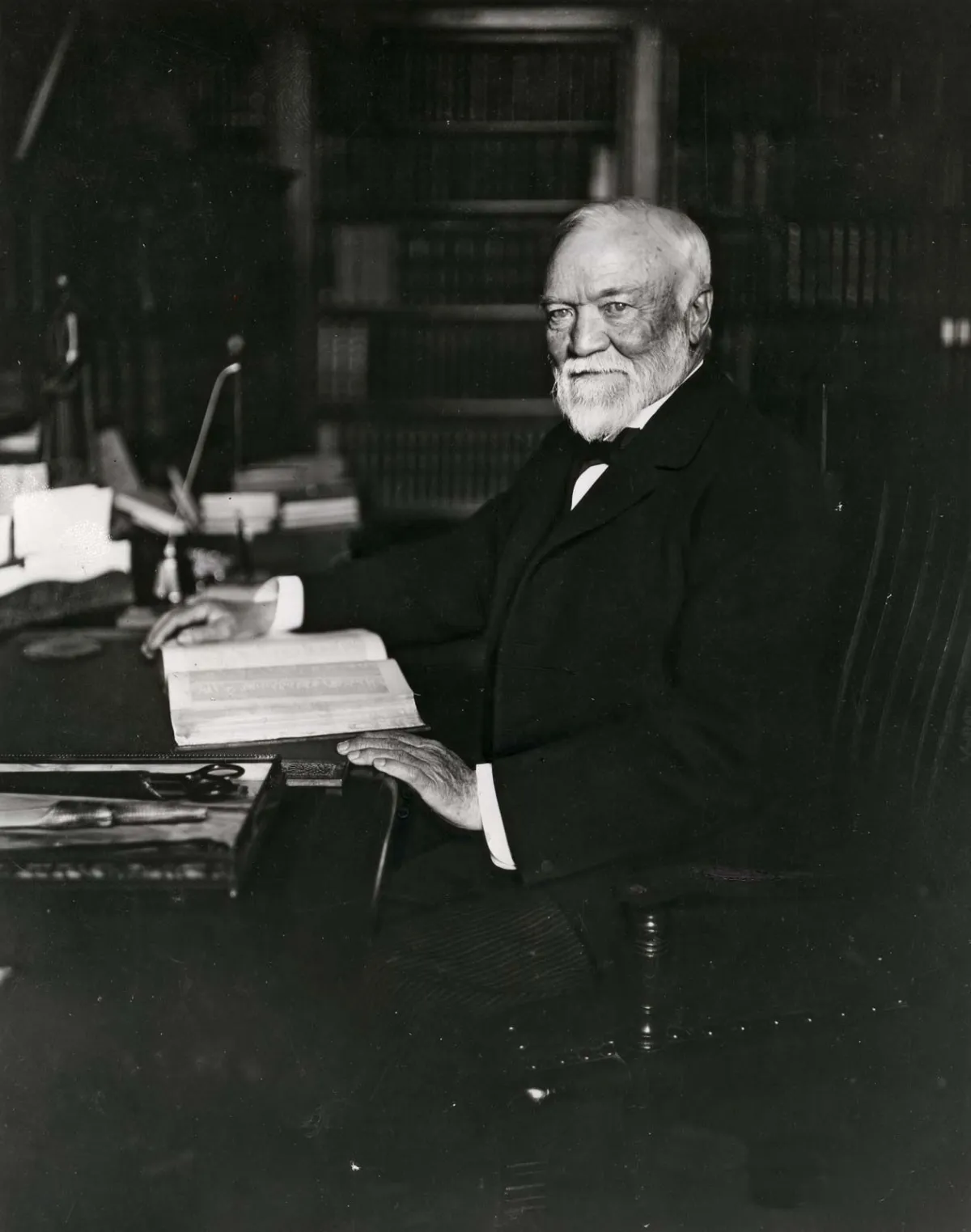 Photo: Andrew Carnegie, via cdn.britannica.com
The Technology of Social Organization
Inheritance law functions as social technology—a systematic method for organizing human behavior across generations. Like any technology, different designs produce different outcomes. The choice between concentration and dispersion of wealth through inheritance affects everything from military capability to artistic achievement to scientific progress.
Chinese inheritance traditions, which emphasized maintaining family property intact through complex trust arrangements, supported remarkable cultural continuity but may have limited individual innovation. Islamic inheritance law, which mandates specific divisions among heirs, created different economic dynamics in Muslim societies. Jewish inheritance customs, adapted to minority status and frequent displacement, emphasized portable wealth and education rather than land ownership.
Each system represents a solution to the fundamental problem of transferring resources and authority across generations while maintaining social stability and economic productivity. The historical record shows that these solutions have far-reaching consequences that extend well beyond individual families.
The Digital Age Parallel
Modern technology companies face inheritance-like challenges when founders retire or die. The choice between concentrating control in family members, dispersing ownership among employees, or transferring authority to professional managers affects these organizations' long-term development in ways that parallel historical inheritance patterns.
Companies that maintain founder control often preserve original vision but may resist necessary adaptation. Those that disperse ownership broadly may lose strategic focus but gain diverse perspectives. Professional management may optimize efficiency but reduce innovation. The same dynamics that affected medieval kingdoms affect modern corporations.
The parallel extends to national policy. Countries with high wealth concentration face different challenges than those with broad distribution. Societies that encourage risk-taking by making failure survivable develop differently than those where failure means permanent exclusion from opportunity. Inheritance law is one mechanism among many for shaping these fundamental social characteristics.
Lessons From the Deep Record
Five thousand years of inheritance experiments reveal several consistent patterns. Systems that concentrate wealth in single heirs tend to produce expansion and innovation but also instability and inequality. Systems that divide wealth equally tend to produce stability and continuity but also stagnation and fragmentation. Systems that balance concentration with opportunity for non-inheritors tend to produce sustained growth and adaptation.
The optimal inheritance system appears to depend on circumstances. Societies facing external threats benefit from wealth concentration that enables large-scale military efforts. Societies in stable environments benefit from wealth dispersion that prevents internal conflict. Societies with abundant opportunities benefit from systems that channel surplus energy into productive ventures.
But the deeper lesson involves understanding inheritance law as a fundamental social technology rather than a private family matter. The rules governing wealth transfer across generations shape the character of entire civilizations by influencing millions of individual decisions about risk, innovation, and opportunity.
The Current American Experiment
Contemporary America is conducting a massive inheritance experiment. Wealth inequality has reached levels not seen since the Gilded Age, while technological change has created new forms of inheritable assets like intellectual property and digital platforms. Traditional inheritance law wasn't designed for these conditions.
The outcome will likely determine America's trajectory for generations. Will concentrated wealth in tech families create a new aristocracy? Will broad stock ownership through retirement accounts democratize capital? Will intellectual property inheritance create permanent knowledge monopolies? The answers depend partly on policy choices about taxation and regulation, but also on how inheritance law adapts to new economic realities.
The historical record suggests these choices matter more than most people realize. The rules for dividing wealth when patriarchs die have repeatedly determined whether civilizations expand or fragment, innovate or stagnate, adapt or collapse. Human psychology hasn't changed—people still respond to inheritance incentives the same way they did five thousand years ago. Only the stakes have grown larger.