
The Ancient Art of Misdirection
In 301 AD, Emperor Diocletian faced a crisis that would be familiar to any modern economist: runaway inflation destroying his empire's purchasing power. His response would also be familiar to any student of political theater. Rather than acknowledge that decades of coin debasement had triggered the crisis, Diocletian issued his famous Edict on Maximum Prices, fixing the cost of everything from bread to silk while simultaneously launching prosecutions against merchants for "avarice" and "conspiracy against the public good."
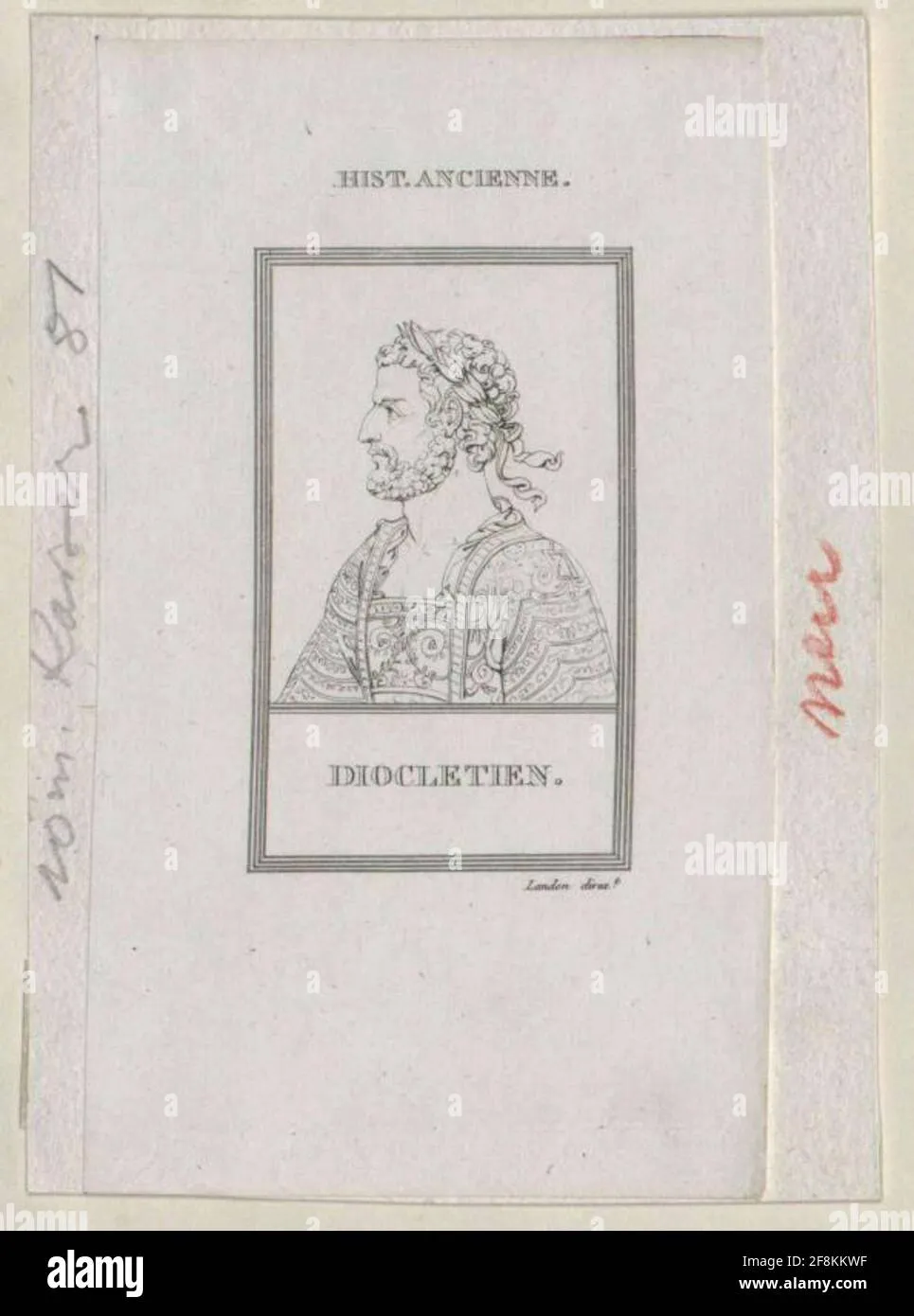 Photo: Emperor Diocletian, via c8.alamy.com
The merchants, of course, had not debased the currency. They had simply responded to it by raising prices to match the declining silver content in Roman coins. But Diocletian understood something that transcends the specifics of monetary policy: when people are angry about economic hardship, they need a face to blame, and the face of a merchant is far more satisfying than the face of a complex systemic failure.
This pattern—monetary debasement followed by merchant scapegoating—appears with such regularity across civilizations that it suggests something fundamental about human psychology rather than economics. The historical record spanning five millennia reveals that societies consistently choose the comfort of a villain over the discomfort of acknowledging institutional failure.
The Medieval Playbook
England's experience during the 14th and 15th centuries provides perhaps the clearest example of this dynamic. As successive monarchs clipped coins and reduced silver content to fund military campaigns, prices inevitably rose. The response was predictable: parliamentary investigations into merchant "monopolies," public trials of prominent traders, and legislation restricting "excessive" profits.
The Statute of Laborers in 1351, ostensibly a response to post-plague labor shortages, actually served as a broader framework for prosecuting anyone who charged "more than accustomed" prices. Merchants found themselves in an impossible position: sell at artificially low prices and face bankruptcy, or charge market rates and face prosecution for "forestalling" and "engrossing."
What makes this particularly revealing is the complete absence of parallel investigations into royal minting practices. The very institutions debasing the currency were simultaneously prosecuting those who responded to debasement. The psychological appeal of this arrangement is obvious: it allowed the public to maintain faith in their monetary system while directing anger at a visible, comprehensible target.
The French Innovation
France under Louis XIV elevated merchant scapegoating to an art form. As the Sun King's military adventures drained the treasury, Finance Minister Jean-Baptiste Colbert implemented increasingly sophisticated versions of the ancient strategy. Rather than simply prosecuting individual merchants, Colbert created a comprehensive narrative in which foreign traders, domestic speculators, and "unpatriotic" financiers formed a conspiracy against French prosperity.
 Photo: Louis XIV, via www.louis-xiv.de
 Photo: Jean-Baptiste Colbert, via c8.alamy.com
The psychological sophistication of this approach is noteworthy. By expanding the villain category beyond simple merchants to include "enemies of France," Colbert transformed economic policy into patriotic duty. Citizens who might have questioned currency manipulation could feel virtuous about supporting investigations into "foreign influence" on French markets.
This innovation—wrapping monetary scapegoating in nationalism—would prove remarkably durable. The template appears in modified forms across subsequent centuries, suggesting that the basic psychological mechanism remains unchanged even as the specific cultural packaging evolves.
The American Echo
The United States has generally avoided the extreme merchant prosecutions that characterized European monetary crises, but the underlying psychological pattern persists in modified forms. During periods of monetary instability, American political discourse consistently gravitates toward identifying specific actors—speculators, foreign investors, particular industries—as responsible for broader economic problems.
The savings and loan crisis of the 1980s, the 2008 financial collapse, and recent inflation debates all feature variations of the ancient script. Complex monetary and regulatory factors get reduced to narratives about specific groups "taking advantage" of ordinary Americans. The Federal Reserve's role in creating conditions for these crises receives far less public attention than the actions of those who operated within those conditions.
This pattern suggests that American democratic institutions, while more resilient than historical monarchies, have not fundamentally altered the psychological appeal of personalized economic villains. The preference for blaming individuals over systems appears to transcend specific governmental structures.
The Persistence of Pattern
What emerges from five thousand years of monetary history is not primarily an economic story but a psychological one. The specific mechanisms of currency debasement change—from physically clipping coins to quantitative easing—but the human response remains remarkably consistent. Societies facing monetary instability consistently choose the comfort of identifiable villains over the complexity of systemic analysis.
This preference appears to be independent of education level, governmental structure, or economic sophistication. Medieval peasants and modern voters demonstrate the same psychological tendency to seek human agency behind economic forces that often operate according to impersonal dynamics.
The implications extend beyond monetary policy. If human psychology consistently gravitates toward personalized explanations for systemic problems, then understanding this tendency becomes crucial for evaluating contemporary economic discourse. The merchants may change, but the cross they bear remains remarkably similar across millennia.