
The Quiet Revolution
In 1950s East Germany, Margarete Schmidt received a commendation from local party officials for reporting her neighbor's "defeatist" comments about food shortages. She wasn't a secret police agent or political fanatic—she was a schoolteacher who believed she was helping build a better society. By 1989, one in three East German adults had reported on fellow citizens, creating the most surveilled society in human history.
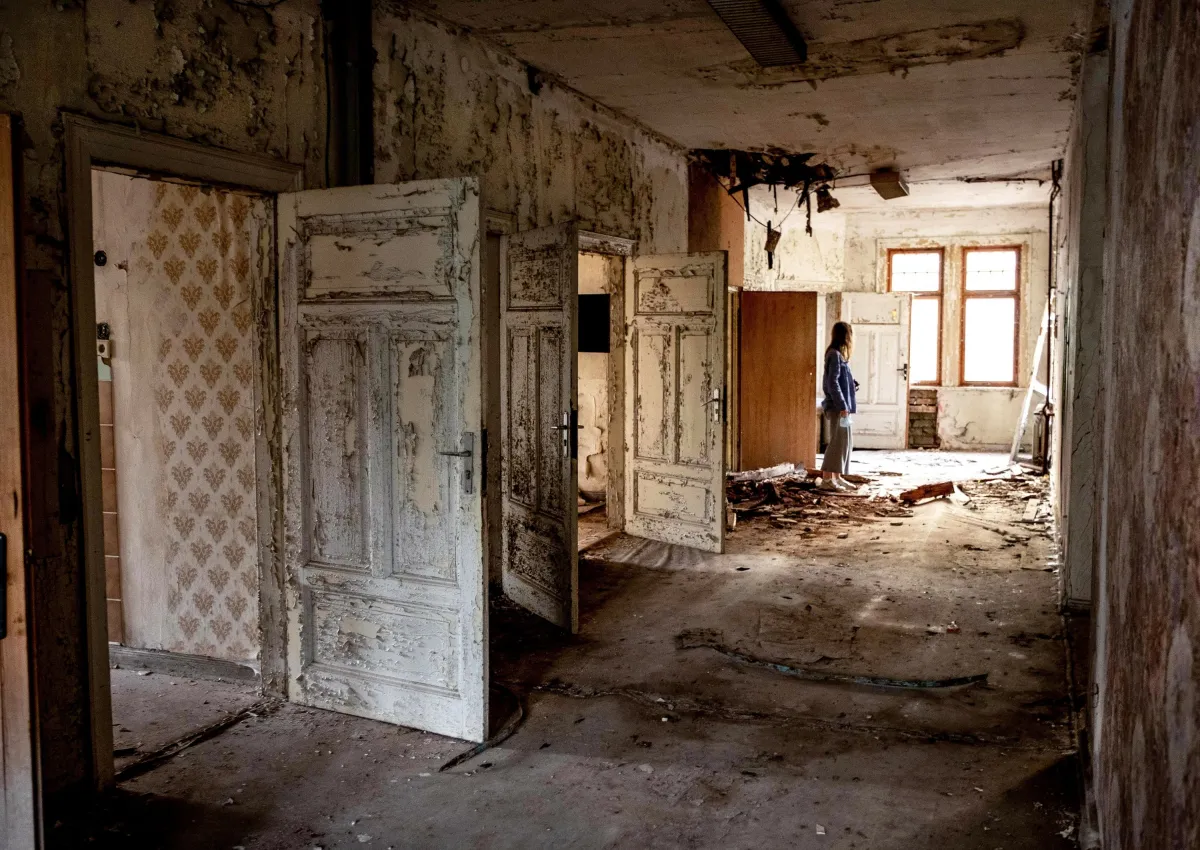 Photo: East Germany, via storage.googleapis.com
This transformation didn't happen overnight. It began with reasonable requests: report genuine criminal activity, watch for foreign spies, help maintain public order. The Stasi understood something about human psychology that every successful surveillance state has discovered—most people want to be good citizens, and the definition of good citizenship can be gradually expanded.
The Ancient Precedent
Sparta pioneered systematic civilian surveillance twenty-five centuries before East Germany. The krypteia—young Spartan warriors conducting secret monitoring of the helot population—represented only the official layer. Spartan citizens were expected to report on each other's adherence to state-mandated lifestyle requirements: physical fitness, military readiness, proper child-rearing, appropriate consumption levels.
Spartan surveillance served explicit purposes: maintaining military supremacy and preventing helot rebellions. Citizens understood the system and generally supported it. Archaeological evidence suggests Sparta achieved remarkable internal stability for over three centuries. It also suggests that Spartan economic innovation essentially ceased during this period, and that population decline eventually made the surveillance system unsustainable.
The Mechanics of Normalization
Every successful informer culture has followed similar developmental patterns. Initial surveillance focuses on genuinely threatening activities—foreign espionage, violent crime, armed rebellion. Citizens support these efforts because the targets seem obviously dangerous and the methods seem proportionate.
Gradually, the definition of threatening activity expands. Economic crimes join violent ones. Political dissent becomes equivalent to foreign espionage. Private moral failings become public security issues. At each stage, the expansion seems logical to those implementing it and reasonable to many citizens experiencing it.
The psychological mechanism involves what researchers now call "moral licensing"—once people have established themselves as good citizens by reporting obvious wrongdoing, they become more willing to report ambiguous cases to maintain their positive self-image. The Soviet Union documented this phenomenon extensively in internal security reports.
The American Experience
The United States has experimented with civilian surveillance networks during periods of perceived crisis. World War I brought the American Protective League, which recruited 250,000 volunteers to monitor fellow citizens for disloyalty. World War II created block wardens responsible for reporting suspicious activity in their neighborhoods. The Cold War produced informal networks of citizens watching for communist influence in schools, unions, and entertainment.
Each program was presented as temporary emergency response to genuine threats. Each was staffed largely by volunteers who believed they were performing patriotic duty. Each left detailed records of its effects on social trust and community cohesion—effects that persisted long after the programs officially ended.
Post-9/11 initiatives like "See Something, Say Something" represent the latest iteration of this recurring pattern. Whether current programs will follow historical precedents toward expansion and normalization remains an open question, but the psychological mechanisms appear unchanged.
The Economic Consequences
Surveillance states consistently produce measurable economic effects. Innovation declines as potential entrepreneurs fear their activities might be misinterpreted. Productivity falls as workers spend time and energy monitoring colleagues rather than focusing on tasks. Trust-dependent transactions become more difficult and expensive.
East Germany's economic stagnation wasn't solely due to socialist policies—West Germany had extensive social programs without comparable economic decline. The surveillance apparatus itself created drag on economic activity. Citizens spent enormous amounts of time and energy navigating social relationships that might suddenly become dangerous.
Similar patterns appear throughout history. Venice's Council of Ten, which relied heavily on citizen informants, coincided with Venice's decline as a commercial power. Imperial China's baojia system of mutual surveillance correlated with periods of economic stagnation and technological regression.
The Psychology of Participation
Why do ordinary citizens participate in surveillance systems that ultimately harm their own societies? The historical record suggests several consistent motivations.
Some participants genuinely believe they're protecting their communities. Others enjoy the sense of importance that comes from possessing secret information. Many simply want to avoid becoming targets themselves—in surveillance states, the safest position is often that of active collaborator.
Most participants, however, seem motivated by a desire to be good citizens combined with gradual redefinition of what good citizenship requires. The Stasi's files reveal that most informants weren't malicious or calculating—they were ordinary people trying to do what they believed was right according to the standards their society had established.
The Endpoint
No society in recorded history has maintained extensive civilian surveillance networks indefinitely. Eventually, the economic costs become unsustainable, or social trust collapses to the point where the system stops functioning, or external pressures force abandonment of surveillance in favor of more productive activities.
The Soviet Union's surveillance apparatus consumed enormous resources that might otherwise have been invested in economic development. East Germany's system created such pervasive mistrust that normal social and economic relationships became nearly impossible. Even Sparta eventually had to choose between maintaining surveillance and maintaining military effectiveness—it couldn't afford both.
Modern Implications
Technological surveillance differs from human surveillance in important ways—algorithms don't have personal motivations, and data collection can be automated rather than requiring active citizen participation. But the fundamental dynamics appear unchanged: societies that normalize monitoring of ordinary citizens for their own safety consistently discover that the cure becomes worse than the disease.
The historical record doesn't prove that current surveillance programs will follow ancient patterns. Modern democratic institutions and legal protections may prevent the expansion and normalization that characterized previous surveillance states. But it does suggest that human psychology under surveillance conditions hasn't fundamentally changed.
People still want to be good citizens. Authorities still find compelling reasons to expand surveillance. Communities still suffer when neighbors can't trust each other. The technology has improved dramatically. The underlying human dynamics appear essentially unchanged.
The lesson from five thousand years of civilian surveillance isn't that monitoring fellow citizens is always wrong—sometimes genuine threats require collective vigilance. The lesson is that surveillance systems have their own internal logic that tends toward expansion, and that human psychology makes this expansion feel reasonable and necessary to those participating in it, even when historical precedent suggests it will ultimately damage the society it claims to protect.