
The Roman Template
In 301 CE, Emperor Diocletian issued the Edict on Maximum Prices, a comprehensive attempt to control food costs throughout the Roman Empire. The policy emerged from what seemed like reasonable logic: military campaigns required reliable provisioning, and market fluctuations threatened the stability of army supply lines. The solution appeared straightforward—set maximum prices for agricultural products and require farmers to sell fixed quotas to imperial authorities at those prices.
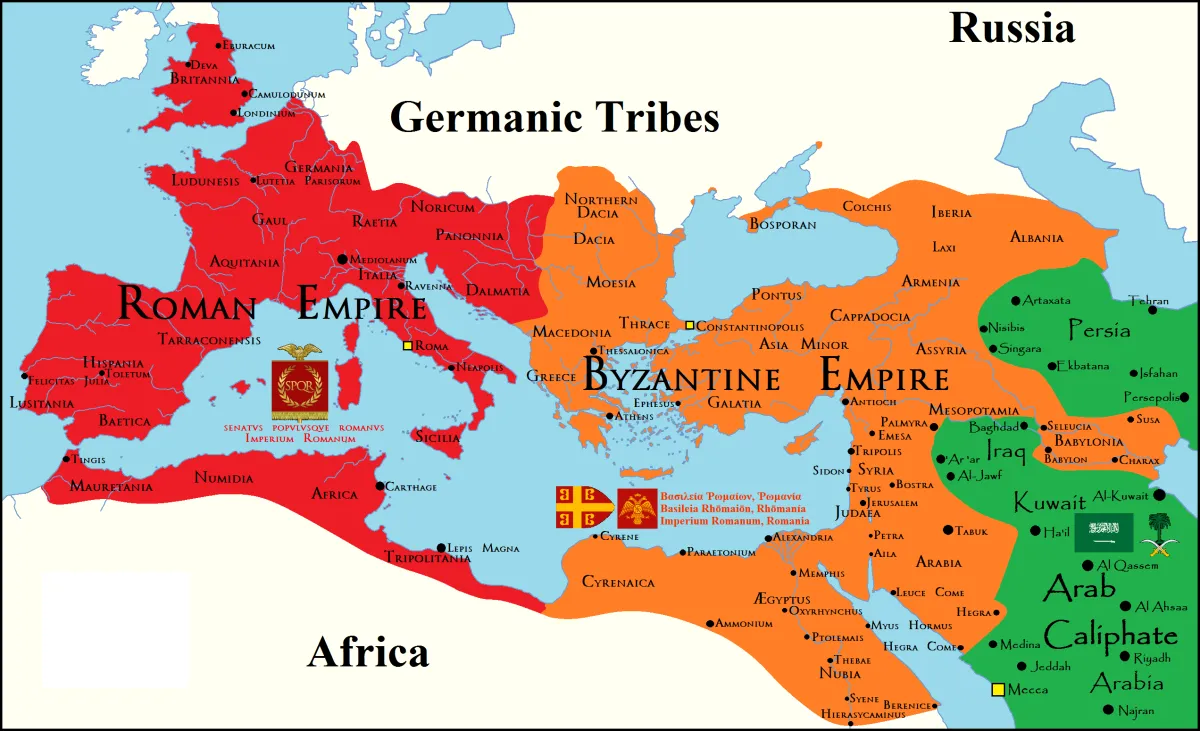 Photo: Roman Empire, via i.redd.it
 Photo: Emperor Diocletian, via c8.alamy.com
The results followed a pattern that would repeat with mechanical precision across cultures and centuries. Within two years, farmers throughout the empire began abandoning their land rather than produce crops at artificially suppressed prices. Agricultural output plummeted, creating genuine scarcity that made the original price controls even more necessary in the minds of imperial administrators.
By 305 CE, vast regions of what had been the empire's most productive agricultural areas lay fallow, their former inhabitants having fled to cities or joined barbarian tribes beyond imperial control. The army, ironically, found itself competing with civilian populations for increasingly scarce food supplies, while the very policies designed to ensure military provisioning had destroyed the agricultural base that made such provisioning possible.
Diocletian's own administrative records, preserved in fragmentary form, reveal the psychological mechanism at work. Imperial officials genuinely believed that farmer resistance stemmed from greed rather than economic necessity. They could not understand why rational producers would refuse to grow crops at prices that seemed adequate to urban administrators who had never worked agricultural land.
This was humanity's first well-documented experiment in subordinating food production to state priorities, and it established a template that subsequent civilizations would follow with depressing consistency.
The Psychology of Appropriation
The human psychology driving agricultural commandeering has remained constant across five millennia. Leaders facing military or ideological pressures consistently convince themselves that food production represents an underutilized resource that can be optimized through central planning and political will.
This conviction stems from a fundamental misunderstanding of agricultural economics. Farming appears simple to non-farmers—seeds go in the ground, crops come out, surely the process can be rationalized and improved through intelligent oversight. The complex relationships between soil conditions, weather patterns, market incentives, and farmer expertise remain invisible to administrators who view agriculture as a mechanical process rather than a skilled profession.
The pattern repeats because each generation of leaders encounters the same psychological temptation. Faced with immediate political or military needs, they see agricultural resources that appear to be inefficiently allocated by market mechanisms. The solution seems obvious: direct those resources toward higher priorities through government coordination.
What they cannot see—and what no amount of historical evidence seems able to teach them—is that agricultural production depends on knowledge, incentives, and relationships that central planning inevitably destroys.
The Soviet Amplification
Stalin's collectivization campaigns of the 1930s represented the most systematic application of agricultural commandeering in human history. Soviet planners, armed with Marxist economic theory and convinced of their ability to improve upon traditional farming methods, implemented policies that followed the Roman template with mathematical precision.
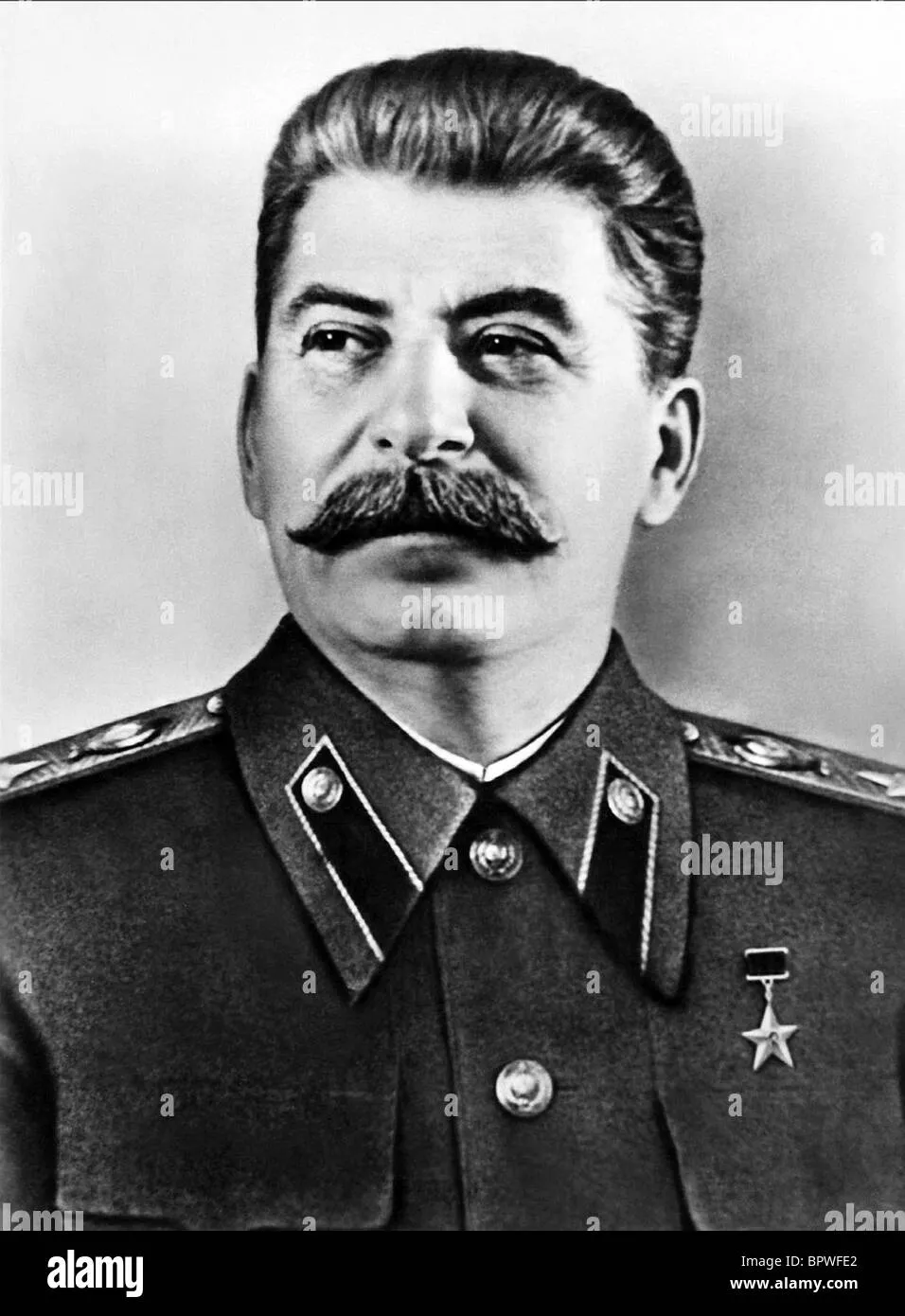 Photo: Stalin, via c8.alamy.com
The stated logic was impeccable: individual peasant farms were inefficient relics of feudalism that wasted resources through duplication and prevented the application of modern scientific methods. Collective farms would enable mechanization, rational planning, and optimal resource allocation while freeing surplus agricultural labor for industrial development.
The implementation followed the familiar script. Agricultural quotas were set based on theoretical yields rather than actual soil conditions or weather patterns. Farmers who resisted collectivization were classified as kulaks and either executed or deported to labor camps. Traditional agricultural knowledge, accumulated over generations, was dismissed as superstition incompatible with scientific socialism.
The results validated every historical precedent. Within three years, agricultural production collapsed throughout the Soviet Union's most productive regions. The Holodomor in Ukraine alone killed between three and seven million people, while similar famines devastated Kazakhstan, the North Caucasus, and other agricultural areas.
Soviet administrative records from this period, released after the collapse of the USSR, reveal the same psychological dynamics that had operated in Roman times. Party officials genuinely believed that resistance to collectivization stemmed from bourgeois consciousness rather than practical agricultural concerns. They could not understand why eliminating private property rights would reduce farmer incentives to maintain soil quality or invest in long-term improvements.
The Chinese Iteration
Mao's Great Leap Forward (1958-1962) demonstrated how the agricultural commandeering template could be adapted to different cultural contexts while producing identical results. Chinese Communist Party officials, convinced that revolutionary enthusiasm could overcome natural limitations, implemented policies that subordinated food production to ideological goals with characteristic thoroughness.
The People's Communes system eliminated private agricultural plots and required farmers to meet production quotas set by party officials rather than agricultural experts. Traditional farming techniques were abandoned in favor of methods promoted by ideologically reliable cadres, regardless of their effectiveness in local conditions.
Most catastrophically, farmers were required to participate in backyard steel production schemes that removed them from agricultural work during critical planting and harvesting periods. The logic seemed sound to party planners: China could simultaneously achieve agricultural and industrial development through coordinated effort and revolutionary will.
The famine that resulted killed between 15 and 45 million people, making it possibly the deadliest in human history. As with previous iterations, the disaster stemmed not from natural causes but from policies that systematically destroyed the knowledge, incentives, and relationships that effective agriculture requires.
Party documents from this period, available in Chinese archives, show the same psychological patterns documented in Roman and Soviet sources. Officials convinced themselves that reports of agricultural problems represented political resistance rather than practical warnings. They could not acknowledge that their theoretical understanding of farming might be inadequate to replace the accumulated expertise of generations of peasant farmers.
The Cambodian Extreme
The Khmer Rouge's agricultural policies (1975-1979) pushed the commandeering template to its logical extreme. Pol Pot's regime, convinced that Cambodia could achieve agricultural self-sufficiency through pure ideological commitment, eliminated money, markets, and private property while forcing the entire population into collective agricultural labor.
The psychological dynamics were identical to those documented in previous cases, but amplified by revolutionary fanaticism. Khmer Rouge cadres believed that traditional agricultural knowledge represented feudal thinking that prevented optimal resource utilization. They implemented farming quotas based on ideological conviction rather than soil science, weather patterns, or practical experience.
The results followed the established pattern with horrifying efficiency. Agricultural production collapsed within months, creating famines that killed approximately two million people—roughly one-quarter of Cambodia's population. The regime's response was to increase quotas and eliminate anyone suspected of sabotaging agricultural production, creating a feedback loop that accelerated both agricultural collapse and mass death.
Surviving Khmer Rouge documents reveal the same psychological mechanism that had operated in Rome, the Soviet Union, and China. Officials genuinely believed that agricultural problems stemmed from insufficient revolutionary commitment rather than flawed policies. They could not see that their attempts to optimize food production were systematically destroying it.
The American Warning Signs
Contemporary American agricultural policy exhibits several characteristics that historians associate with early-stage subordination of food production to political priorities. Farm consolidation has created unprecedented concentration of agricultural decision-making, while environmental regulations increasingly treat farming as an industrial process to be optimized rather than a complex ecological system requiring local expertise.
The psychological dynamics are disturbingly familiar. Policy makers convinced of their ability to improve upon traditional farming methods implement regulations based on theoretical models rather than practical agricultural experience. When farmers resist or report problems, their concerns are dismissed as special interest pleading rather than legitimate warnings about policy consequences.
Recent debates about sustainable agriculture, carbon sequestration, and climate change mitigation have introduced explicitly ideological elements into agricultural policy that echo the patterns documented in previous civilizational collapses. The conviction that farming should serve broader social goals beyond food production represents the same mindset that produced famines in Rome, the Soviet Union, China, and Cambodia.
The Structural Inevitability
What makes agricultural commandeering so persistent across cultures and centuries is that it emerges from basic human psychology interacting with political necessity. Leaders facing immediate pressures consistently view agricultural resources as underutilized assets that can be redirected toward higher priorities through intelligent planning.
This perception stems from agriculture's apparent simplicity when viewed from outside the farming community. The complex relationships between soil conditions, weather patterns, market incentives, and accumulated expertise remain invisible to administrators who encounter agriculture only as statistics on government reports.
The historical pattern suggests that no political system has successfully avoided this temptation when faced with sufficient pressure. Democratic societies prove as susceptible as authoritarian ones, though the mechanisms differ. Market-based economies can subordinate food production to political goals just as effectively as command economies, though the process typically takes longer and involves different justifications.
The Price of Patterns
Every society that has implemented systematic agricultural commandeering has followed the same trajectory: initial confidence in the ability to optimize food production through central planning, farmer resistance to artificially imposed constraints, declining agricultural output as traditional knowledge and incentives are destroyed, genuine scarcity that seems to justify even more aggressive intervention, and finally famine as the agricultural base collapses entirely.
The United States currently exhibits several early-stage characteristics of this pattern: increasing regulatory complexity that treats farming as an industrial process, growing political pressure to subordinate agricultural decisions to environmental and social goals, and declining numbers of independent farmers as consolidation concentrates decision-making in fewer hands.
The historical record suggests that this trajectory, once established, proves remarkably resistant to correction. The same officials who would need to reverse course are typically those most invested in the policies that created the problems, while the farmers who understand the practical consequences often lack political influence to change policy direction.
Five thousand years of data points toward an uncomfortable conclusion: societies that subordinate food production to political priorities consistently destroy their agricultural base and experience mass starvation. The pattern has held across every culture, political system, and historical period in which it has been attempted.
The question for contemporary Americans is not whether this pattern will continue, but whether existing political and economic institutions can recognize and reverse course before the historical template completes another iteration.
The seeds are planted. The harvest remains to be determined.