What Lasts: The Civilizations That Chose Pipes Over Pyramids
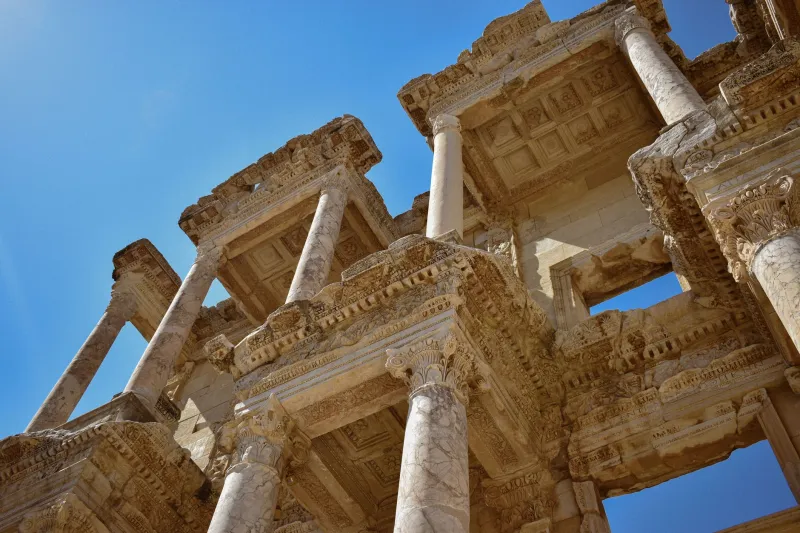
The Roman Colosseum draws more than seven million visitors a year. The Cloaca Maxima, Rome's ancient sewer system, draws almost none. Yet the historical record is unambiguous about which of these two engineering projects was more responsible for Rome's longevity as a functioning civilization. The sewer came first, by several centuries. The Colosseum came later, at a moment when Rome was already beginning to consume more than it produced.
This is not a coincidence. It is a pattern. And it repeats across the full five-thousand-year record of organized human society with a consistency that should trouble anyone currently making decisions about where public resources go.
The Visibility Problem
Human beings respond to what they can see. This is not a character flaw; it is a cognitive baseline, documented extensively in behavioral research and confirmed, at far greater scale, by the entire historical record. Political leaders who build visible monuments generate immediate, legible evidence of accomplishment. Leaders who repair aqueducts, maintain road networks, or invest in communication infrastructure generate results that are distributed across time and population in ways that resist easy attribution.
The incentive structure this creates has been consistent across every political system humanity has devised. Pharaohs built temples. Emperors built triumphal arches. Modern politicians cut ribbons at stadiums. The underlying psychology is identical: visible construction creates a specific kind of political credit that invisible maintenance cannot replicate, regardless of which investment actually serves the population better.
The historical data on this trade-off is extensive and one-directional. Societies that prioritized functional infrastructure over symbolic construction consistently demonstrated greater resilience across the variables that matter most: population stability, economic continuity, and the capacity to absorb external shocks.
The Achaemenid Lesson
The Persian Empire under Cyrus and his immediate successors built one of the ancient world's most sophisticated road networks — the Royal Road, stretching roughly 1,700 miles from Sardis to Susa. The system was not primarily a military asset, though it served that purpose. It was a communication and logistics network that allowed the empire to function as an integrated economic unit rather than a collection of taxable territories.
Later Persian rulers, facing the political pressures that accompany imperial maturity, shifted investment toward the ceremonial complexes at Persepolis. The architecture was extraordinary. The administrative logic was sound — Persepolis projected imperial authority in a language every subject culture could read. But the maintenance of the road network, the irrigation systems, and the relay stations that had made Persian governance functional was increasingly deferred.
When Alexander arrived, he inherited a road network in partial decay and ceremonial infrastructure in excellent condition. He burned Persepolis. He used the roads.
The Roman Engineering Paradox
Rome presents the most thoroughly documented case study in the tension between visible and invisible infrastructure investment, precisely because Roman recordkeeping was unusually systematic and because the empire's decline has been analyzed by historians across twenty centuries.
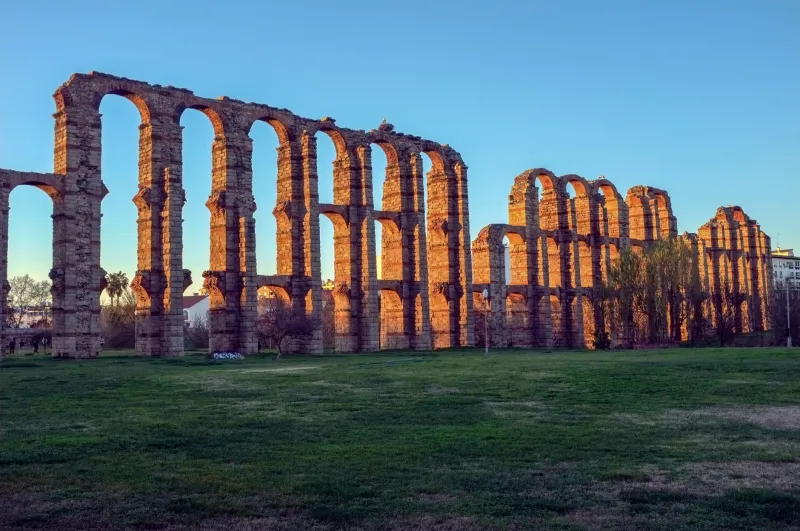
The Roman aqueduct system at its peak delivered an estimated 300 gallons of water per person per day to the city of Rome — a figure that most American cities did not match until the late nineteenth century. This was not an accident of geography. It was the product of sustained, deliberate investment in engineering that was, by the standards of the ancient world, almost entirely invisible. The aqueducts ran underground for most of their length. Their maintenance required constant expenditure with no ceremonial return.
The period of Rome's greatest monumental construction — the Flavian Amphitheater, Trajan's Column, the Pantheon in its current form — coincides with a period of substantial deferred maintenance on the hydraulic infrastructure that had made Roman urban life possible. Historians continue to debate causation versus correlation. The sequence, however, is not disputed.
The Song Dynasty Data Point
China's Song dynasty, which governed from 960 to 1279, represents perhaps the clearest historical case for the long-term value of investment in functional over symbolic infrastructure. The Song state invested heavily in canal networks, granary systems, and paper-based communication infrastructure at a scale that had no contemporary parallel anywhere in the world.
The dynasty did not build for spectacle. Its architectural legacy is modest compared to the Tang dynasty that preceded it or the Ming dynasty that followed. What the Song built instead was a logistics network capable of moving grain from surplus regions to deficit regions with sufficient speed to prevent the famines that had destabilized every previous Chinese dynasty during drought cycles.
The Song survived 319 years — longer than any dynasty in Chinese history that attempted comparable territorial control. When it finally fell, it fell to the Mongols, who were by any reasonable assessment an existential military threat that no infrastructure investment could have neutralized. The Song did not collapse from within. It was conquered from without. The distinction matters.
What Modern Leaders Are Actually Building
The contemporary United States presents a dataset that future historians will find instructive. The American Society of Civil Engineers has graded the nation's infrastructure at a C-minus — a score that reflects decades of investment prioritized toward visible projects over maintenance of existing systems. The interstate highway network, built between the 1950s and 1970s, was the largest public works program in American history. Its maintenance backlog now runs into the hundreds of billions of dollars.
Meanwhile, the political incentive structure that Roman emperors would have recognized immediately continues to function as it always has. Ribbon cuttings on new construction generate press coverage. Replacing aging water mains does not. The choice between visibility and function is being made continuously, at every level of American government, by people operating under the same cognitive constraints as every political leader who has ever held office.
The Conclusion the Record Supports
Five thousand years of infrastructure decisions produce a finding that is straightforward to state and apparently very difficult to act upon: the systems that keep populations alive, connected, and economically productive are the systems that resist political credit. They work best when they are never noticed. They fail in ways that are immediately catastrophic and retrospectively obvious.
The civilizations that lasted built things that future archaeologists had difficulty finding. The civilizations that fell built things that tourists visit today. This is not a perfect correlation, and the historical record contains exceptions that deserve serious analysis. But as a general pattern, it is about as robust as the deep record gets.
What any given society chooses to build, and what it chooses to maintain, is one of the most reliable indicators of what it actually values — as opposed to what it says it values. The record on this question goes back five thousand years. The answer has not changed.