The Weight of Silver and the Weight of Truth
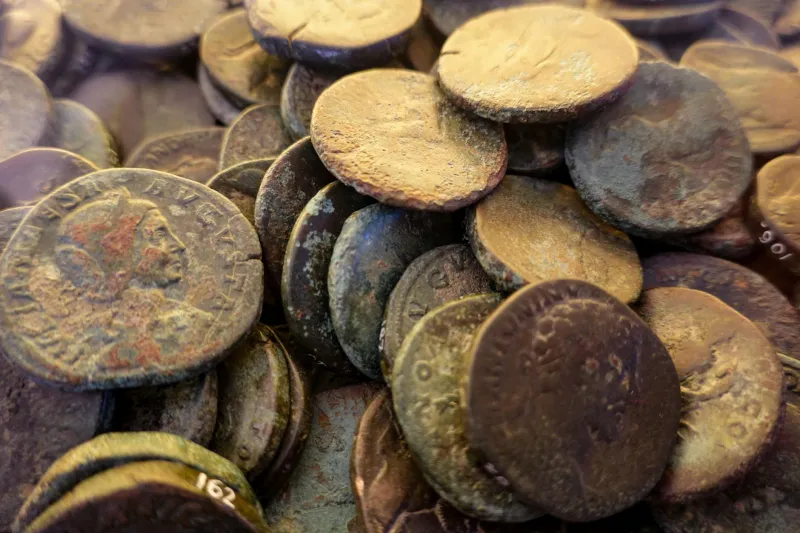
In 64 AD, Roman citizens could purchase a day's worth of bread with a single denarius containing 98% silver. By 268 AD, that same denarius contained less than 5% silver, yet Roman law still demanded it be accepted at face value. Citizens who refused the debased coins or who publicly questioned their worth faced charges of treason against the state.
This pattern—currency debasement followed by legal punishment for acknowledging reality—represents one of history's most consistent governmental behaviors. The archaeological record shows us the coins. The legal texts show us the penalties. The economic outcomes show us the consequences. Human psychology, it seems, has remained remarkably constant across millennia.
The Mechanics of Monetary Destruction
Every major civilization has discovered the same tempting solution to fiscal pressure: reduce the precious metal content of coins while maintaining their legal purchasing power. The Byzantine Empire mixed copper into its gold solidi. Medieval European monarchs routinely "called in" silver coins to remint them with less silver content. Chinese dynasties printed paper money until it became worthless, then returned to metal, then repeated the cycle.
 Photo: Byzantine Empire, via smarthistory.org
The process follows an observable pattern. Initial debasement occurs gradually—a few percentage points of silver removed here, slightly more copper added there. Citizens adapt, prices adjust marginally upward, and life continues. But the precedent has been established. The next fiscal crisis brings more dramatic debasement. Then more. Eventually, the gap between official proclamations and street-level economic reality becomes impossible to ignore.
The Criminalization of Economic Truth
What makes this historical pattern particularly instructive is how consistently governments have prosecuted citizens who acknowledged what was happening. Roman merchants who weighed coins faced accusations of undermining imperial authority. Medieval traders who demanded extra debased coins to equal previous purchasing power were charged with extortion. Weimar Germany prosecuted citizens for "economic sabotage" when they preferred foreign currencies to rapidly depreciating marks.
 Photo: Weimar Germany, via welterbedeutschland.de
The psychology behind these prosecutions reveals something fundamental about human nature in positions of power. Leaders who authorize currency debasement rarely view themselves as thieves. They see themselves as solving urgent problems—funding wars, building infrastructure, maintaining social programs. The citizens who notice and complain become, in this mindset, obstacles to necessary governance rather than victims of theft.
The American Experience
The United States has not escaped this pattern. The Constitution originally defined the dollar as a specific weight of silver. By 1933, gold ownership was criminalized for American citizens. By 1971, the dollar's connection to precious metals was severed entirely. Each step was presented as temporary emergency measure or necessary modernization.
Contemporary Americans live within the world's first purely fiat currency system maintained by military and economic dominance rather than precious metal backing. The historical record suggests this represents either a genuine breakthrough in monetary science or the same old pattern playing out on a larger scale. Five thousand years of precedent lean heavily toward the latter interpretation.
The Unchanging Human Element
What remains constant across cultures and centuries is the human psychology involved. Citizens consistently demonstrate what behavioral economists now call "money illusion"—the tendency to think in nominal rather than real terms. A Roman citizen felt richer receiving 100 debased denarii than 50 pure ones, even when the purchasing power was identical.
Governments consistently demonstrate what might be called "fiscal illusion"—the belief that monetary problems can be solved through monetary manipulation rather than addressing underlying fiscal imbalances. The temporary relief provided by currency debasement creates political incentives to repeat the process, even when historical precedent shows the inevitable outcome.
The Endpoint
No currency in recorded history has survived indefinite debasement. Eventually, citizens lose faith entirely. They begin using foreign currencies, precious metals, or barter systems. The government's monetary authority collapses, often taking the political system with it.
The Roman Empire's currency crisis preceded its political fragmentation. The assignats of revolutionary France became worthless before Napoleon restored monetary stability through conquest and plunder. The Continental dollar's collapse nearly destroyed the American Revolution before foreign loans and taxation provided alternative funding.
 Photo: Roman Empire, via www.worldhistorymaps.info
Lessons From the Deep Record
The complete historical record on currency debasement offers no examples of successful long-term outcomes. Every civilization that began reducing precious metal content in its coins eventually faced monetary collapse. Every government that prosecuted citizens for acknowledging currency debasement eventually lost credibility entirely.
This doesn't mean modern monetary systems are doomed to repeat ancient failures—technological and institutional innovations may have changed the fundamental dynamics. But it does mean that anyone claiming current monetary experiments are unprecedented should explain why five thousand years of contrary evidence no longer applies.
The deeper lesson involves human psychology under stress. When governments face fiscal pressure, they consistently choose the same solution: transfer wealth from citizens to the state through currency manipulation, then criminalize acknowledgment of the transfer. Citizens consistently accept this arrangement until the accumulated damage becomes undeniable.
Understanding this pattern doesn't require taking political positions about current monetary policy. It simply requires acknowledging what the historical record actually shows about human behavior when money, power, and desperation intersect.