After the Confession: What History Actually Does to the People Who Expose It

The popular imagination tends to freeze the whistleblower at the moment of maximum drama: the document handed to the journalist, the testimony delivered before the tribunal, the sealed complaint dropped into the official receptacle. What history actually records is something considerably less cinematic and considerably more instructive — the long, grinding aftermath that follows, in which societies process, punish, rehabilitate, and eventually canonize the same individual they once treated as a criminal.
The throughline across five thousand years of this pattern is not what you might expect. The fate of the truth-teller has almost never been determined by the accuracy of what they revealed. It has been determined almost entirely by whether the institution they challenged survived.
The Mesopotamian Precedent
The oldest documented cases of institutional whistleblowing emerge from Mesopotamian temple economies, where literate scribes occupied a uniquely dangerous position. They possessed both the administrative access to detect fraud and the technical ability to record it. Several cuneiform tablets from the third millennium BCE preserve accounts of scribes who documented irregularities in temple grain distributions — discrepancies between what was recorded as received and what was actually distributed to laborers.
The outcomes varied, but the pattern is recognizable. When the temple administration against which the complaint was lodged remained politically dominant, the scribe who filed the record typically vanished from subsequent administrative rolls. When the administration collapsed — as Mesopotamian political structures frequently did — the same records were sometimes retrieved and the scribe's account incorporated into the successor regime's legitimizing narrative. The truth did not change. The power structure did.
This is the first lesson the deep record offers: rehabilitation is not a moral judgment. It is a political convenience.
Rome's Uncomfortable Informants
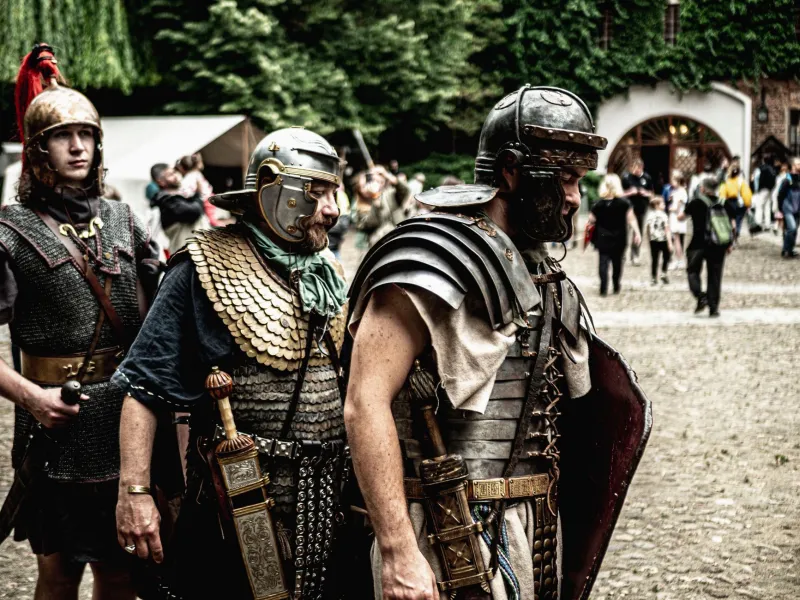
Roman legal culture institutionalized a version of whistleblowing through the delator system, in which citizens could formally accuse officials of corruption or malfeasance. The system produced some genuine accountability. It also produced a class of professional accusers who weaponized the mechanism for personal gain, which had the long-term effect of poisoning the cultural legitimacy of anyone who brought forward damaging institutional information — regardless of whether that information was accurate.
This is the second lesson: societies under pressure do not distinguish carefully between the person who exposes genuine wrongdoing and the person who exploits the machinery of exposure. Both become, in the public imagination, the same archetype. Both are treated with the same mixture of utility and contempt.
The Roman Senate's response to inconvenient disclosures during the late Republic followed a recognizable sequence. Initial suppression. Selective prosecution of the messenger. Eventual acknowledgment, often posthumous, that the underlying information was accurate. The senators who exposed Caesar's consolidation of power were not vindicated while Caesar lived. Several were not vindicated while Rome remained an empire.
The English Reformation's Paper Trail
The dissolution of the English monasteries under Henry VIII generated a remarkable documentary record of institutional exposure. Commissioners sent to evaluate monastic houses produced reports — some genuine, some almost certainly fabricated or exaggerated to serve Crown policy — documenting corruption, financial mismanagement, and moral irregularities. The individuals who produced the most damaging reports were rewarded in the short term. Several were destroyed in the medium term, when the political calculus shifted and proximity to the dissolution became a liability rather than an asset.
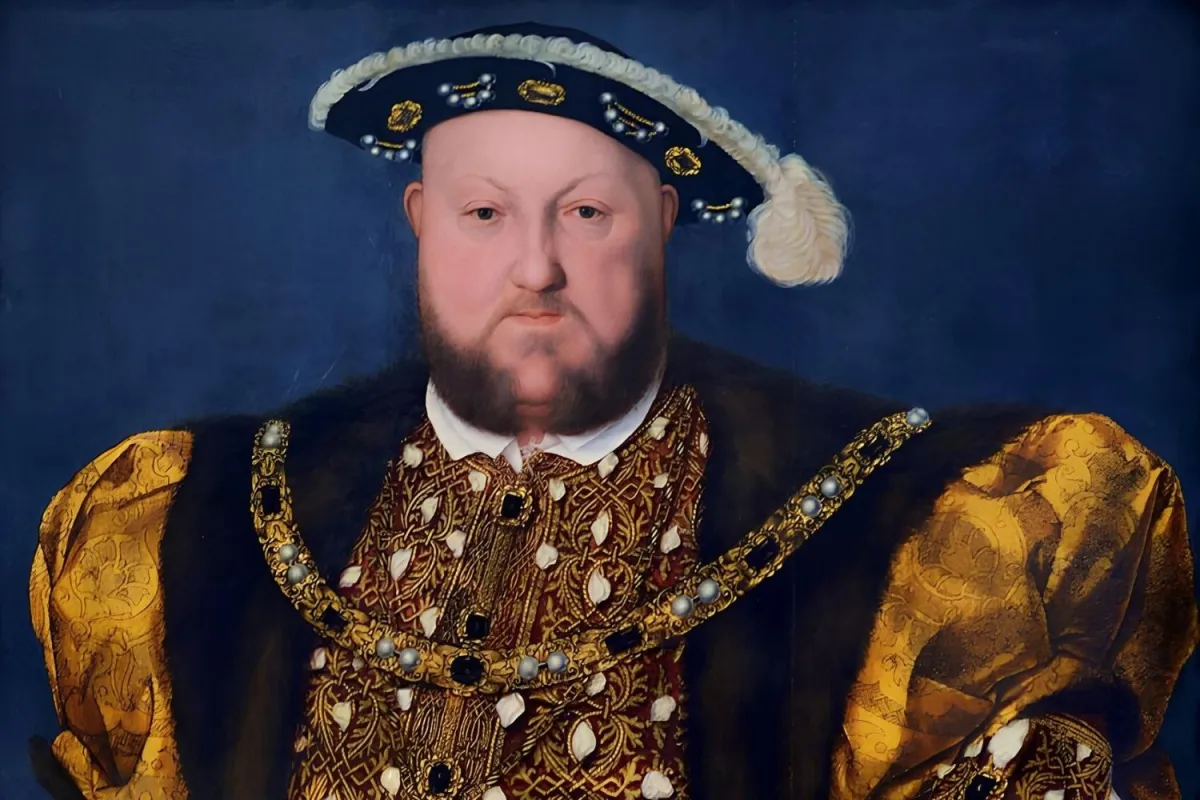 Photo: Henry VIII, via facts.net
Thomas Cromwell, who architected the entire machinery of ecclesiastical dismantling, was executed in 1540. The apparatus he built survived him by centuries. The man who understood it best was eliminated precisely because that understanding had become dangerous.
 Photo: Thomas Cromwell, via morningstaronline.co.uk
The Pentagon Papers and the Long Game
Daniel Ellsberg leaked the Pentagon Papers in 1971 and spent the following years under federal indictment, facing charges that could have resulted in more than a century in prison. The charges were eventually dismissed — not because the government concluded he had acted righteously, but because the Nixon administration's conduct in pursuing him had been so egregiously illegal that the case became legally untenable.
 Photo: Daniel Ellsberg, via static01.nyt.com
Ellsberg was not vindicated. The case against him collapsed. These are meaningfully different outcomes.
The distinction matters because it illustrates the third lesson from the deep record: the legal system and the moral system operate on different timelines, and conflating them produces a distorted picture of what actually happens to people who disclose damaging institutional information. Ellsberg lived long enough to be celebrated. Most of history's whistleblowers did not. The archive preserves the famous cases. It is largely silent about the ones who were simply destroyed quietly.
The Rehabilitation Mechanism
What triggers the rehabilitation of a whistleblower is almost always the collapse or discrediting of the institution they challenged — not the passage of time, not the weight of evidence, not the moral evolution of the society in question. When the institution survives, the whistleblower remains, at best, a complicated figure and, at worst, a cautionary tale. When the institution falls, the whistleblower is retroactively transformed into a prophet.
This mechanism has profound implications for how we interpret the historical record. The whistleblowers we know about — the ones whose stories survived and were eventually told approvingly — are a heavily selected sample. They are the ones whose targets did not survive. The full population of institutional truth-tellers includes an enormous number of individuals whose names were expunged along with the records they tried to protect.
What the Pattern Reveals
The consistent feature across five thousand years is not the courage or the cowardice of any individual whistleblower. It is the institutional logic that determines their fate. Civilizations do not punish truth-tellers because they hate truth. They punish truth-tellers because disclosure is a threat to the organizational coherence that any functioning power structure requires.
The same logic that prosecutes the insider today will canonize them tomorrow — provided the institution they challenged no longer exists to object. The deep record does not offer a more comforting conclusion than that. What it offers is clarity: the rehabilitation of the whistleblower is not evidence that justice eventually prevails. It is evidence that power eventually changes hands.
For Americans watching the current generation of institutional disclosures work their way through the legal system and the public imagination, the historical pattern offers a specific and uncomfortable prediction. The question of which current whistleblowers will be celebrated by future generations has a determinable answer. It is not the one that depends on the quality of their evidence.