The Connector's Curse: What History Teaches About Societies That Destroy Their Own Networks

The Middleman's Function
In 1915, the Ottoman Empire began systematically eliminating Armenian merchants who had served for centuries as commercial intermediaries between Turkish, Kurdish, and Arab communities. The Armenians spoke multiple languages, understood diverse customs, and maintained trading relationships that crossed ethnic and religious boundaries. To Ottoman officials, they appeared to be profiting from connections they had not created, extracting value without adding obvious worth.
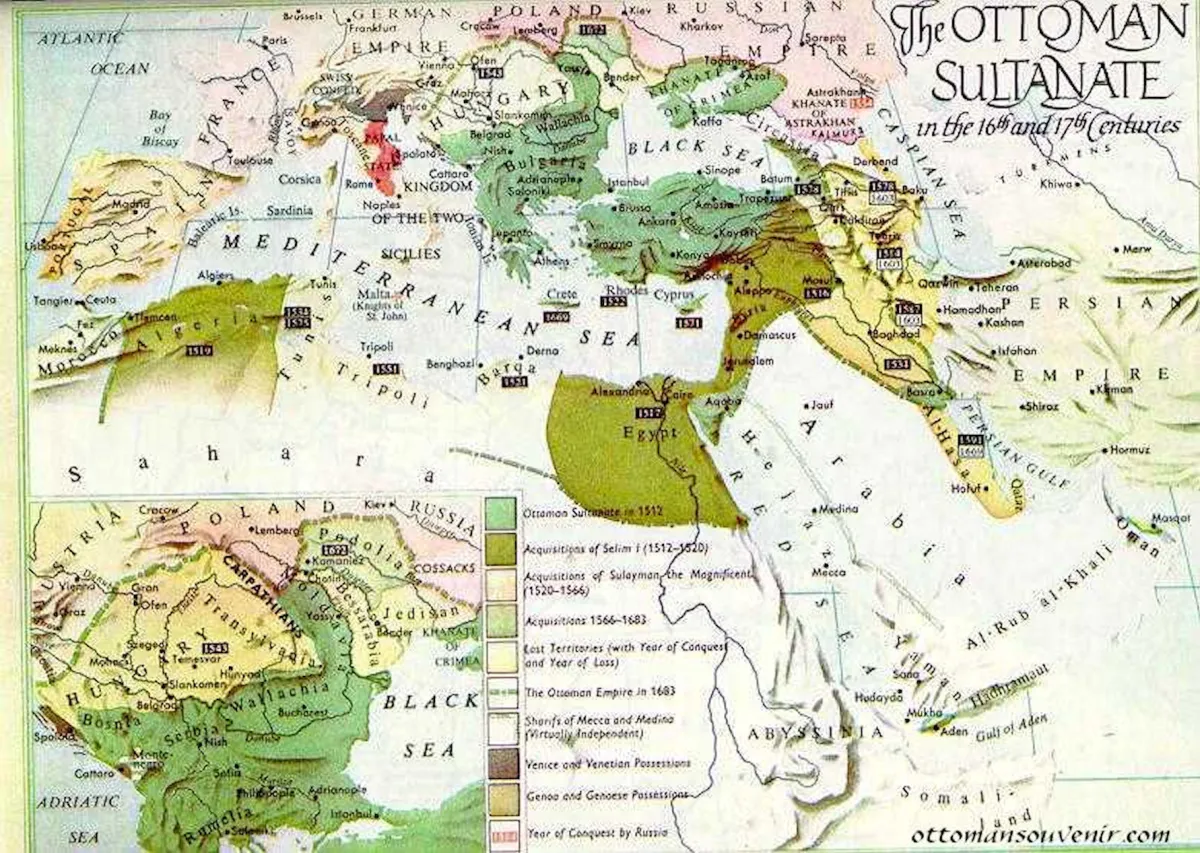 Photo: Ottoman Empire, via globalsecurity.org
The elimination of Armenian traders did not strengthen the Ottoman economy or improve conditions for the remaining population. Instead, it severed commercial networks that had taken generations to establish. Trade routes collapsed, credit systems failed, and regions that had been economically integrated became isolated from each other. The empire's economic decline accelerated, contributing to its eventual dissolution.
This pattern—the identification, elimination, and catastrophic aftermath of middleman removal—has repeated across cultures and centuries with mechanical precision. Human psychology has not changed in five thousand years, and neither has our tendency to misunderstand the function of intermediaries in complex systems.
The Soviet Experiment
The Soviet Union's liquidation of kulaks between 1929 and 1932 represents perhaps the most systematic attempt in history to eliminate agricultural middlemen. Kulaks were relatively prosperous peasants who had accumulated land, livestock, and equipment through market transactions. They served as intermediaries between subsistence farmers and urban markets, providing credit, storage, transportation, and market information to rural communities.
 Photo: Soviet Union, via imgcdn.stablediffusionweb.com
Soviet ideology identified kulaks as exploitative parasites who enriched themselves by controlling resources that should belong to the collective. The solution was dekulakization—the forced removal of kulak families to remote regions and the redistribution of their assets to collective farms.
The results were catastrophic. Agricultural production collapsed, distribution networks failed, and the Soviet Union experienced one of history's most severe famines. The kulaks had not simply been extracting wealth from the agricultural system—they had been providing essential coordination functions that kept the system operating. Their elimination revealed the difference between what intermediaries appeared to do and what they actually did.
The Commercial Intermediary Problem
Medieval Europe experienced similar dynamics when various rulers attempted to eliminate Jewish merchants who served as financial intermediaries. These merchants provided credit, currency exchange, and commercial connections between Christian communities that were forbidden by religious law from engaging in certain financial transactions with each other.
When rulers expelled Jewish communities—as happened repeatedly in England, France, Spain, and other kingdoms—they eliminated not just individual merchants but entire commercial networks. The immediate result was often a temporary influx of seized assets to royal treasuries. The longer-term consequence was economic disruption as credit markets collapsed and trade relationships dissolved.
The pattern was so consistent that some rulers eventually recognized it. When Ferdinand and Isabella expelled Jews from Spain in 1492, they inadvertently transferred a significant portion of Spanish commercial expertise to competing nations, particularly the Ottoman Empire and various Italian city-states that welcomed the refugees.
The Technology Platform Parallel
Contemporary American debates about technology platforms, gig economy intermediaries, and financial brokers follow remarkably similar scripts to these historical episodes. The language has evolved, but the underlying psychology remains unchanged: intermediaries are identified as parasitic entities that extract value without creating it, and their elimination is proposed as a solution to various economic problems.
Consider the ongoing political pressure on companies like Uber, Amazon, and various financial trading platforms. Critics argue that these intermediaries profit by connecting buyers and sellers without adding genuine value to transactions. The proposed solutions—direct regulation, forced restructuring, or outright elimination—mirror approaches that civilizations have attempted repeatedly throughout history.
The historical record suggests caution about these proposals. Intermediaries often provide functions that are invisible until they disappear. Uber drivers and passengers could theoretically connect directly without platform mediation, just as Ottoman communities could theoretically have traded directly without Armenian merchants. But the coordination costs, information asymmetries, and trust problems that intermediaries solve do not disappear when the intermediaries are removed.
The Network Effect
Modern network theory provides vocabulary for understanding what historical societies learned through bitter experience: intermediaries often serve as crucial nodes in complex systems. Their apparent parasitism may actually be payment for coordination services that become visible only when they cease to function.
The elimination of middlemen creates what economists call "disintermediation," but historical examples suggest that this process rarely produces the benefits its advocates expect. Instead, it typically results in system fragmentation, increased transaction costs, and reduced economic efficiency.
The Armenian merchants in the Ottoman Empire were not simply profiting from arbitrary price differences—they were being compensated for language skills, cultural knowledge, risk assessment, and relationship maintenance that enabled trade across ethnic and religious boundaries. When they disappeared, so did the commercial infrastructure they had maintained.
The American Context
The United States has not been immune to this pattern. The Populist movement of the 1890s targeted railroad companies, grain elevators, and commodity exchanges as parasitic intermediaries that exploited farmers. Some of these criticisms were valid—certain intermediaries did abuse their market positions. But the broader anti-intermediary sentiment reflected the same psychology that has appeared throughout history when complex economic systems create visible inequalities.
More recently, the 2008 financial crisis generated similar sentiments toward financial intermediaries, many of whom had indeed engaged in destructive behavior. But the policy responses—increased regulation, forced restructuring, and elimination of certain intermediary functions—have had mixed results that mirror historical patterns. Some genuinely parasitic activities were curtailed, but essential coordination functions were also disrupted.
The Pattern's Persistence
Why do societies repeatedly make this mistake? The historical record suggests several factors. First, intermediary functions are often invisible to outside observers. The work of connecting, translating, coordinating, and maintaining relationships appears less tangible than the work of producing goods or providing direct services.
Second, intermediaries often accumulate wealth and influence that appears disproportionate to their visible contributions. This creates resentment, particularly during periods of economic stress when their prosperity contrasts sharply with general hardship.
Third, the elimination of intermediaries often produces short-term benefits—seized assets, reduced transaction costs, or simplified market structures—that mask longer-term systemic damage.
The Contemporary Warning
The historical pattern suggests that contemporary American debates about intermediaries should proceed with greater awareness of past precedents. This does not mean that all intermediaries are beneficial or that all criticism of intermediary functions is misguided. Some intermediaries do engage in genuine rent-seeking behavior that adds costs without providing value.
But the historical record indicates that societies should be extremely cautious about wholesale elimination of intermediary functions, regardless of how parasitic they appear. The networks that intermediaries maintain often become visible only after they have been destroyed, and rebuilding them can take generations.
Five thousand years of human experience suggest that the impulse to eliminate middlemen is both understandable and dangerous. Understanding this pattern will not eliminate the temptation to repeat it, but it might encourage more careful consideration of what we lose when we destroy the connections that hold our societies together.