Hired Swords and Empty Loyalties: The Long History of Civilizations That Stopped Fighting Their Own Wars
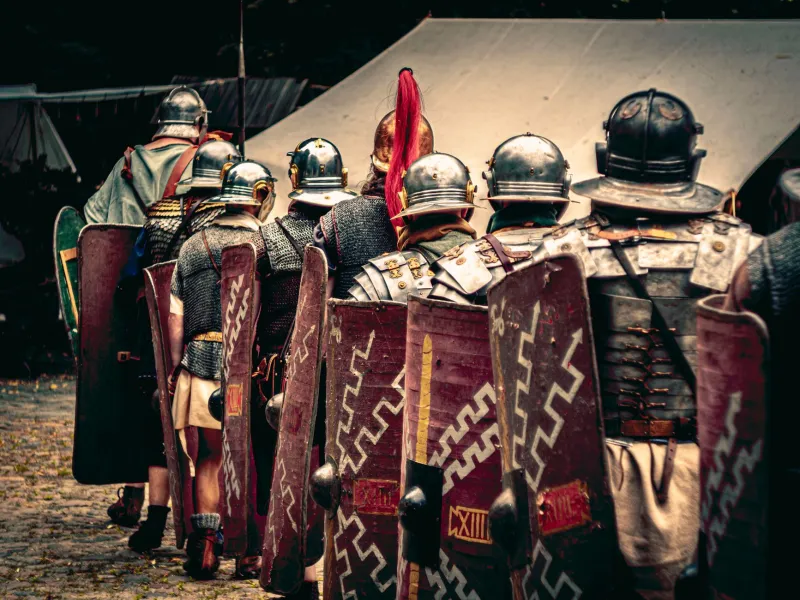
Somewhere between the citizen-soldier who fights because the alternative is losing his farm and the professional who fights because the paycheck clears, something changes in the relationship between a state and its own survival. That change is subtle at first. It looks, in fact, like progress — a more capable force, better trained, more experienced, freed from the inefficiencies of mass conscription. It is only later, usually much later, that the bill arrives.
The bill, when it comes, is not always military defeat. Sometimes it is something quieter and harder to reverse: a civilian population that has lost the psychological habit of identifying its own fate with the fate of the state, and a professional military that has begun to notice the difference.
The Roman Sequence
The transformation of the Roman legions is the case study most historians reach for first, and for good reason. The early Roman army was a property-owning citizen militia. Service was a civic obligation tied to land ownership, and the men who fought were the same men who voted, paid taxes, and had a direct material stake in what Rome decided to do with itself.
By the late second century BCE, that model was already eroding. The Marian reforms of 107 BCE completed the transition: Gaius Marius opened the legions to the landless poor, creating a professional force paid by the state and, critically, loyal to the generals who commanded it rather than to the republic those generals nominally served. The legions that subsequently marched on Rome — Sulla's, Caesar's, Antony's — were not aberrations. They were the logical product of a military whose soldiers had no particular reason to distinguish between the republic's interests and their commander's.
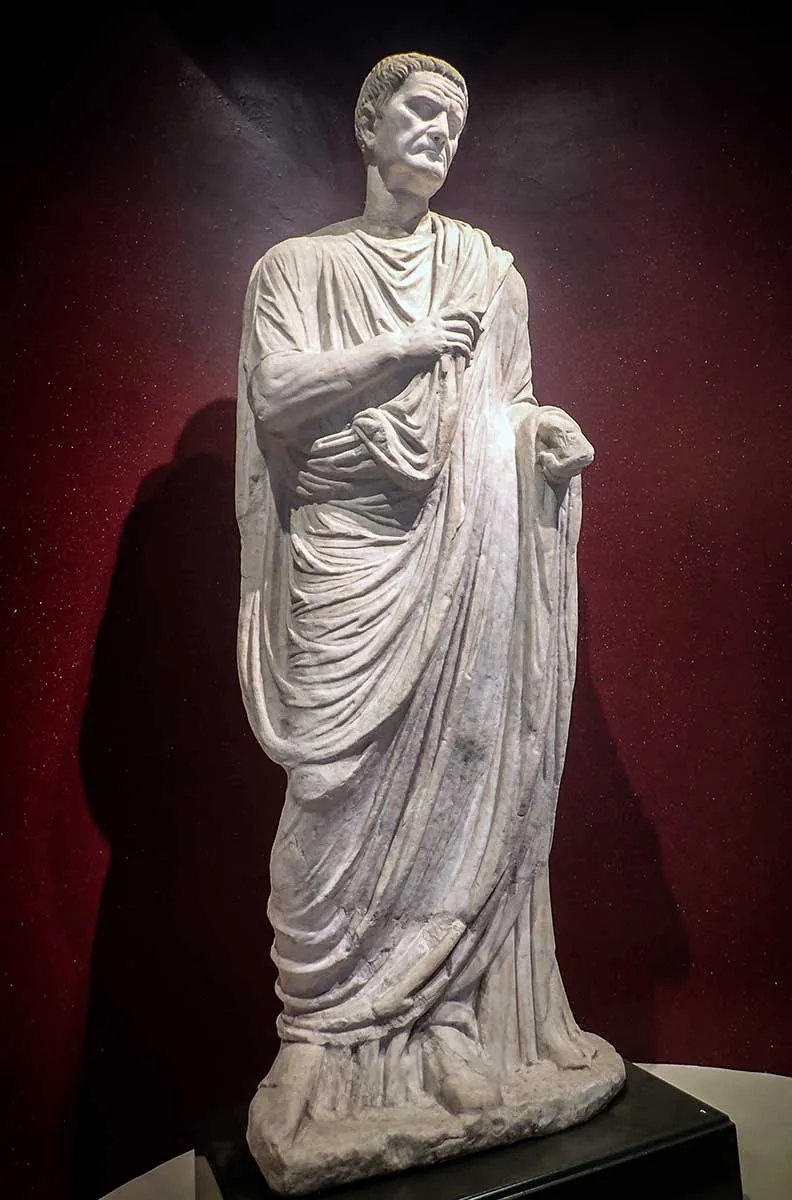 Photo: Gaius Marius, via cdn.thecollector.com
The later empire's reliance on Germanic federates — essentially contracted tribal units fighting under Roman nominal command — extended the same logic further. By the fifth century, the Western Empire was defending itself with forces whose members had no cultural, linguistic, or ancestral connection to Roman civilization. When Odoacer deposed Romulus Augustulus in 476 CE, he was not a foreign conqueror in any conventional sense. He was the commander of Rome's own hired army, collecting on a debt the empire had been accumulating for three centuries.
The Condottieri Problem
Renaissance Italy produced a different version of the same dynamic, compressed into a more legible timeframe. The condottieri were professional military contractors — mercenary commanders who hired out their forces to Italian city-states that had long since abandoned the civic militias of their earlier republican periods. Florence, Venice, Milan, and the Papal States all relied heavily on these men to prosecute their frequent wars against one another.
The arrangement generated a specific pathology that Machiavelli, writing in the early sixteenth century, diagnosed with characteristic bluntness. Because the condottieri were paid by results and had no interest in dying for a city-state they were not citizens of, they developed a strong professional incentive to avoid decisive combat. Wars became elaborate, expensive, and largely inconclusive affairs in which the contractors preserved their capital — meaning their soldiers — while the states that hired them accumulated debt and resolved nothing.
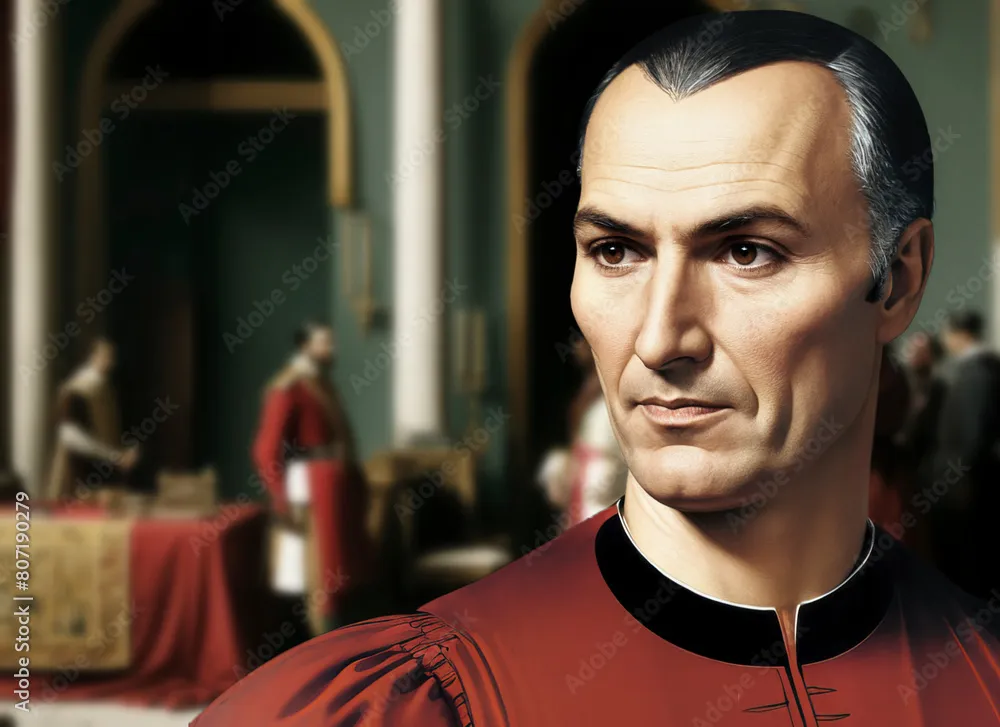 Photo: Niccolò Machiavelli, via as1.ftcdn.net
When genuinely committed foreign armies arrived — the French in 1494, the Spanish shortly after — the condottieri system collapsed almost immediately. The hired professionals, faced with opponents who actually intended to win, discovered that their employers' wars were not worth dying for. The Italian city-states, having outsourced their defense for generations, had no fallback.
Machiavelli's conclusion was stark: a state that cannot field its own citizens in its own defense has, in a meaningful sense, already surrendered its sovereignty. It has simply not yet received formal notification.
The Modern American Condition
The United States abolished the draft in 1973, following Vietnam, and has fielded an all-volunteer force ever since. The military that resulted is, by most technical measures, extraordinarily capable. It is also drawn from a remarkably narrow demographic slice of the American population — disproportionately rural, disproportionately from specific regional and socioeconomic backgrounds, and representing a shrinking percentage of the overall citizenry with any direct military experience.
This is not a criticism of the individuals who serve. It is an observation about what happens to a society when the experience of national defense becomes the province of a distinct subculture rather than a broadly shared civic obligation. Several things follow, all of them documented in the historical record.
First, the civilian population loses its intuitive resistance to military adventurism. Wars become easier to start when the political class knows that the costs will be distributed among a volunteer professional force and their families rather than across the electorate. The Roman Senate became considerably more aggressive in its foreign policy after the Marian reforms removed the propertied citizen-soldiers whose farms and families were directly at stake in every campaign.
Second, the professional military develops institutional interests that diverge from civilian interests. This is not corruption — it is sociology. An institution that exists to fight wars has structural reasons to find wars worth fighting, to define threats in ways that justify its own scale and budget, and to resist the kind of civilian oversight that might constrain its operational preferences.
Third, and most subtly, the social contract between citizen and state quietly renegotiates itself. When defense is someone else's job, so, eventually, is governance. The psychological distance between the professional military and the civilian population it nominally serves is a variable that historical empires have repeatedly discovered they cannot control once it exceeds a certain threshold.
What the Record Warns
None of this suggests that professional militaries are inherently destabilizing or that conscription is the only legitimate model of national defense. The historical record is more nuanced than that. What it does suggest, with considerable consistency, is that the relationship between military professionalization and civic disengagement is not accidental. It is structural.
Societies that outsource their defense do not simply change how they fight. They change who they are — and they rarely notice it happening until the bill is already overdue.