The Price of Mercy: How History's Most Generous Pardons Became Its Most Expensive Mistakes

The Price of Mercy: How History's Most Generous Pardons Became Its Most Expensive Mistakes
There is a category of political decision that looks, at the moment it is made, like wisdom — and reads, a generation later, like catastrophic naivety. Political amnesty belongs firmly in that category. The historical record, stretching back far beyond the familiar examples of the modern West, shows a pattern so consistent it borders on mechanical: a victorious power extends forgiveness to its defeated enemies, stability follows, and then, with a reliability that should disturb anyone paying attention, the forgiven return to finish what they started.
The question history keeps forcing back onto the table is not whether mercy is admirable. It often is. The question is whether it is survivable.
Caesar's Fatal Generosity
Julius Caesar is the ancient world's most celebrated practitioner of what he himself called clementia — deliberate, public, politically calculated mercy toward defeated opponents. After Pharsalus, he pardoned Brutus. After Thapsus, he pardoned dozens of Pompeian officers. He returned property, restored honors, and in several cases handed pardoned enemies positions of renewed authority within the very state they had tried to destroy.
 Photo: Julius Caesar, via c8.alamy.com
The historical consensus has long treated this as evidence of Caesar's political sophistication. It was also, on the Ides of March in 44 BCE, the direct mechanism of his assassination. Brutus, the most symbolically significant of his killers, was a man Caesar had personally spared and promoted. The daggers in the Senate chamber were, in a precise and literal sense, the instruments of clemency turning against its author.
Caesar's successors noticed. Augustus, who understood the lesson his adoptive father had not lived long enough to absorb, was considerably less sentimental about defeated rivals. The Augustan settlement survived. Caesar's did not.
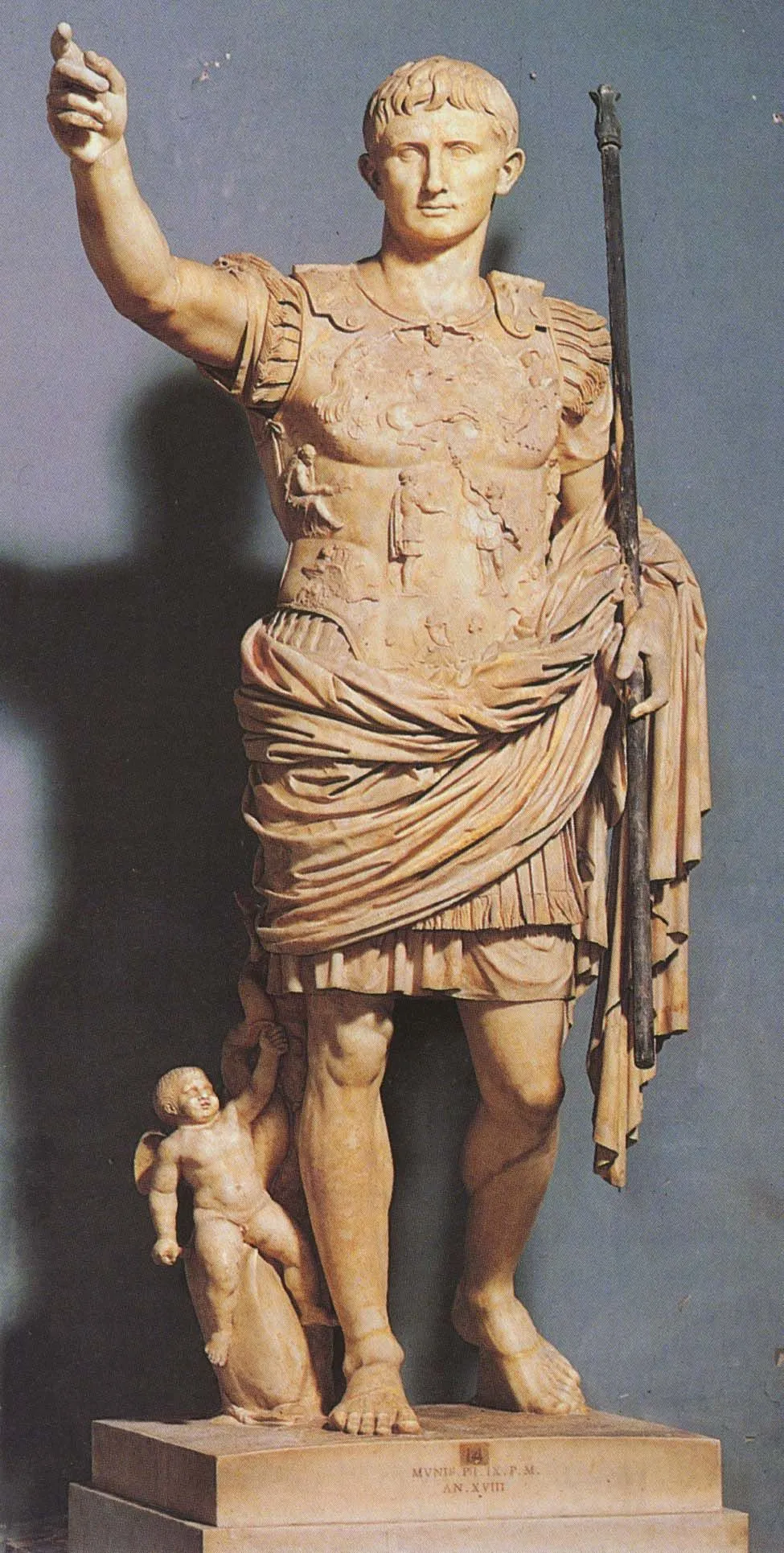 Photo: Augustus, via i.pinimg.com
The Reconstruction Collapse
The American experience after the Civil War offers perhaps the most thoroughly documented example of the amnesty trap in modern history. The political terms extended to former Confederate leadership — rapid restoration of voting rights, the return of confiscated property, the explicit rejection of serious criminal accountability for treason — were justified at the time on grounds of national healing and practical governance.
What followed is now taught in every serious American history course, though its structural implications are rarely foregrounded. Within a decade of Appomattox, the political class that had led the Confederacy had reconstituted itself with sufficient power to systematically dismantle the legal gains of Reconstruction. The Redeemer governments that swept through the South in the 1870s were not a spontaneous popular reaction. They were an organized restoration, led in significant part by the same men — or the direct political heirs of the same men — whom the victorious Union had declined to hold accountable.
The formerly enslaved population that Reconstruction had briefly extended legal personhood to paid the price of that generosity for the better part of a century. The forgiven had not forgotten what they wanted. They had simply waited.
Athens and the Thirty Tyrants
The pattern predates Rome and America by centuries. In 403 BCE, following the brutal oligarchic rule of the Thirty Tyrants, Athens restored its democracy and enacted what is often celebrated as history's first formal political amnesty. The decree prohibited prosecution of most individuals for acts committed under the oligarchy, with limited exceptions.
Athens survived. The democracy was restored and functioned for decades. Historians have rightly pointed to the amnesty as a stabilizing measure that prevented the kind of retaliatory bloodletting that typically followed Greek civil conflicts.
But survival is not the only metric worth measuring. The Athenian amnesty also meant that the social networks, property holdings, and family connections that had produced the Thirty Tyrants remained largely intact. The oligarchic faction did not disappear. It receded. And the Athenian democracy, for the remainder of its independent existence, continued to fight the same internal battles between democratic and oligarchic tendencies that the amnesty had papered over rather than resolved.
Socrates was tried and executed in 399 BCE, four years after the amnesty, in a prosecution that many scholars read as a displaced settling of political scores the amnesty had formally prohibited. The pressure did not dissipate. It found another outlet.
The Structural Argument Against Mercy
None of this is an argument for brutality. The historical record also contains ample evidence that mass executions of defeated enemies produce their own catastrophic sequels — martyrs, vendettas, and the radicalization of populations that might otherwise have acquiesced. The Ottoman practice of executing all male relatives of a new sultan's potential rivals produced a century of fratricide that weakened the dynasty it was meant to protect.
The structural argument is narrower and more precise: amnesty without institutional transformation is not mercy. It is postponement. When a victorious power pardons its enemies without simultaneously dismantling the structures — economic, legal, social, military — that gave those enemies their power, it has not ended a conflict. It has rescheduled it.
Rome's most durable political settlements were not those that relied on the gratitude of the pardoned. They were those that restructured the incentives of former opponents so thoroughly that restoration of the old order became practically impossible. Where that restructuring failed or was abandoned — as it was abandoned in the late Republic, as it was abandoned after Reconstruction — the forgiven eventually returned to collect what they believed was still owed to them.
What the Record Suggests
Five thousand years of political history do not yield simple prescriptions. But they do yield a consistent warning: the strategic value of amnesty depends entirely on what accompanies it. Forgiveness extended to individuals who have been structurally disempowered is a genuine stabilizing force. Forgiveness extended to individuals who retain their networks, their wealth, their institutional connections, and their grievances is something else entirely.
It is a loan, taken out against the future, at an interest rate that history has repeatedly shown to be very high indeed.