The Neutral Ground That Never Was: Who Controls the Standard Reference Controls the Argument

There is a particular kind of authority that does not announce itself. It does not issue decrees or make demands. It simply becomes the place that people consult when they want to know what is true — and in becoming that place, it acquires a power over public knowledge that is more durable and less visible than almost any other form of institutional influence. The history of that authority, traced across five thousand years of recorded civilization, is a history of capture, corruption, and replacement. The timeline varies. The pattern does not.
The Temple Archive and the Limits of Stone
The earliest written records we possess come from Mesopotamia, and a significant portion of them are administrative documents maintained by temple institutions. The temples of Sumer and Akkad were not merely religious centers; they were the record-keeping infrastructure of their societies — repositories of commercial contracts, agricultural yields, legal precedents, and astronomical observations. To control the temple archive was to control what could be verified, what could be disputed, and what had to be accepted as settled.
The priests who maintained these archives were not, by all available evidence, primarily engaged in fraud. Many of them appear to have been genuinely committed to accurate record-keeping within the frameworks they inherited. But those frameworks were themselves products of institutional interest. The categories of knowledge that the temples preserved, the disputes they were equipped to adjudicate, and the questions they treated as settled were all shaped by the fact that the temples were also landowners, creditors, and political actors.
This is the first and most important lesson the record offers: the institution that holds the standard reference does not need to falsify individual entries to shape the overall picture. It needs only to determine which questions are worth asking.
The Scriptoria and the Boundaries of the Thinkable
Medieval Europe's equivalent institution was the Church's network of scriptoria — the copying workshops attached to monasteries and cathedrals that preserved, reproduced, and in some cases selectively transmitted the accumulated knowledge of the ancient world. The debt that Western civilization owes to those institutions is genuine and substantial. Without them, the loss of classical learning would have been far more complete than it was.
But the scriptoria were also the gatekeepers of what counted as authoritative knowledge in a society where literacy was largely confined to ecclesiastical institutions. The texts that were copied, the commentaries that were appended, and the conclusions that were endorsed or suppressed all passed through the filter of institutional interest. Galileo's confrontation with the Church in the seventeenth century is the famous case, but it was the culmination of a much longer pattern in which the standard reference institution and the producers of new knowledge operated in structural tension.
 Photo: Galileo, via img.freepik.com
The printing press did not destroy that authority immediately. It took roughly a century of pamphlet wars, competing Bible translations, and the fragmentation of religious authority before the Church's monopoly on the standard reference was effectively broken. And what replaced it was not a neutral alternative. It was a series of competing institutions — universities, royal academies, learned societies — each of which carried its own set of embedded interests.
The Encyclopedia and the Enlightenment's Self-Portrait
The great encyclopedic projects of the eighteenth and nineteenth centuries represent a third mode of the same pattern. Diderot and d'Alembert's Encyclopédie, published in France between 1751 and 1772, was explicitly a project of intellectual reform — an attempt to compile and systematize human knowledge in ways that would undercut both ecclesiastical and aristocratic authority. It was also a product of a specific philosophical movement with specific commitments, and it encoded those commitments into its structure, its categories, and its conclusions.
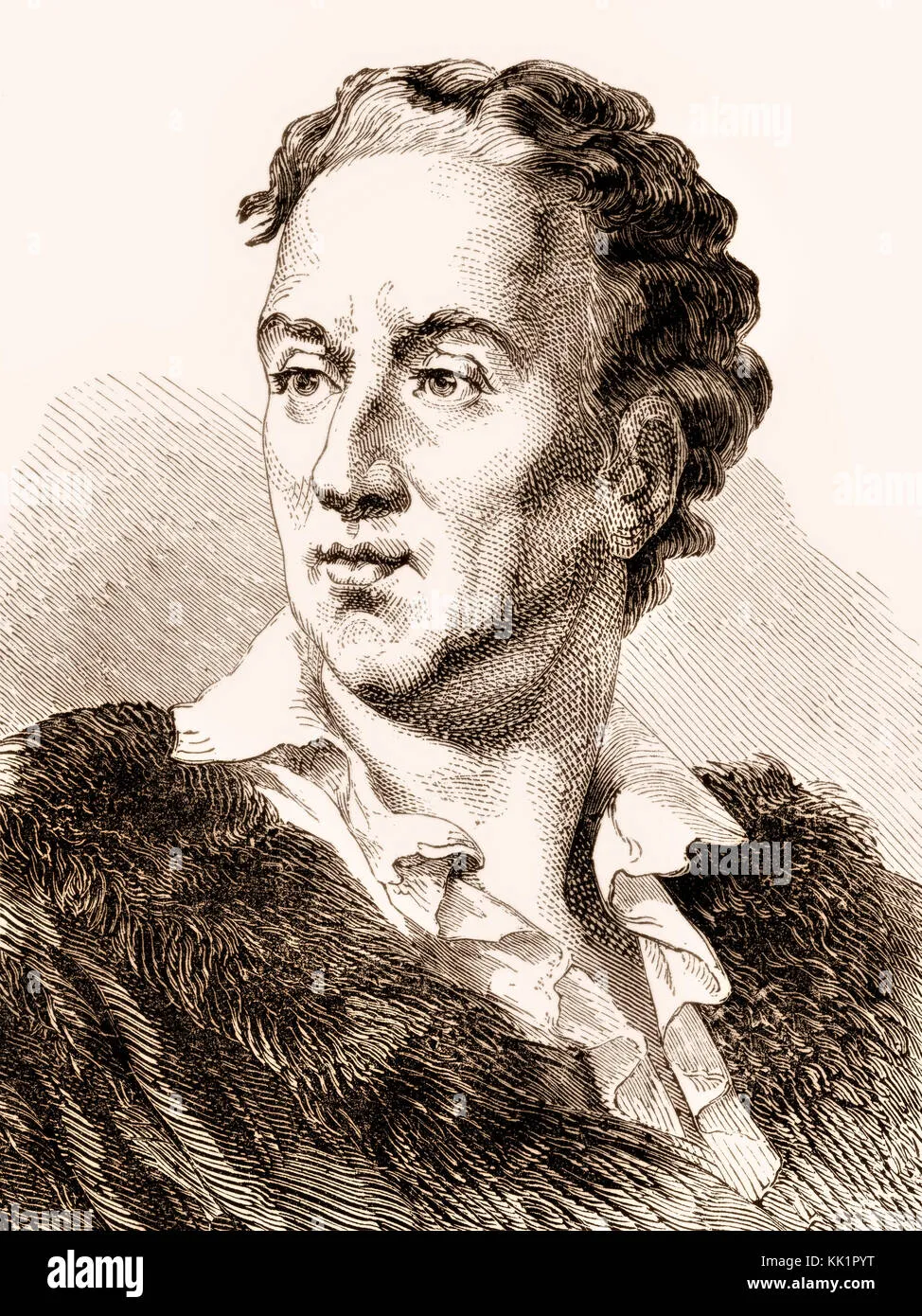 Photo: Diderot, via c8.alamy.com
The Encyclopaedia Britannica, which would eventually become the dominant English-language reference standard, began as a Scottish Enlightenment project and evolved over two centuries into something that carried the weight of institutional authority without necessarily carrying its original intellectual commitments. By the twentieth century, the encyclopedia industry had consolidated around a small number of publishers whose editorial choices determined, for millions of households and schoolchildren, what counted as established fact.
The authority was real. The neutrality was always partial. And the industry that maintained it was captured, like all such industries, by the economic and cultural interests of the moment.
The Algorithm and the Crowd
The contemporary equivalents are more distributed in appearance and more concentrated in practice. A single crowd-edited website — one whose name requires no introduction — now serves as the primary reference point for a substantial fraction of the English-speaking world's factual inquiries. Its articles appear at or near the top of nearly every major search engine's results for informational queries. Its content is reproduced, summarized, and treated as authoritative by AI systems that hundreds of millions of people now use as their first point of contact with disputed questions.
The platform's stated commitment to neutrality is genuine in the sense that Diderot's commitment to reason was genuine: it reflects the actual values of many of the people who built and maintain it. It is also structurally incomplete in the same way. The categories of knowledge that the platform treats as settled, the sources it recognizes as reliable, and the editorial communities that control the most contested articles are all products of specific cultural and institutional contexts. Those contexts are not neutral. They are not intended to be neutral. They are the contexts of a particular moment in Western, English-dominant, digitally connected culture — which is to say, they are a portrait of certain interests presented as a portrait of facts.
The search algorithms that determine which of those articles is seen first add another layer. The platforms that index the web have their own economic incentives, their own regulatory pressures, and their own relationships with the institutions whose authority they amplify or diminish. The result is a reference ecosystem that functions as a standard — that is treated as a standard by courts, journalists, students, and policymakers — while being shaped by forces that are only partially visible to the people who rely on it.
What the Record Predicts
Human psychology, across five thousand years of documented behavior, has consistently demonstrated two things in this domain: a desire for authoritative reference, and a tendency to grant that authority to whatever institution most successfully presents itself as neutral. The desire is rational. The tendency is exploitable.
The historical record also predicts what comes next. Every standard reference institution has eventually been replaced — not because the replacement was neutral, but because the original institution's captured status became visible enough to undermine its credibility. The temple archives gave way to secular administrative records. The scriptoria gave way to the printing press. The encyclopedia industry gave way to the open web. Each transition was presented as a democratization of knowledge. Each produced a new institution that was captured in new ways by new interests.
The current arrangement is not permanent. The signs of its instability are already visible in the proliferating debates about algorithmic bias, editorial capture, and the reliability of AI-generated summaries. What replaces it will almost certainly be presented as more neutral, more open, and more trustworthy than what it displaces.
The five-thousand-year record suggests that presentation should be examined with some care.