The Indispensable Man Problem: Why History's Greatest Builders Became Their Own Systems' Greatest Threats
The Indispensable Man Problem: Why History's Greatest Builders Became Their Own Systems' Greatest Threats
There is a category of historical figure that receives less attention than it deserves, perhaps because its story does not resolve cleanly into either triumph or tragedy. These are the system builders: the engineers, the legal architects, the financial network designers, the logistical innovators who constructed the mechanisms that allowed their civilizations to function at scale. Their fate, repeated with remarkable consistency across five millennia and across cultures with no meaningful contact with one another, suggests something fundamental about the relationship between expertise, institutional power, and survival.
The pattern is this: the person who builds the system becomes, at the moment of the system's maturity, the single greatest threat to the authority of everyone who now depends on it.
The Logic of Institutional Vulnerability
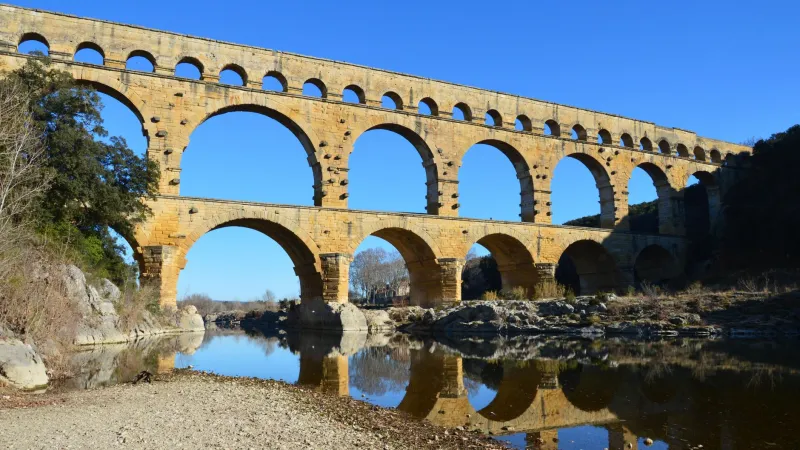
To understand why this happens, it is useful to think carefully about what a complex system actually represents to a power structure. An aqueduct, a legal code, a financial clearing network, a military supply chain — each of these is, at the moment of its creation, a source of tremendous value. The ruler or institution that commissions it gains capabilities that were previously unavailable. The builder is celebrated, rewarded, and protected.
But a complex system is also a form of concentrated knowledge. The person who designed it understands not only how it functions but how it fails — and, crucially, how it could be subverted. In a political environment where the control of infrastructure is the control of power, the individual who possesses that understanding occupies a position that is structurally identical to a rival claimant. They may have no political ambitions whatsoever. Their dangerousness is independent of their intentions.
This is the mechanism that the historical record documents repeatedly: not the betrayal of the system builder, but the rational, cold-blooded assessment by the power structure that the builder's continued existence represents an unacceptable concentration of knowledge.
Rome's Engineers and the Cost of Competence
Roman hydraulic engineering reached its apex under a relatively small number of specialists who accumulated, over careers of extraordinary productivity, an intimate knowledge of the empire's water infrastructure. The curator aquarum — the official responsible for Rome's water supply — was among the most powerful administrative positions in the imperial government, precisely because the position's authority was grounded in technical knowledge that was not widely shared.
Frontinus, who held the position under Nerva and Trajan and wrote the definitive Roman treatise on the aqueduct system, understood the vulnerability this created. His De Aquaeductu was explicitly framed, in part, as an attempt to distribute the knowledge he possessed — to make it impossible for any single individual to monopolize understanding of the system. The text reads, between its technical lines, as the work of a man who understood that what he knew could get him killed, and who was attempting to make himself less dangerous by making himself less unique.
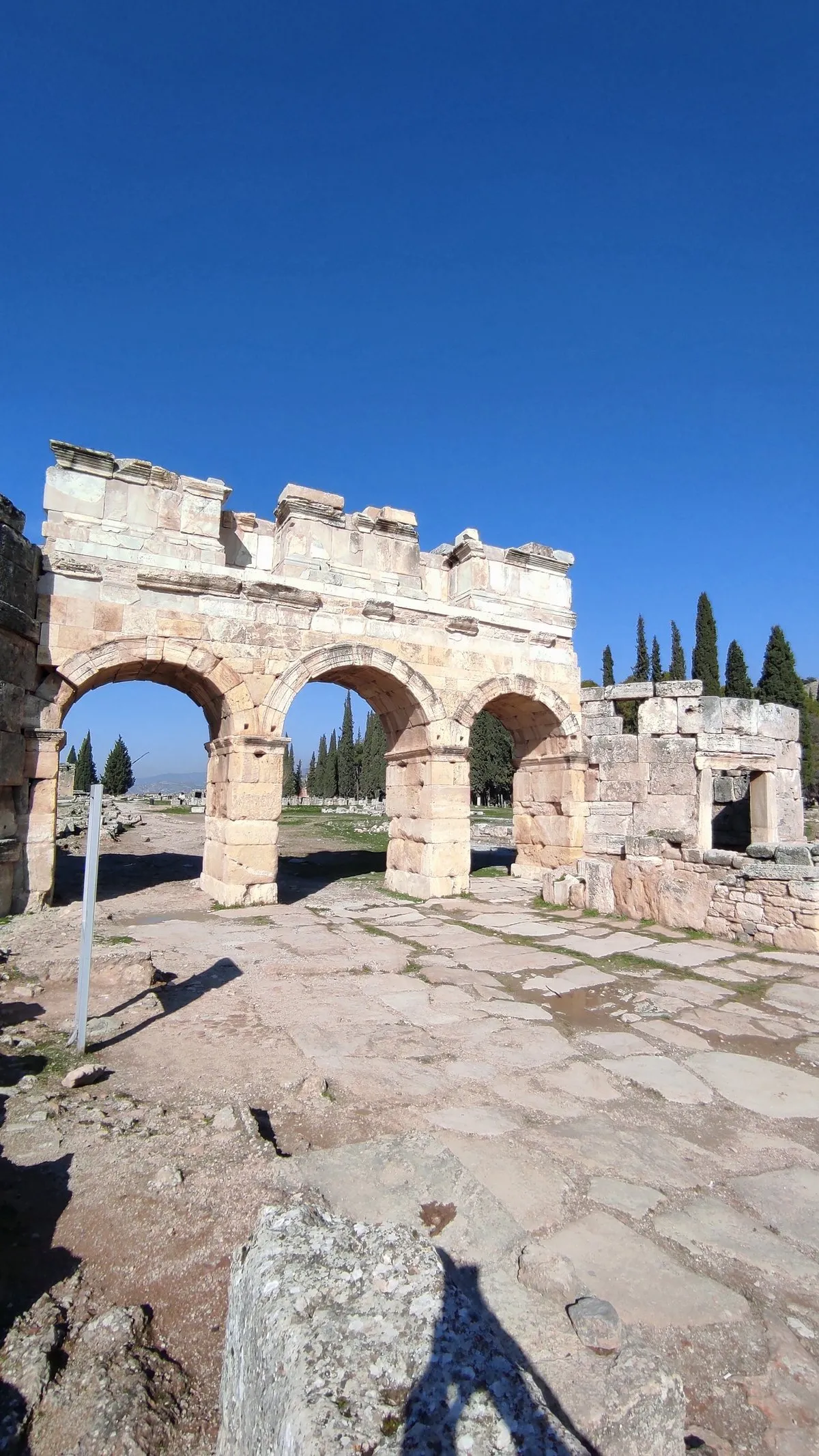 Photo: Frontinus, via dynamic-media-cdn.tripadvisor.com
The strategy worked for Frontinus. It did not work for many of his predecessors and successors in analogous positions, whose fates the historical record either does not preserve or preserves only in the laconic form of an administrative appointment that simply ends.
The Legal Architects of the Ancient Near East
The great law codes of the ancient Near East — Hammurabi's among them, but also the earlier Sumerian codes and the later Assyrian compilations — were each the product of specific individuals or small groups who possessed the jurisprudential knowledge to translate royal authority into enforceable legal structure. These individuals occupied a position of extraordinary influence: they determined, in practical terms, how the king's will was expressed in the resolution of disputes that the king himself would never hear.
The historical record on what happened to these legal architects is fragmentary but suggestive. The codes themselves were often inscribed on permanent monuments — a practice that served the dual purpose of publicizing the law and, notably, making the law's existence independent of the person who wrote it. Once the stele was erected, the scribe was no longer necessary. Several scholars of ancient Near Eastern law have observed that the careers of prominent legal officials in these cultures tend to end abruptly and without recorded explanation at precisely the moment when their codification projects reach completion.
The timing is too consistent to be coincidental.
The Financial Network Designers
The medieval and early modern periods produced a class of financial architects — the designers of the clearing systems, the double-entry bookkeeping innovators, the architects of the first sovereign debt instruments — whose fate followed a recognizable trajectory. The Medici banking network was built by individuals of extraordinary technical sophistication. Several of them were expelled, imprisoned, or ruined when the political winds shifted and their intimate knowledge of the network's structure became, in the eyes of the family's political rivals, a weapon that needed to be neutralized.
John Law, who designed and implemented the first French paper money system in the early eighteenth century, was perhaps the most dramatic example in the modern period. His system worked, in the sense that it accomplished what it was designed to accomplish — the monetization of French sovereign debt through a paper currency backed by colonial assets. When it collapsed, as it was perhaps inevitable to do given the underlying asset valuations, Law fled France and died in Venice in relative poverty. The system he built was dismantled. The knowledge he possessed about how it had functioned, and how it had been manipulated, went with him.
 Photo: John Law, via i.ytimg.com
Silicon Valley and the Ancient Pattern
The contemporary technology industry has produced its own version of this dynamic, and the historical pattern makes it easier to see clearly. The engineers and architects who build the foundational infrastructure of large technology platforms — the recommendation algorithms, the data pipeline architectures, the security systems — occupy a position structurally identical to Rome's aqueduct engineers. They understand, in ways that no executive or regulator fully does, how the system actually functions and how it could be subverted.
The corporate response to this structural vulnerability has been the same as the imperial response: a combination of institutional loyalty mechanisms (equity compensation vesting over multi-year periods), non-disclosure agreements, and, when those prove insufficient, the quiet removal of individuals whose knowledge has become inconvenient. The technology sector has generated its own version of the whistleblower — the former engineer who departs and then describes, in congressional testimony or journalistic interviews, the gap between how the system was publicly represented and how it actually operated.
The historical pattern predicts what happens next with uncomfortable precision.
The Structural Conclusion
What the deep record reveals about system builders is not that they were naive or that their rulers were uniquely ungrateful. It reveals something more structural: that the act of building a complex system is, in any political environment, simultaneously an act of value creation and an act of power concentration. The builder cannot separate these two outcomes. The power structure cannot ignore the second one.
The most successful system builders in history — the ones who died in their beds with their reputations intact — were almost universally individuals who found ways to distribute their knowledge before it became uniquely dangerous. They wrote the treatise. They trained the successors. They made themselves, in the precise technical sense, redundant.
The ones who did not, or could not, or were not permitted to, provide a different kind of lesson. Their systems outlasted them. Their names, where they survive at all, are footnotes to the infrastructure they built. The deep record preserves the aqueduct. It is considerably less careful about preserving the engineer.