New Face, Same Poison: The Five-Thousand-Year History of Currency as Political Theater
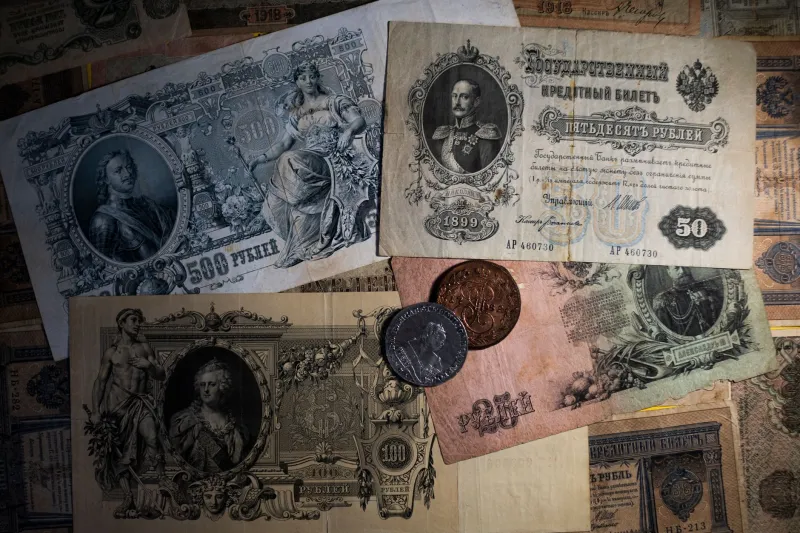
There is a ritual that dying governments perform with remarkable consistency. The treasury runs low. The public grows restless. Prices climb faster than wages, and the people who hold power begin to sense that the social contract is fraying at its edges. At that moment — not always, but with a frequency that should disturb anyone paying attention — the regime announces a new currency.
The notes are redesigned. The portraits are updated. A new name is given to the unit of account. Officials deliver speeches about national renewal. And for a brief, merciful interval, a portion of the population believes that something fundamental has changed.
It almost never has.
The Oldest Trick in the Monetary Record
The practice of using coinage as a loyalty instrument predates paper money by several millennia. When Darius I of Persia introduced the gold daric in the sixth century BCE, the coin's primary function was not commercial standardization — it was the projection of imperial legitimacy. The king's image, rendered in gold, circulated through every province of an empire that stretched from the Aegean to the Indus. You did not need to see the king. You held him in your hand every time you completed a transaction.
This is the foundational insight that monetary authorities have exploited ever since: currency is not merely a medium of exchange. It is a daily, tactile referendum on the authority of whoever issued it. Empires have understood this intuitively. So have the regimes that replaced them.
When Alexander the Great swept through Persia, one of his first acts was to remint captured Persian bullion into coins bearing his own image. The metal was the same. The value was theoretically identical. But the political message was unambiguous: the old order was gone, and this new face in your pocket was its proof.
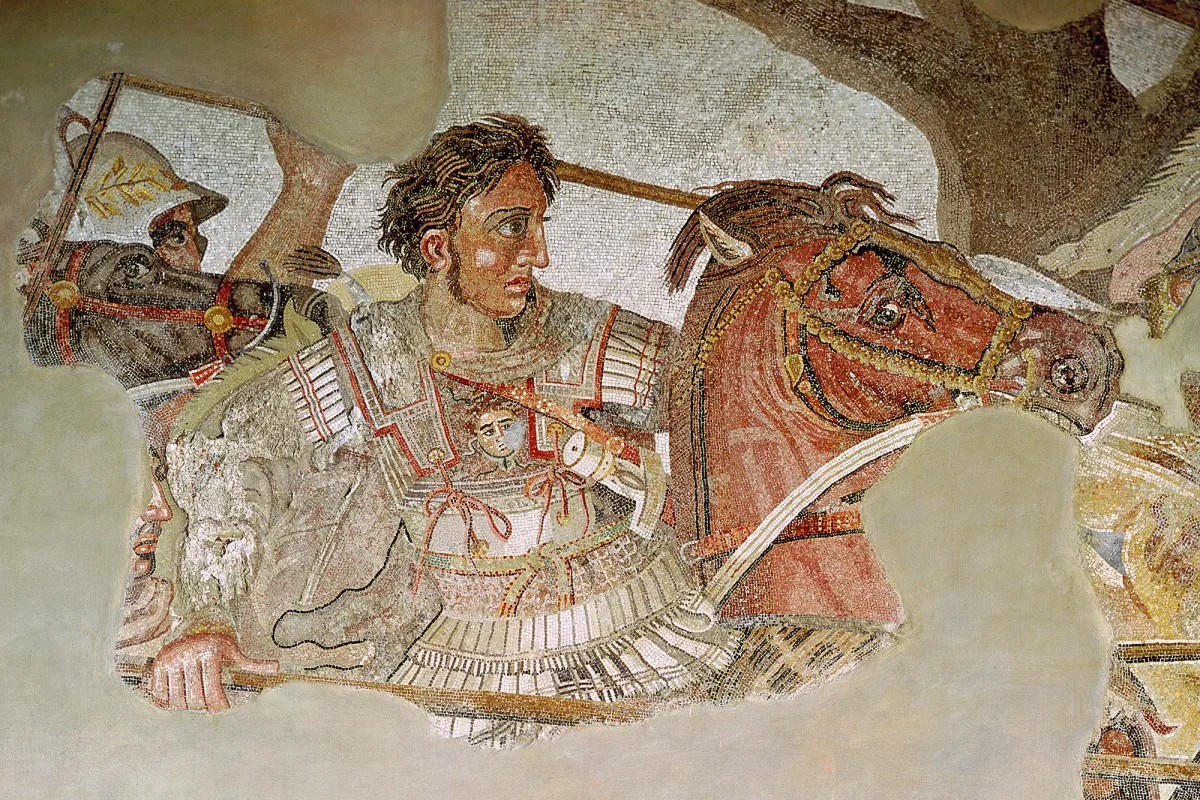 Photo: Alexander the Great, via theaccomplishmagazine.com
Weimar and the Aesthetics of Desperation
The most studied example of monetary rebranding as political theater belongs to Germany in the early 1920s. The hyperinflation of the Weimar Republic has been analyzed extensively as an economic catastrophe, but its psychological dimension receives less attention than it deserves.
As the mark collapsed — losing, at its nadir, virtually all purchasing power — the German government issued successive waves of emergency currency, the so-called Notgeld. These notes were often extraordinarily beautiful. Towns and municipalities commissioned local artists. The designs featured medieval knights, idealized landscapes, scenes from German folklore. Some collectors sought them out specifically for their aesthetic merit.
The beauty was not incidental. It was the point. A government that could no longer guarantee the value of its money could still insist on the dignity of its imagery. The container was being polished even as the contents evaporated. Citizens who could not afford bread could at least hold a note that looked like it belonged to a serious nation.
The psychological literature on motivated reasoning — developed largely through experiments on college students in the latter half of the twentieth century — suggests that people are strongly inclined to update their emotional assessments of a situation when given new symbolic cues, even when the underlying facts remain unchanged. The five-thousand-year record of monetary history suggests that governments discovered this principle long before social psychologists named it.
Venezuela and the Bolivar's Many Lives
The contemporary case that most closely mirrors the ancient pattern belongs to Venezuela. Between 2008 and 2021, the Venezuelan government redenominated its currency three times. The strong bolívar replaced the bolívar in 2008, dropping three zeros. The sovereign bolívar replaced the strong bolívar in 2018, dropping five more. The digital bolívar arrived in 2021, removing six additional zeros.
Each redenomination was accompanied by official rhetoric about economic stabilization and national pride. The name Bolívar — belonging to Simón Bolívar, the continent's most celebrated liberator — was retained through each iteration, a deliberate invocation of revolutionary legitimacy. If the currency carried the name of the nation's founder, perhaps it carried his authority as well.
 Photo: Simón Bolívar, via i.pinimg.com
It did not. Inflation continued. The economy contracted. Venezuelans who had lived through all three redenominations watched the same arc repeat with only the number of zeros varying. The container changed three times. The poison did not.
Why Citizens Keep Believing
The more uncomfortable question is not why governments attempt monetary rebranding. The incentive is obvious: it is cheap, it is fast, and it occasionally works long enough to matter politically. The more uncomfortable question is why populations repeatedly extend credibility to an instrument that the record so consistently exposes as theater.
Part of the answer lies in what economists call money illusion — the documented tendency of individuals to think in nominal rather than real terms, to respond to the face value of a number rather than its purchasing power. But money illusion alone does not explain the persistence of the phenomenon across radically different cultures and centuries.
A more complete explanation may involve the social function of shared symbols. Currency is one of the few artifacts that an entire society handles simultaneously. When a government changes the symbol, it is not merely updating a note — it is proposing a collective act of re-imagination. The new currency is an invitation to agree, together, that the past is past and a different future is beginning. That invitation carries genuine emotional weight, particularly in societies that have endured prolonged hardship and desperately want the story to turn.
The historical record does not suggest that people are foolish for wanting the story to turn. It suggests that bad-faith actors have learned to exploit that want with considerable sophistication.
The Pattern's Diagnostic Value
For anyone willing to read the five-thousand-year record as a data set rather than a collection of unrelated episodes, monetary rebranding functions as a fairly reliable leading indicator. Regimes that announce new currencies with nationalist framing — particularly when the announcement is accompanied by controls on foreign exchange, restrictions on gold or hard assets, or the sudden criminalization of alternative stores of value — are almost always in deeper trouble than they are publicly admitting.
The new face on the note is not a sign of renewal. It is a sign that the people managing the note have run out of other options and are hoping that aesthetics will substitute for solvency.
The record is patient. It has seen this performance many times. It knows how the third act ends.