The Revolution Will Not Be Administered: Why the People Who Build Nations Cannot Govern Them
There is a casting problem at the heart of almost every revolution in recorded history. The skills required to overthrow an existing order and the skills required to replace it with something functional are not merely different — they are, in several critical respects, actively opposed to one another. Yet successor generations have shown a persistent and costly tendency to hand power back to founders, under the assumption that the person who built the fire is also the right person to manage the hearth.
The record does not support this assumption.
The Psychological Profile of the Indispensable Disruptor
Revolutions select for a specific type of person. The successful revolutionary must be capable of maintaining absolute conviction in the face of evidence that the project is failing. She must be willing to make enemies of former allies, to demand sacrifices that she herself may not share equally, and to sustain a vision of the future with sufficient intensity that others will risk their lives for it. She must, in short, be somewhat impervious to the normal social feedback mechanisms that regulate most people's behavior.
These are not character flaws. In the specific context of dismantling an entrenched power structure, they are adaptive traits. A revolutionary who updates too readily on negative information does not survive long enough to succeed. A revolutionary who worries too much about consensus will be outmaneuvered by opponents who do not share that scruple.
The problem arrives the morning after victory, when the same psychological profile that was adaptive becomes maladaptive almost immediately. Governance requires compromise. It requires tolerance for ambiguity, for incremental progress, for the maddening slowness of institutional change. It requires the ability to hear criticism as information rather than betrayal. The revolutionary who conquered by treating every obstacle as an enemy to be destroyed will, in the governing context, find enemies everywhere — including among the people who were supposed to benefit from the revolution.
Sulla and the Precedent That Killed the Republic
Lucius Cornelius Sulla is one of history's more instructive case studies in the founder's trap, precisely because he was self-aware enough to recognize, at least partially, what he was.
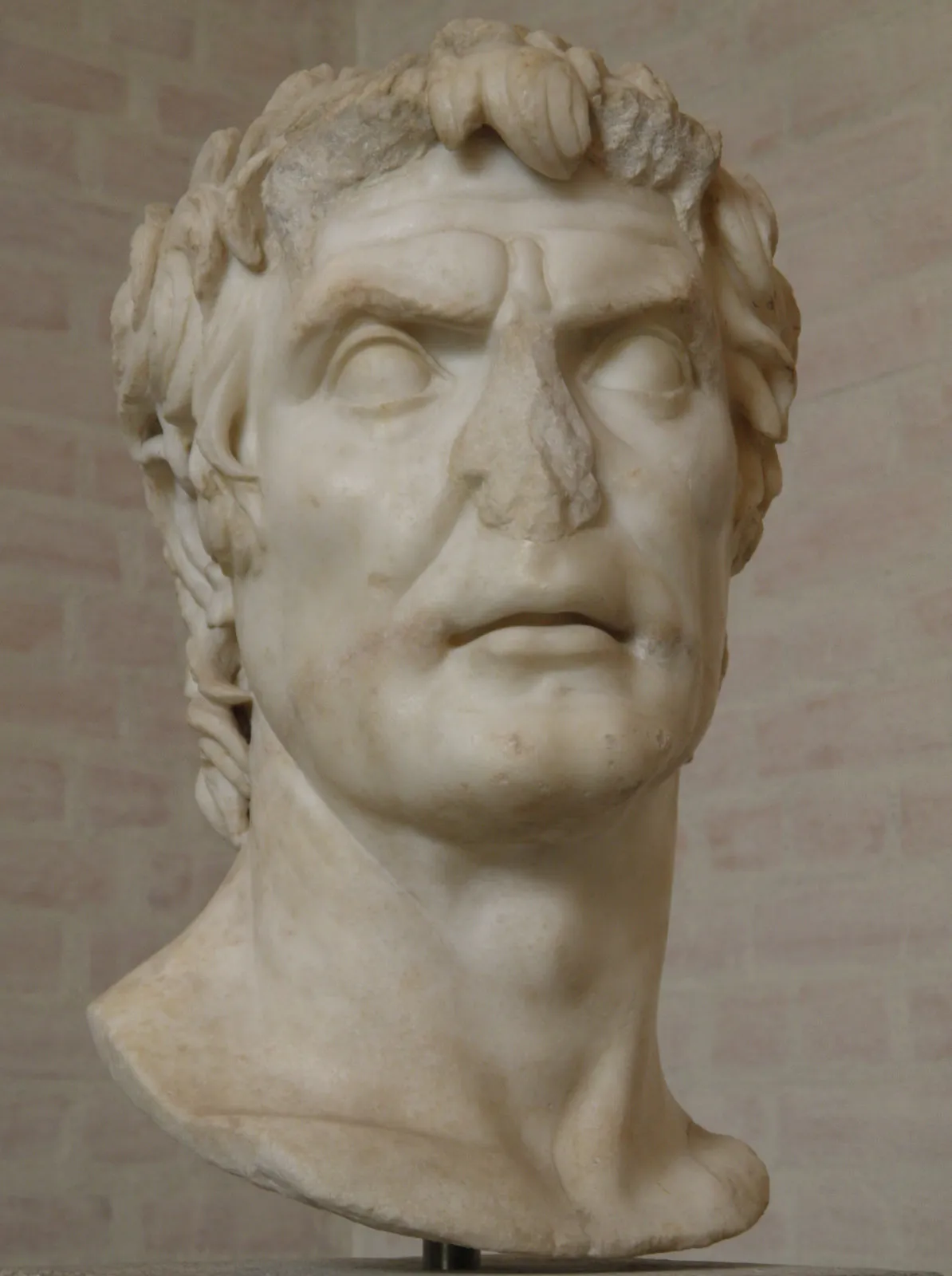 Photo: Lucius Cornelius Sulla, via www.worldhistory.org
Sulla marched on Rome twice. He published proscription lists that resulted in the deaths of thousands of political opponents. He rewrote the Roman constitution by fiat. And then, in 79 BCE, he resigned the dictatorship voluntarily — an act so unprecedented that contemporaries could not quite believe it was happening.
Sulla appears to have understood that the skills which had made him effective as a military commander and political disruptor were not suited to the patient work of constitutional governance. His solution — step aside — was, in a narrow sense, correct. The problem was everything he had done before stepping aside.
The precedent Sulla established was not the voluntary resignation. The precedent was the march on Rome. Every ambitious general who came after him — Marius, Caesar, Augustus — learned the same lesson from Sulla's career: the institutions of the Republic could be overridden by sufficient military force, and the man willing to apply that force could reshape the political landscape entirely. Sulla's personal restraint at the end of his life could not undo the template his earlier actions had created.
Founders do not only damage institutions through what they do in power. They damage them through the methods they model on the way in.
The American Exception That Proves the Rule
The American founding generation is often cited as a counterexample to the pattern — a collection of revolutionary leaders who successfully transitioned to constitutional governance. The citation is partially correct and instructive in its incompleteness.
George Washington's voluntary relinquishment of power after two terms is genuinely exceptional in the historical record. It was exceptional enough that it stunned European observers at the time, including King George III, who reportedly said that if Washington truly stepped down, he would be the greatest man in the world. The remark was not entirely a compliment — it expressed astonishment that a man with Washington's power would choose constraint.
 Photo: George Washington, via constitutionus.com
But the American founding also produced the full range of founder pathologies operating alongside Washington's restraint. Alexander Hamilton's certainty that his vision for American finance was the only correct one made him indispensable in building the treasury system and toxic in nearly every political relationship he maintained. Samuel Adams, brilliant as an agitator and organizer of resistance, became increasingly irrelevant and embittered as the country moved from revolution to administration — his talent for opposition had no productive outlet in a system he had helped create. Aaron Burr's career traced the arc of a man whose gifts for political maneuvering were perfectly suited to the insurgent phase of republic-building and catastrophically mismatched with the norms of the republic itself.
The American founding worked, to the extent that it did, not because founders are naturally suited to governance, but because the specific institutional design — separation of powers, written constitution, fixed terms — was explicitly constructed to constrain the founder's impulse. The Framers were, in this sense, designing a system to protect the republic from people like themselves.
Post-Colonial Africa and the Recurring Tragedy
The decolonization movements of the mid-twentieth century ran the founder's trap experiment at scale across an entire continent, with results that the historical record could have predicted.
Kwame Nkrumah of Ghana, Jomo Kenyatta of Kenya, Sékou Touré of Guinea — the list of liberation leaders who became authoritarian governors is long enough to constitute a pattern rather than a series of individual failures. These were men of genuine historical significance, whose courage and organizational genius in the face of colonial power is not in question. What is in question is the assumption, made repeatedly by populations desperate for continued leadership after independence, that the person who had won the struggle was therefore qualified to manage its aftermath.
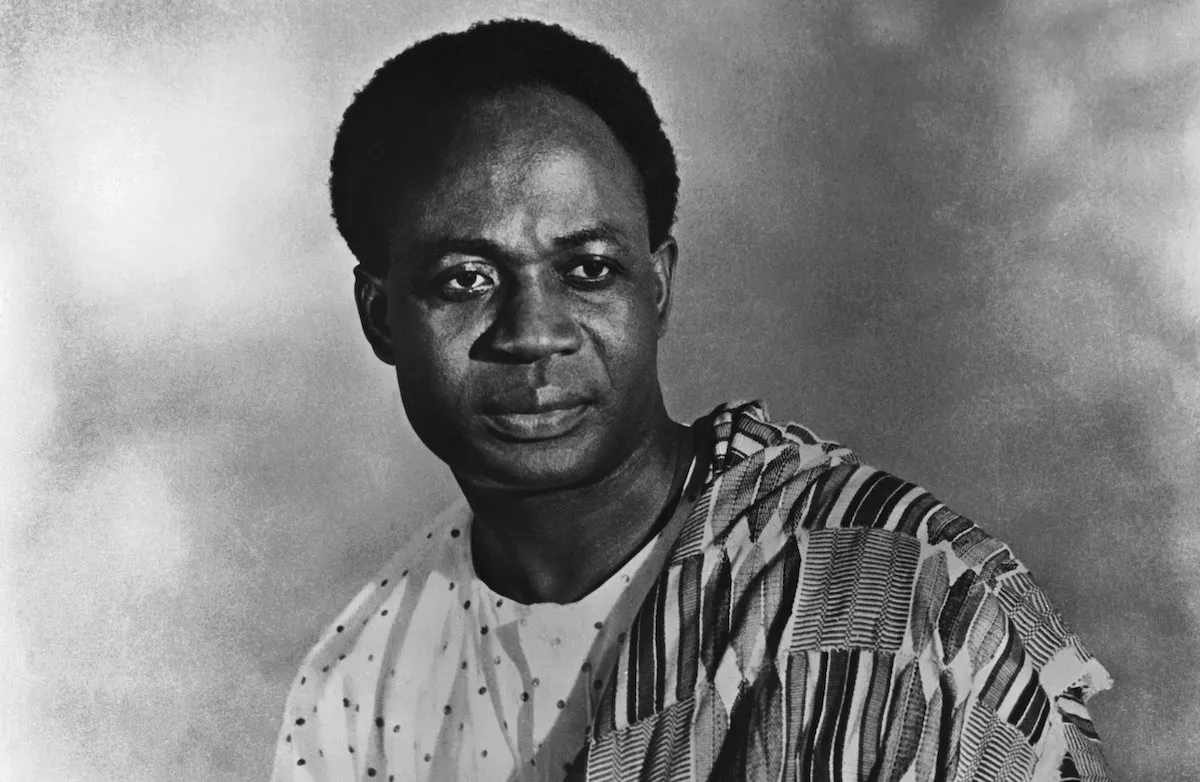 Photo: Kwame Nkrumah, via thisisafrica.me
Nkrumah, who had organized one of the most sophisticated independence movements in African history, declared Ghana a one-party state in 1964 and had himself named president for life. The organizational skills that had made him an effective disruptor made him constitutionally incapable of tolerating institutional constraints on his authority. The feedback loops that governance requires — opposition parties, free press, independent judiciary — looked to him like the mechanisms of enemies rather than the architecture of a stable state.
The pattern repeated because the underlying human psychology repeated. Populations that have endured prolonged struggle develop deep emotional attachments to the figures who led them through it. Those attachments are not irrational — they are the natural consequence of shared suffering and shared victory. But they are also, historically, extremely dangerous, because they create the political conditions under which founders are granted authority they are temperamentally unsuited to exercise.
The Succession Problem
The deeper structural issue is not the founder. It is the succession.
Every political system that has survived long enough to be studied eventually solved — or failed to solve — the problem of transitioning from founding energy to administrative competence. The ones that solved it generally did so through institutional design that made the transition mandatory rather than voluntary: term limits, succession laws, constitutional requirements that stripped founders of extraordinary powers once the emergency that justified them had passed.
The ones that failed to solve it generally did so for the same reason: they could not bring themselves to constrain the person to whom they owed their existence as a polity. The emotional debt felt too large. The risks of transition felt too great. And so they handed power back to the founder, or to the founder's chosen heir, and discovered once again that gratitude is not a substitute for governance.
The record has no shortage of data on this question. What it has a shortage of is audiences willing to read it before the next revolution begins.