The Unkillable Merchant: Why Every Revolution's First Target Always Survives to Profit Again

The Unkillable Merchant: Why Every Revolution's First Target Always Survives to Profit Again
When Vladimir Lenin launched War Communism in 1918, eliminating private traders was a top priority. The Bolsheviks viewed merchants as parasitic middlemen who extracted profit without creating value. By 1921, store shelves sat empty, agricultural production had collapsed by 60%, and famine gripped the Soviet Union. Lenin was forced to restore limited private trade through the New Economic Policy, quietly acknowledging that the despised middlemen had been performing essential economic functions.
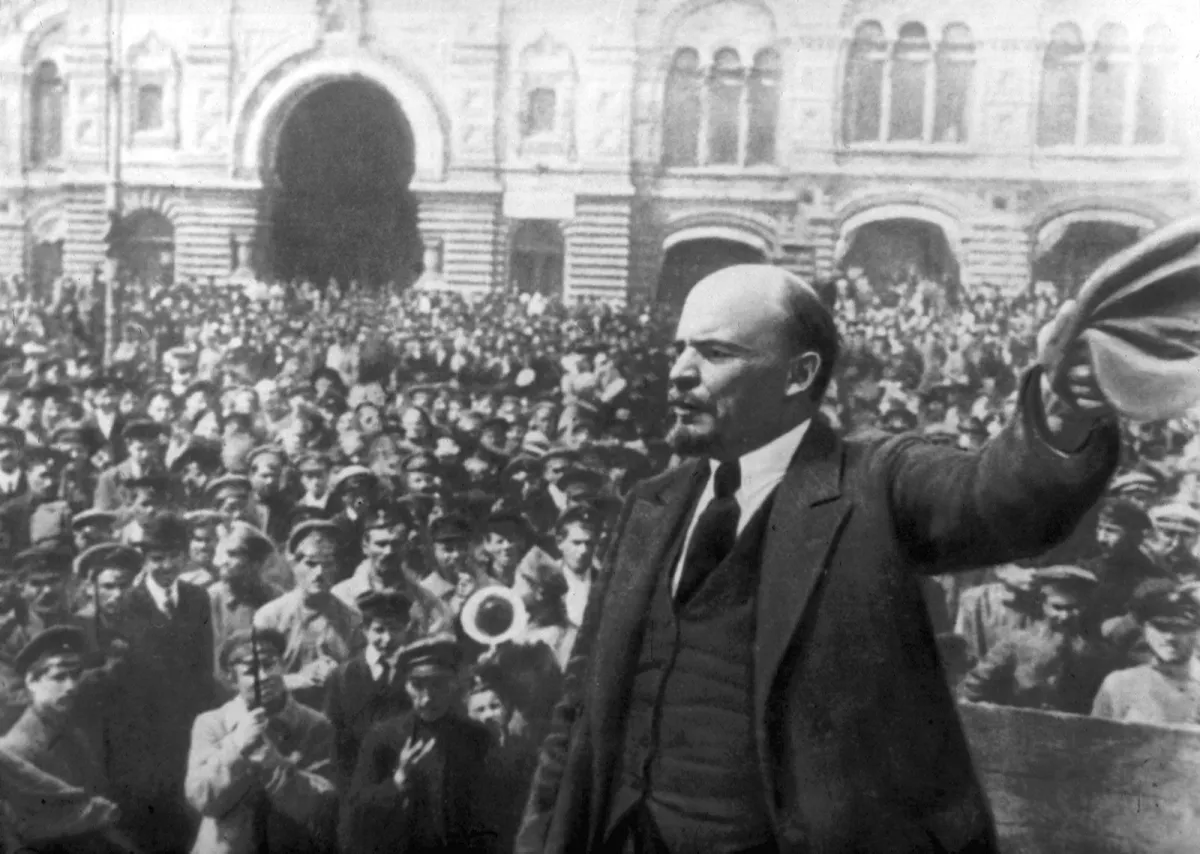 Photo: Vladimir Lenin, via cdn.britannica.com
This sequence—revolutionary elimination of merchants, economic catastrophe, grudging restoration of intermediaries—has repeated across cultures and centuries with mechanical precision. The pattern persists because human psychology drives both the initial hatred of middlemen and their inevitable resurrection.
The Ancient Hatred of Those Who Stand Between
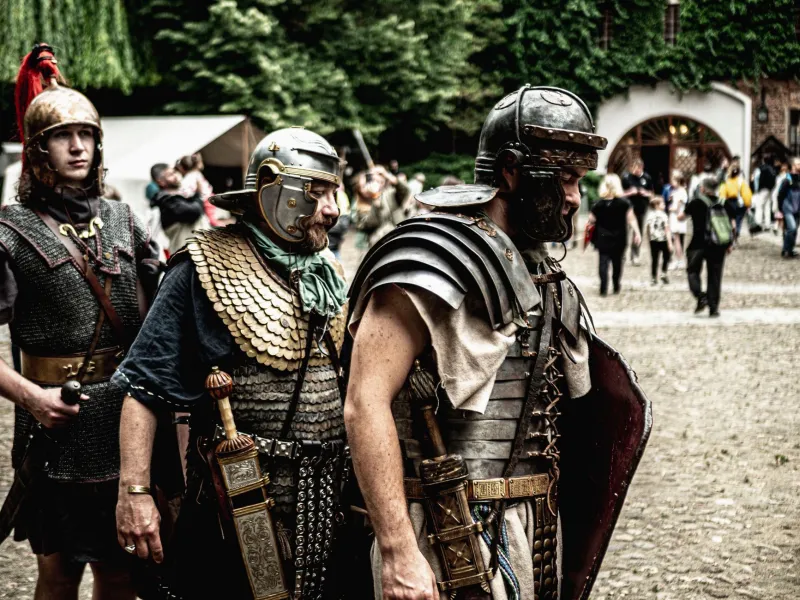
Roman emperors regularly blamed grain shortages on greedy merchants, confiscating their warehouses and executing speculators. The result was predictable: farmers stopped growing surplus grain, knowing the state might seize it, while remaining merchants demanded higher prices to compensate for increased risks. Diocletian's Edict on Maximum Prices in 301 CE attempted to solve inflation by fixing merchant profits at legally mandated levels. The decree succeeded only in driving trade underground.
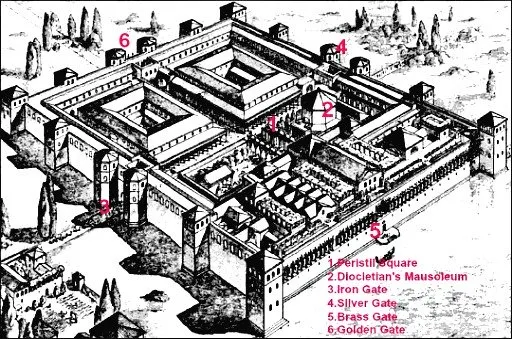 Photo: Diocletian, via split.gg
Medieval guilds existed partly to control merchant activities that authorities viewed as exploitative. Islamic scholars debated whether merchant profits constituted usury. Chinese dynasties alternated between embracing and suppressing merchant classes, with each cycle of suppression leading to economic stagnation.
The consistency across cultures suggests something deeper than economic ignorance: humans instinctively resent those who profit from others' needs without producing tangible goods. This psychological bias blinds societies to the actual functions that intermediaries perform.
The Hidden Infrastructure of Exchange
Modern experiments in eliminating middlemen reveal why they persistently re-emerge. When Venezuela's government bypassed food distributors to sell directly to consumers, the result wasn't lower prices but empty shelves. State agencies lacked the logistics networks, storage capabilities, and demand forecasting systems that private distributors had developed over decades.
Similar patterns appeared in Mao's China, where eliminating grain merchants led to massive famines, and in post-colonial Africa, where government marketing boards replaced private traders with disastrous results. Each case demonstrated that intermediaries provide invisible services: risk management, quality control, inventory optimization, and information transmission between producers and consumers.
These functions seem parasitic until they disappear. Merchants absorb demand fluctuations, maintaining inventory during low-demand periods and preventing shortages during spikes. They aggregate small producers' outputs and disaggregate bulk supplies for individual consumers. Most importantly, they assume risks that neither producers nor consumers want to bear.
The Psychology of Middleman Hatred
Experimental psychology explains why societies consistently underestimate intermediary value. The "labor theory of value"—the intuition that worth derives from physical production—appears universal across cultures. Merchants violate this mental model by profiting from ownership and exchange rather than creation.
Loss aversion amplifies anti-merchant sentiment during crises. When prices spike, consumers blame visible intermediaries rather than invisible supply constraints. The grain merchant becomes a scapegoat for harvest failures, the landlord for housing shortages, the retailer for inflation.
This bias intensifies during social upheaval. Revolutionaries need villains to mobilize popular support, and merchants provide perfect targets: they're visible, often wealthy, and their value creation is abstract compared to farmers or manufacturers.
The Stubborn Return of Economic Reality
Despite consistent failures, each generation rediscovers the appeal of eliminating middlemen. Stalin's collectivization, Pol Pot's return to agrarian communism, and Zimbabwe's land redistribution all targeted intermediary functions with similar results: economic collapse followed by black market emergence.
The black markets that emerge during anti-merchant campaigns reveal intermediaries' true value. Soviet citizens paid enormous premiums to illegal traders who could obtain scarce goods. These underground merchants provided the same services as their legal predecessors—risk management, inventory optimization, quality assurance—but at much higher costs due to legal risks.
Modern Echoes of Ancient Patterns
Today's debates about platform capitalism, financial intermediaries, and supply chain optimization replay historical dynamics. Critics argue that Amazon, Uber, and payment processors extract excessive profits without adding proportional value. The psychological appeal of "cutting out the middleman" remains as strong as ever.
Yet attempts to eliminate modern intermediaries encounter the same obstacles that doomed their historical predecessors. Cities that banned ride-sharing companies saw transportation availability plummet. Merchants who tried to bypass Amazon found themselves lacking the logistics infrastructure that the platform provided. Countries that restricted financial intermediaries watched capital flee to more accommodating jurisdictions.
The Evolutionary Function of Economic Intermediaries
The merchant's persistence across five millennia suggests an evolutionary function. Human societies that successfully eliminated intermediaries consistently lost economic competition to those that preserved them. Venice's dominance in Mediterranean trade, Dutch commercial supremacy, and London's financial centrality all depended on sophisticated intermediary networks.
This competitive advantage stems from specialization benefits that transcend individual psychology. Dedicated intermediaries develop expertise, economies of scale, and risk management capabilities that producers and consumers cannot efficiently replicate. Their elimination forces society to reinvent these functions at higher cost and lower quality.
The Eternal Cycle of Rediscovery
The pattern suggests a fundamental tension in human economic psychology. Societies benefit from intermediary services but instinctively resent those who provide them. This creates cyclical dynamics: intermediaries emerge to serve genuine needs, accumulate wealth and resentment, face political backlash, get eliminated or restricted, cause economic disruption, and eventually return in new forms.
Understanding this cycle doesn't resolve modern debates about platform power or financial intermediation, but it provides historical context for contemporary tensions. The merchant's five-thousand-year survival record suggests that current intermediaries, however unpopular, likely perform functions that their critics don't fully appreciate.
The lesson isn't that all intermediaries are beneficial or that their current forms are optimal. Rather, it's that the impulse to eliminate them entirely has consistently produced results opposite to those intended. The unkillable merchant survives not through political protection but through economic necessity—a reality that each generation must rediscover for itself.