When the Crown Creates Dragons: The Ancient Art of Enemy Manufacturing
The Athenian Playbook
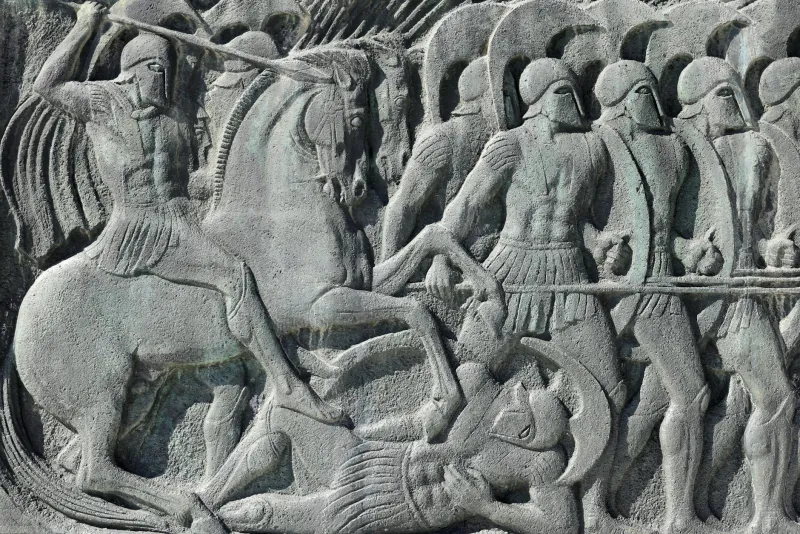
In 415 BCE, as Athens struggled with internal divisions and economic strain, its leaders found salvation in Sicily. The distant island posed no immediate threat, but Athenian orators transformed it into an existential danger requiring immediate military action. The Sicilian Expedition became Athens' graveyard, but the political mechanism that created it had already served its purpose: uniting a fractured citizenry against a common enemy.
This pattern—domestic instability resolved through external threat creation—appears with mechanical regularity across five millennia of recorded history. While modern political science focuses on contemporary case studies, the deeper record reveals that human psychology hasn't changed since the first city-states learned to redirect internal pressure outward.
The Manufacturing Process
The process follows predictable steps. First, ruling elites face genuine internal challenges: economic inequality, political opposition, or social unrest. Rather than address root causes directly, they identify or create external threats that require national unity to combat. The enemy must be distant enough to avoid immediate verification but credible enough to justify extraordinary measures.
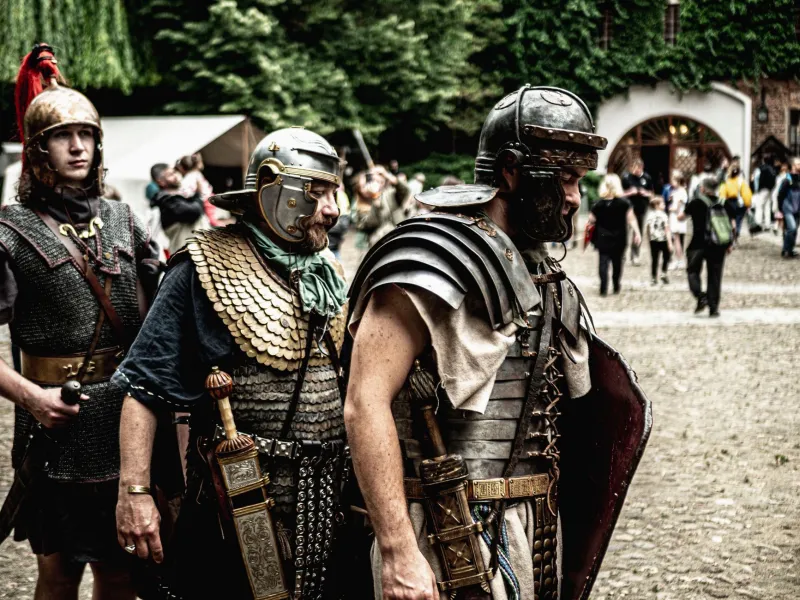
Roman emperors perfected this technique. When Marcus Aurelius faced economic crisis and plague, Germanic tribes suddenly became an existential threat requiring massive military expenditure. When Diocletian struggled with inflation and administrative chaos, Christian communities transformed from minor religious minority to empire-threatening conspiracy. Each manufactured crisis bought temporary domestic stability at the cost of long-term strategic coherence.
The psychological mechanism remains unchanged. Humans instinctively rally around leaders during perceived external threats, temporarily suppressing internal disagreements. This response served our ancestors well in genuine emergencies but becomes destructive when deliberately triggered by political calculation.
The Feedback Loop
The most dangerous aspect of enemy manufacturing isn't the initial deception—it's what happens next. Manufactured threats have a disturbing tendency to become real through the very process of their creation.
Consider the Mongol Empire's approach to Chinese dynasties. Song Dynasty officials, facing internal rebellion and economic crisis, repeatedly portrayed Mongol tribes as barbarian threats requiring massive military preparation. These preparations, including border fortifications and military buildup, actually threatened Mongol pastoral territories and trade routes. What began as manufactured justification for domestic authoritarianism created genuine Mongol grievances that eventually materialized into the very invasion Chinese leaders had imagined.
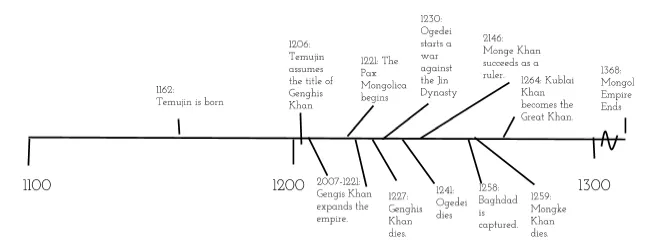 Photo: Mongol Empire, via bvsasianhistory.weebly.com
The Spanish Template
Sixteenth-century Spain provides perhaps the clearest example of manufactured enemies becoming existential reality. Facing internal religious divisions and economic strain from American silver inflation, Spanish monarchs transformed Ottoman expansion into a civilizational threat requiring total mobilization. The resulting military expenditure and religious warfare lasted centuries, bankrupted the Spanish treasury multiple times, and ultimately created the very Ottoman naval dominance in the Mediterranean that Spain had originally fabricated as justification for domestic control.
The pattern repeats across cultures and centuries because the underlying psychology remains constant. Leaders under pressure seek external enemies to unite domestic opposition. Citizens, evolved to respond to group threats, temporarily suppress internal criticism. But the military and economic preparations required to combat manufactured enemies often provoke genuine external responses, creating the very dangers initially invented for political convenience.
Modern Manifestations
Twentieth-century examples follow the same template. Weimar Germany's manufactured communist threat justified emergency powers that destroyed democratic institutions. The Soviet Union's manufactured capitalist encirclement justified internal repression that ultimately weakened the state's ability to respond to genuine external challenges. In each case, the fabricated enemy eventually became real through the feedback effects of preparation.
The United States has not been immune to this pattern. McCarthyism transformed limited communist influence into existential threat, justifying domestic surveillance and international interventions that created genuine anti-American sentiment worldwide. The War on Terror followed similar logic, transforming scattered terrorist groups into civilizational threats requiring massive military expenditure and domestic surveillance expansion.
The Arithmetic of Destruction
The historical record suggests that manufactured enemies cost more than genuine threats. Real enemies can be defeated, negotiated with, or contained. Manufactured enemies, by contrast, must be continuously maintained through escalating rhetoric and preparation. This creates resource drain that weakens the state's ability to address both genuine external threats and the original internal problems that motivated enemy creation.
Moreover, the feedback loop ensures that manufactured enemies eventually become real. Mongol invasions, Ottoman expansion, Soviet military buildup, and international terrorism all materialized partly in response to the very preparations initially justified by their manufactured threat.
The Pattern Continues
Five thousand years of recorded history demonstrate that human psychology hasn't evolved past this trap. Modern democratic institutions and global communication haven't eliminated the underlying mechanism—they've simply changed its manifestation. Social media amplifies threat perception, while 24-hour news cycles accelerate the manufacturing process.
The deeper lesson isn't about specific enemies or particular rulers. It's about the consistent human tendency to solve internal problems through external scapegoating, and the consistent historical outcome when that tendency meets political power. Understanding this pattern won't prevent its recurrence—human psychology remains unchanged—but it might help us recognize the costs before they compound into civilizational consequences.