Ea-Nasir's Inbox: The Copper Merchant Whose Grievances Outlived His Business
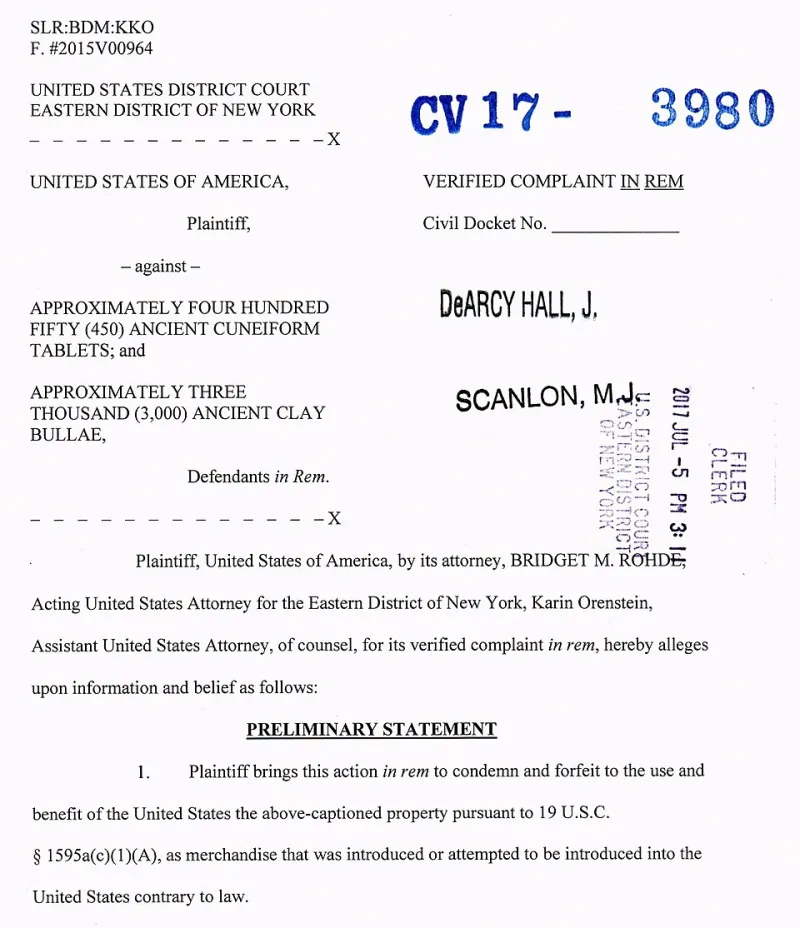
Photo: United States District Court for the Eastern District of New York, Public domain, via Wikimedia Commons
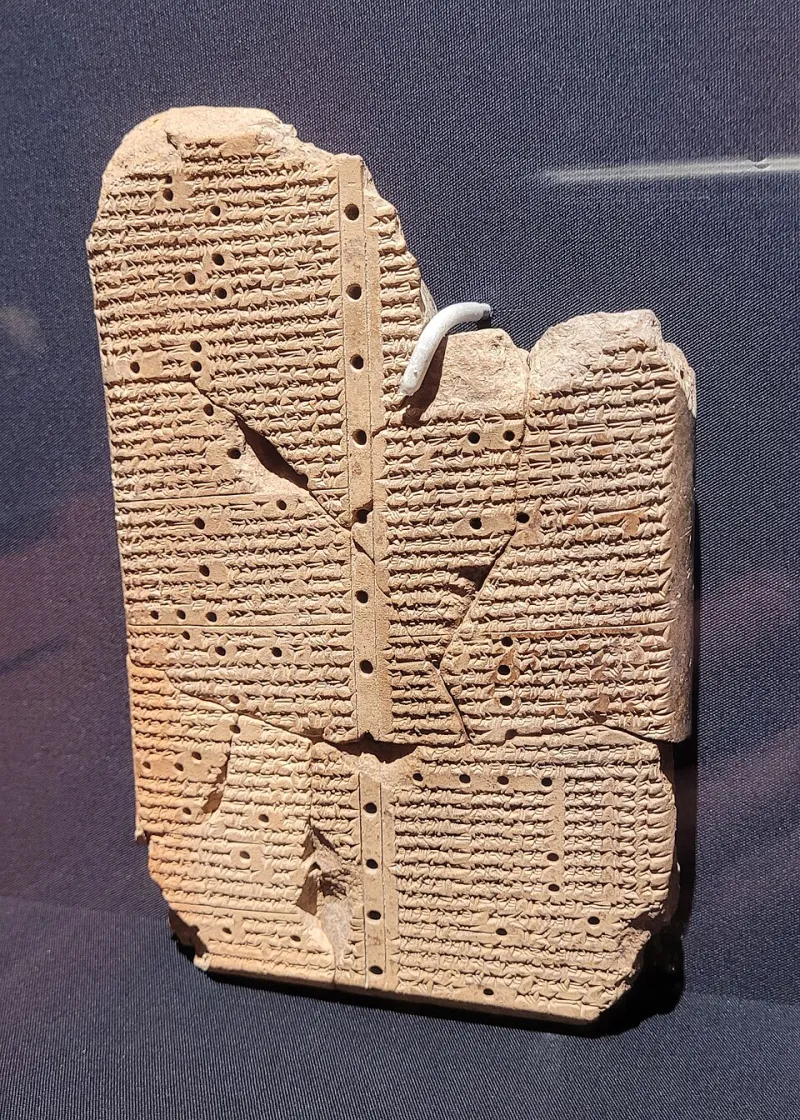
In the ruins of Ur, archaeologists uncovered something remarkable: a clay tablet dated to roughly 1750 BCE, inscribed with a complaint so detailed, so aggrieved, and so thoroughly modern in its tone that it could be forwarded to any customer service department in America today without a single edit to its emotional register.
The tablet, written by a man named Nanni to a copper merchant named Ea-nasir, documents a transaction gone wrong. Nanni had paid for copper ingots. What arrived, he claimed, was substandard ore delivered through careless handling. His grievance, translated from the Akkadian, follows a structure that anyone who has ever filed a chargeback will recognize instantly: here is what I paid, here is what I received, here is the gap between promise and delivery, and here is what I demand as remedy.
What makes this artifact remarkable is not its age but its preservation of a complete grievance ecosystem. Nanni didn't just complain — he documented prior communications, referenced witnesses, and threatened to escalate to a wider audience of mutual business contacts. He was building a case file, and he was doing it in writing.
The Architecture of Ancient Accountability
The Babylonian commercial world had developed systems for handling exactly these disputes. Middlemen who failed to deliver quality goods risked reputational damage that traveled through trade networks faster than the goods themselves. A merchant like Ea-nasir operated in a market where his name was his collateral — there was no regulatory body to appeal to, no consumer protection agency, no small claims court. The only enforcement mechanism was the accumulated weight of other people's opinions.
This is why the tablet matters as a business document rather than a curiosity. Nanni's letter was, functionally, a public review. It was written to be shown around, to be referenced in future negotiations, to serve as a warning to other buyers. The medium was clay instead of a five-star rating system, but the incentive structure was identical.
What the Record Shows About Resolution
The historical record of ancient Near Eastern trade reveals several consistent patterns in how grievances were handled. Merchants who responded quickly to complaints, offered partial refunds, or replaced defective goods tended to maintain long-term trading relationships. Merchants who stonewalled, blamed intermediaries, or simply refused to engage — as Ea-nasir apparently did — accumulated a paper trail that followed them.
The clay tablets that survive suggest that ancient merchants understood something modern businesses sometimes forget: the complaint itself is not the crisis. The mishandling of the complaint is the crisis. Nanni's letter survives because it was kept — possibly as a record of Ea-nasir's failure, possibly as evidence for others considering whether to do business with him.
The Modern Parallel
American businesses today operate with tools the Babylonians could not have imagined: instant communication, digital records, review platforms that aggregate thousands of opinions. But the underlying psychology has not changed in nearly four thousand years. A customer who feels cheated wants three things: acknowledgment of the grievance, a fair remedy, and confidence that the failure will not be repeated.
When any of these three elements is missing, the customer escalates. In ancient Ur, escalation meant telling your trading partners. In 2020s America, it means posting on social media, filing a chargeback, or leaving a review that will outlive the business itself.
The lesson from the deep record is not that customer service is new. It is that the fundamentals — acknowledgment, remedy, and prevention — have been the entire game since before the invention of the alphabet. Businesses that study the pattern will recognize that the tools have changed but the playbook has not. The merchants who survived in Ur were not the ones who never received a complaint. They were the ones who answered it.