The Invisible Hand That Shapes History: How Translators Have Secretly Determined the Fate of Nations

The Power Behind the Throne of Babel
When Hernán Cortés met Moctezuma II in 1519, their conversation passed through a woman known to history only as La Malinche. She spoke Nahuatl, Maya, and Spanish — making her perhaps the most influential person present at one of history's most consequential encounters. Her translation choices helped determine whether the Aztec Empire would survive or fall. It fell. But how much of that outcome reflected Cortés's intentions versus her interpretation of them?
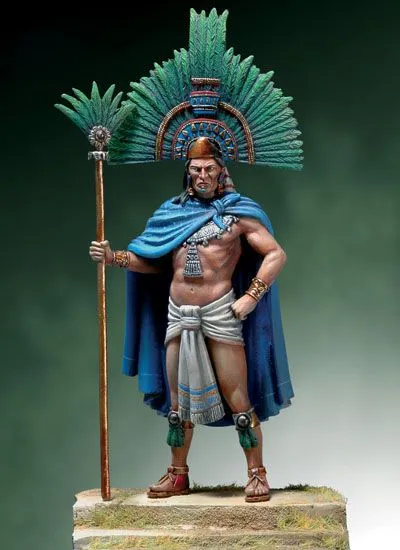 Photo: Moctezuma II, via i.pinimg.com
 Photo: La Malinche, via static.wixstatic.com
This question echoes across five millennia of human conflict and cooperation. Every diplomatic breakthrough, every treaty negotiation, every first contact between civilizations has depended on someone capable of bridging not just languages but entire worldviews. These interpreters possessed extraordinary power to shape outcomes, yet their influence remains largely invisible to modern analysis. The pattern suggests we may have fundamentally misunderstood how history's biggest decisions were actually made.
The Mesopotamian Template
The earliest recorded interpreters appear in Sumerian texts from 4,000 years ago, facilitating trade between city-states that spoke different dialects. Even then, the dynamic was complex: interpreters weren't simply converting words but navigating different legal systems, religious practices, and commercial customs. A single mistranslation could trigger wars or create trading partnerships that lasted centuries.
Babylonian court records reveal that interpreters often held formal positions with significant political influence. They advised rulers on foreign customs, suggested diplomatic strategies, and sometimes served as unofficial ambassadors. The Code of Hammurabi includes specific penalties for interpreters who deliberately mistranslated legal proceedings — suggesting both their importance and the recognized potential for abuse.
The Medieval Information Brokers
During the Crusades, interpreters became crucial figures in a conflict supposedly driven by religious differences. Many were Jewish or Arab Christians who could navigate between Islamic and Christian worlds. These individuals often possessed better intelligence about enemy capabilities than the military commanders they served. Some historians argue that certain Crusade failures resulted not from strategic miscalculations but from interpreters who provided selective or self-serving translations of enemy communications.
The Mongol Empire created perhaps history's most sophisticated translation infrastructure, employing interpreters who spoke dozens of languages across their vast territories. These linguistic specialists became de facto administrators, tax collectors, and cultural ambassadors. Their ability to explain Mongol demands in culturally appropriate terms often determined whether conquered populations accepted or resisted imperial rule.
The Colonial Multiplication Effect
European colonial expansion multiplied the interpreter's influence exponentially. In India, the East India Company relied on local interpreters to navigate complex relationships with hundreds of princely states. These individuals often possessed detailed knowledge of local politics, family rivalries, and economic conditions that European officials lacked entirely.
Similarly, in the Americas, interpreters like Sacagawea became essential to European survival and success. Lewis and Clark's expedition depended not just on her geographical knowledge but on her ability to facilitate peaceful contact with dozens of tribal groups. Her translation choices — what to emphasize, what to omit, how to frame requests — shaped American westward expansion in ways that remain unexamined.
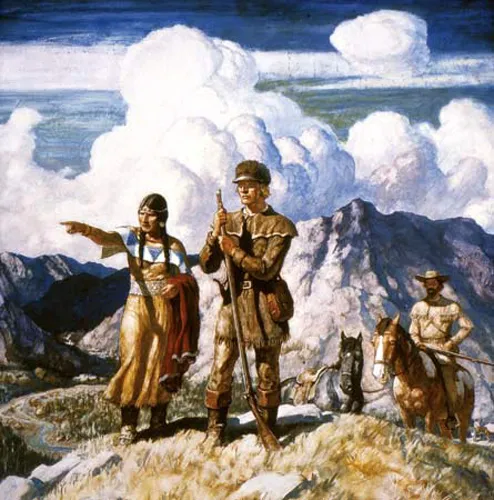 Photo: Sacagawea, via www.legendsofamerica.com
The Modern Intelligence Revolution
The 20th century transformed interpreters into formal intelligence assets. During World War II, Japanese-American translators in the Pacific Theater provided crucial intelligence that shortened the war. Their cultural knowledge allowed them to extract information from captured documents that pure linguistic translation would have missed. Similarly, Cold War communications interception depended heavily on native speakers who understood not just Russian or Chinese words but the bureaucratic and cultural contexts that gave them meaning.
The Cuban Missile Crisis negotiations passed through Soviet interpreters whose word choices may have influenced whether nuclear war occurred. Transcripts reveal moments where interpreters clarified, softened, or emphasized particular phrases in ways that affected the tone and urgency of communications between Kennedy and Khrushchev.
The Digital Age Paradox
Modern technology has simultaneously reduced and amplified interpreter influence. Machine translation handles routine communications, but high-stakes diplomatic encounters still require human interpreters who understand cultural nuance, political subtext, and emotional undertones that algorithms miss.
Recent diplomatic failures have often traced back to interpretation problems. Misunderstandings between American and Chinese negotiators frequently stem not from language barriers but from different cultural assumptions about directness, hierarchy, and face-saving that interpreters must navigate in real-time.
The Structural Invisibility Problem
Why do interpreters remain largely invisible in historical analysis? The answer reveals something important about how we understand decision-making. We prefer to believe that leaders make choices based on clear information and rational calculation. Acknowledging that crucial decisions passed through intermediaries whose personal judgments, cultural biases, and political interests shaped outcomes complicates this narrative uncomfortably.
Moreover, interpreters typically worked under strict confidentiality agreements or cultural expectations of invisibility. They rarely left written records of their experiences or decision-making processes. This creates a systematic gap in historical documentation that affects our understanding of causation in major events.
The Contemporary Warning
As global communications become increasingly complex, the interpreter's role becomes more rather than less critical. Trade negotiations, climate agreements, and security arrangements still depend on individuals capable of bridging not just linguistic but cultural and conceptual differences. The five-thousand-year pattern suggests we ignore their influence at our own peril.
The historical record is clear: the person in the middle of every crucial conversation has always shaped its outcome. Understanding how decisions that affect millions are actually made requires acknowledging the invisible hands that guide them.