When Honor Outlasts Orders: The Eternal Cost of Military Conscience
The Paradox of the Soldier's Oath
Every military officer in history has sworn some version of the same promise: to defend their nation, constitution, or people above all else. Yet when that oath conflicts with direct orders from superiors, the resulting choice has toppled governments, saved republics, and destroyed careers for five millennia. The pattern is so consistent across civilizations that it suggests something fundamental about human psychology under extreme pressure.
Consider Marcus Junius Brutus — not the assassin, but the Roman tribune who refused Julius Caesar's order to arrest fellow senators in 49 BCE. His defiance helped preserve what remained of republican institutions for another generation. Or examine Stanislav Petrov, the Soviet officer who in 1983 chose not to report what appeared to be incoming American missiles, preventing nuclear war. Both men faced the same core dilemma: follow orders that would destroy what they had sworn to protect, or risk everything on their own judgment.
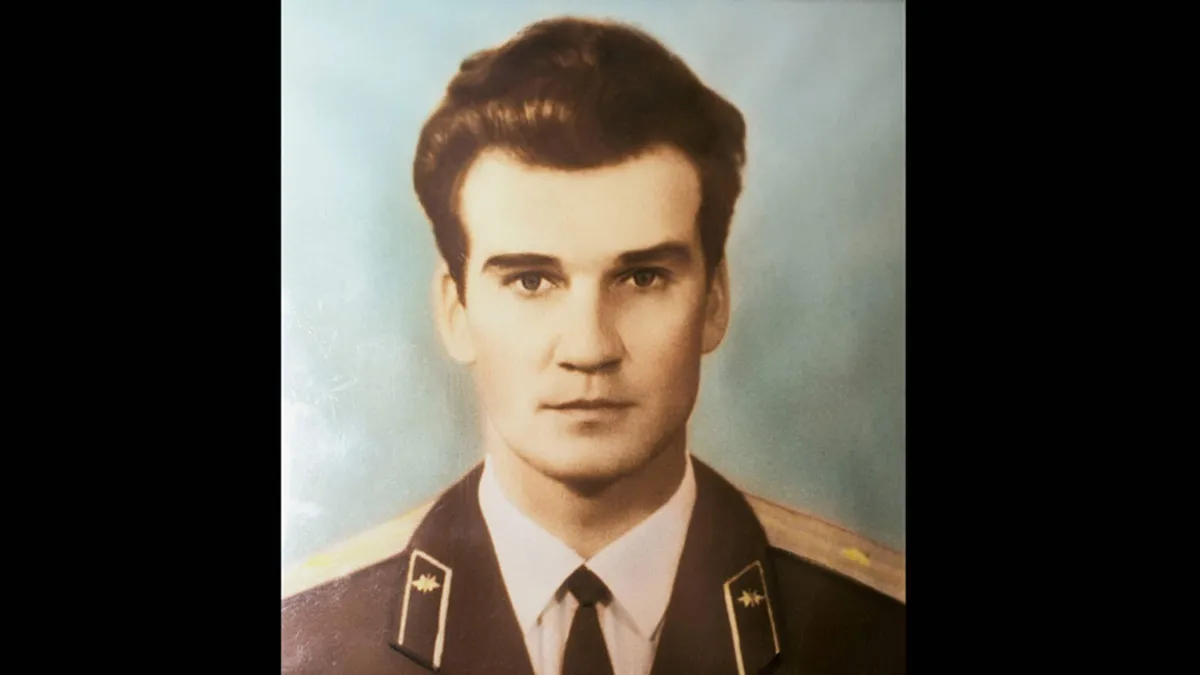 Photo: Stanislav Petrov, via res.cloudinary.com
The Architecture of Institutional Betrayal
The circumstances that produce these moments follow a predictable sequence. First, a leader consolidates power beyond traditional constraints. Second, that leader issues orders that serve personal or political interests rather than national ones. Third, military officers must choose between personal survival and institutional preservation. The historical record shows that societies which systematically punished officers who chose the latter option rarely lasted another century.
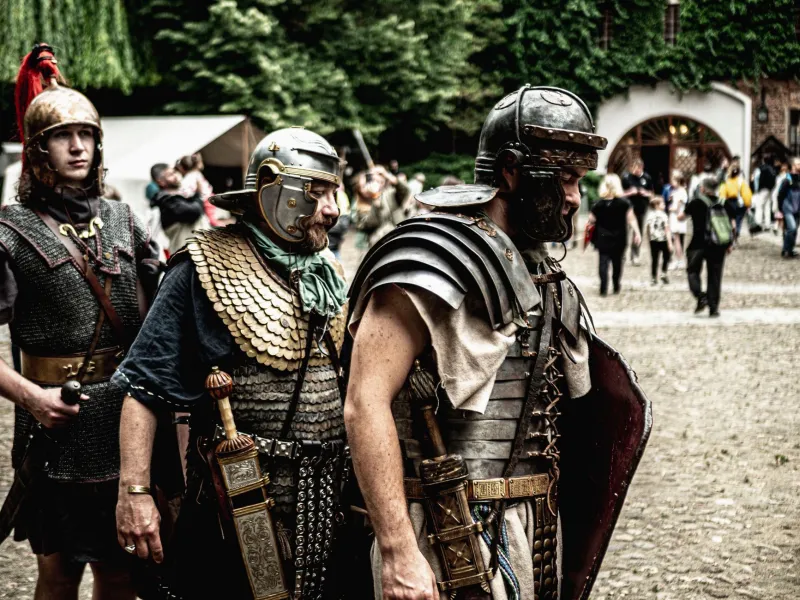
Roman historians documented dozens of centurions who refused orders to massacre civilians during the empire's decline. Most were executed. The empire fell within two generations of when such executions became routine. Similar patterns emerge in the final decades of Imperial China, Revolutionary France during the Terror, and Nazi Germany. When military conscience becomes a capital offense, the state has typically entered its terminal phase.
The American Exception
The United States has produced its share of officers who chose principle over orders, though the consequences have varied dramatically. During Reconstruction, General Oliver Howard defied President Andrew Johnson's attempts to dismantle the Freedmen's Bureau, preserving educational and legal protections for former slaves. Howard faced congressional investigation but kept his commission. In 1973, Major Harold Hering was discharged from the Air Force for asking how he could verify the legality of a nuclear launch order — a question that led to significant improvements in command protocols.
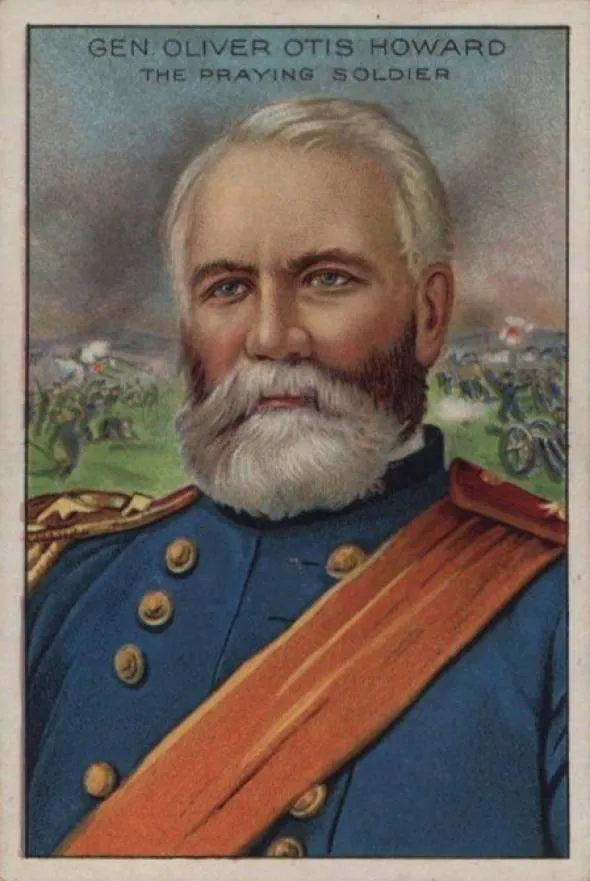 Photo: Oliver Howard, via vintagecardprices.com
More recently, Lieutenant Colonel Alexander Vindman testified before Congress about a presidential phone call he believed violated his oath, resulting in his early retirement but no criminal charges. The pattern suggests American institutions have generally — though not always — distinguished between personal insubordination and principled dissent.
The Psychology of the Uniform
Modern psychological research confirms what ancient historians observed: military training creates individuals particularly susceptible to what researchers call "moral injury" when forced to act against deeply held principles. The same conditioning that makes soldiers effective in combat — absolute respect for hierarchy, group loyalty, mission focus — becomes a source of profound psychological conflict when orders contradict the values that motivated their service.
This explains why military coups often fail not from external resistance but from internal fracture. Officers trained to follow orders discover they cannot follow orders that destroy what they joined to defend. The 1991 Soviet coup attempt collapsed partly because key military commanders refused to fire on civilians, while the 2016 Turkish coup failed when pilots declined to bomb government buildings.
The Institutional Memory Problem
Societies that survive these crises typically develop institutional mechanisms to channel military dissent constructively. The Roman Republic created tribunes with power to veto unconstitutional orders. Modern militaries have inspector generals, ethics officers, and legal channels for reporting illegal commands. These systems acknowledge a crucial truth: the choice between following orders and following conscience will inevitably arise, and institutions must provide alternatives to mutiny or martyrdom.
Nations that fail to develop such mechanisms face a stark choice during crises: accept military defiance of civilian authority, or purge officers willing to prioritize national over personal interests. History suggests the latter choice is typically fatal to the regime that makes it.
The Contemporary Relevance
As American civilian-military relations face new strains, the historical pattern offers both warning and guidance. The officers who have defined themselves by choosing principle over convenience — from Washington refusing to become king to Eisenhower warning about the military-industrial complex — represent not aberrations but the essential function of military professionalism in a republic.
The five-thousand-year record is clear: societies that honor such choices, even when inconvenient, tend to outlast those that punish them. The alternative is not a more obedient military, but a military that eventually serves something other than the nation it was created to defend.