Deep Record News Home

Category

Technology

22 articles


Your Boss With a Clipboard Has Five Thousand Years of Precedent

Your Boss With a Clipboard Has Five Thousand Years of Precedent

The quarterly review, the peer ranking, the inspector's surprise visit — none of it is new. Ancient empires ran performance management systems on parchment and papyrus, and their records show exactly which incentives worked, which ones backfired, and which ones modern HR has cheerfully reinvented.

The Foreign Voice: Why Institutions Have Always Paid Strangers to Repeat What Their Own People Already Said

The Foreign Voice: Why Institutions Have Always Paid Strangers to Repeat What Their Own People Already Said

From the advisors of ancient courts to the management consulting firms that now bill American corporations hundreds of millions of dollars annually, the pattern is identical: internal expertise is systematically devalued until it is imported from outside at significant cost. The historical record does not treat this as a failure of intelligence. It treats it as a predictable feature of how authority is constructed and defended.

The Archive as Asset: Five Thousand Years of Controlling Memory for Competitive Advantage

The Archive as Asset: Five Thousand Years of Controlling Memory for Competitive Advantage

The ability to determine which records survive, which are indexed, and which are forgotten has functioned as a source of durable competitive advantage throughout recorded history. What the five-thousand-year record of archival control reveals is that ownership of the past is not a cultural matter—it is an economic and strategic one, with consequences that compound across generations.

Correct, Ignored, Discredited: The Institutional Fate of People Who Read the Data Too Early

Correct, Ignored, Discredited: The Institutional Fate of People Who Read the Data Too Early

The historical record on early warning is not a record of information failures. It is a record of institutional responses to accurate information arriving before the people in authority were prepared to act on it. From the engineers who flagged structural defects before catastrophic failures to the economists who documented unsustainable debt accumulation before financial crises, the pattern is consistent across centuries: the warning was there, the mechanism for dismissing it was already in pla

When Everyone Agrees, Start Worrying: The Historical Record on Unanimity and Catastrophe

When Everyone Agrees, Start Worrying: The Historical Record on Unanimity and Catastrophe

The moments in history when a society achieved its most complete internal consensus were frequently the moments immediately preceding its most consequential failures. From ancient Athens to modern financial markets, the historical record treats widespread agreement not as a sign of collective wisdom but as a structural warning that the mechanisms of error-correction have broken down.

The Accurate Witness: Why History Has Always Punished the People Who Saw It Coming

The Accurate Witness: Why History Has Always Punished the People Who Saw It Coming

The historical record contains no shortage of individuals who correctly identified approaching catastrophes and said so clearly. What it contains in equal measure is the record of what happened to them afterward. Accurate prediction, it turns out, is not a neutral act. It is a political one—and the politics are rarely favorable to the person who is right.

The Indispensable Man Problem: Why History's Greatest Builders Became Their Own Systems' Greatest Threats

The Indispensable Man Problem: Why History's Greatest Builders Became Their Own Systems' Greatest Threats

Across five thousand years of recorded civilization, a specific and recurring fate has awaited the individuals who constructed the systems that made their societies function. Once the system no longer required a human explanation, the person who could provide one became not an asset but a liability — and the power structures those builders had enabled proved consistently willing to act on that assessment.

The Neutral Ground That Never Was: Who Controls the Standard Reference Controls the Argument

The Neutral Ground That Never Was: Who Controls the Standard Reference Controls the Argument

Every civilization has had one institution that served as the de facto arbiter of settled knowledge — the place you went to find out what was true, what was agreed upon, and what questions were considered closed. The identity of that institution has changed across five millennia. What has not changed is the speed with which interested parties move to capture it, and the confidence with which ordinary people continue to treat it as neutral long after it has ceased to be.

Secrets of the Earth: How Geographic Intelligence Has Been History's Ultimate Weapon

Secrets of the Earth: How Geographic Intelligence Has Been History's Ultimate Weapon

From Venice's jealously guarded sea charts to Soviet satellite surveillance, controlling geographic knowledge has determined the rise and fall of empires. Today, when detailed maps live in every pocket, the ancient relationship between cartographic power and political dominance faces its greatest transformation in human history.

Echoes of Glory: The Historical Pattern of Declining Powers Borrowing Yesterday's Symbols

Echoes of Glory: The Historical Pattern of Declining Powers Borrowing Yesterday's Symbols

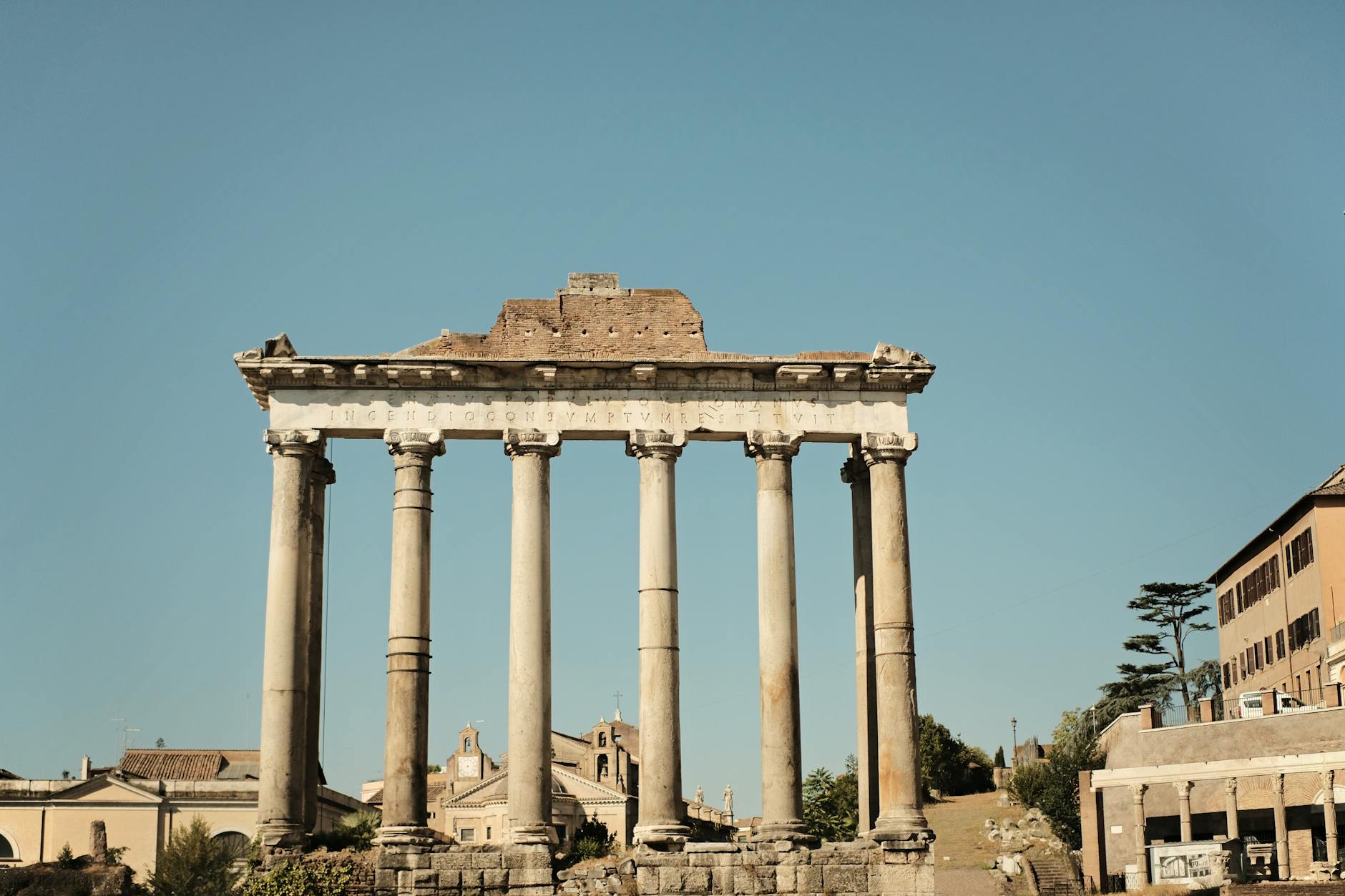
Throughout history, civilizations in decline have consistently abandoned the creation of new symbols and institutions in favor of appropriating the imagery of their predecessors. This pattern of cultural borrowing reveals a society's internal recognition of its own diminished capacity for innovation and suggests uncomfortable parallels with contemporary American political aesthetics.

Built to Last, Allowed to Rot: The Civilizational Cycle of Infrastructure and What Rome's Roads Warn Us About America's

Built to Last, Allowed to Rot: The Civilizational Cycle of Infrastructure and What Rome's Roads Warn Us About America's

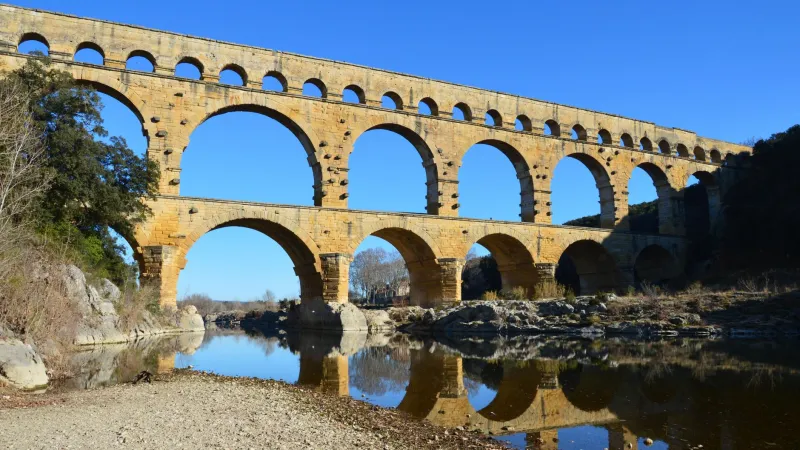
The Roman road network, the Grand Canal of China, the aqueducts of Carthage — history's great powers understood, with an almost intuitive clarity, that physical infrastructure was not a luxury or a political gesture but the literal skeleton of organized civilization. History is equally unambiguous about what happens next: the skeleton is built, the generation that built it ages out, and the political will to maintain what cannot be seen being constructed quietly disappears.

Rome Had a Playbook. It Is Still Being Used.

Rome Had a Playbook. It Is Still Being Used.

Roman political operatives developed a sophisticated toolkit of mass persuasion techniques that shaped public opinion across a largely illiterate empire. Adjust for literacy rates and transmission speed, and the same techniques appear on your television tonight. Roman citizens, for what it is worth, were also certain they could identify propaganda when they saw it.

The Rise, Fall, and Reinvention of Digg: A Story of Internet History and the Battle for Social News

The Rise, Fall, and Reinvention of Digg: A Story of Internet History and the Battle for Social News

Few websites shaped the early social internet quite like Digg, a platform that once dominated how Americans discovered and shared news online. Its dramatic collapse and fierce rivalry with Reddit remains one of the most compelling case studies in digital media history. Now, through a series of ambitious relaunches, Digg continues to evolve — raising the question of whether a pioneer can ever truly reclaim its throne.